
 Abibirem
 Asia
Asia Yuropu
 Amerika Anaafoɔ
 Australia ne Oceania
 Antarctica
 Pacific Po
 Atlantic Po
 India Po
 Arctic Po
 Mediterranean Po
 Po Kɔkɔɔ
 Caribbean Po
 Coral Po
 China Anaafoɔ Po
 Philippine Po
 Andaman Po
 Atifi Po
 Timor ne Arafura Po
 Bengal Ɛpo Ano
 California Ɛpo Ano
Arizona bark scorpion
 Ɛwɔ
ƐwɔThe Arizona bark scorpion is a small, light brown scorpion. It lives in the Sonoran Desert of the southwestern United States and northwestern Mexico. It is the most venomous scorpion in the United States, so it is important to know what it looks like and what to do after a sting.1


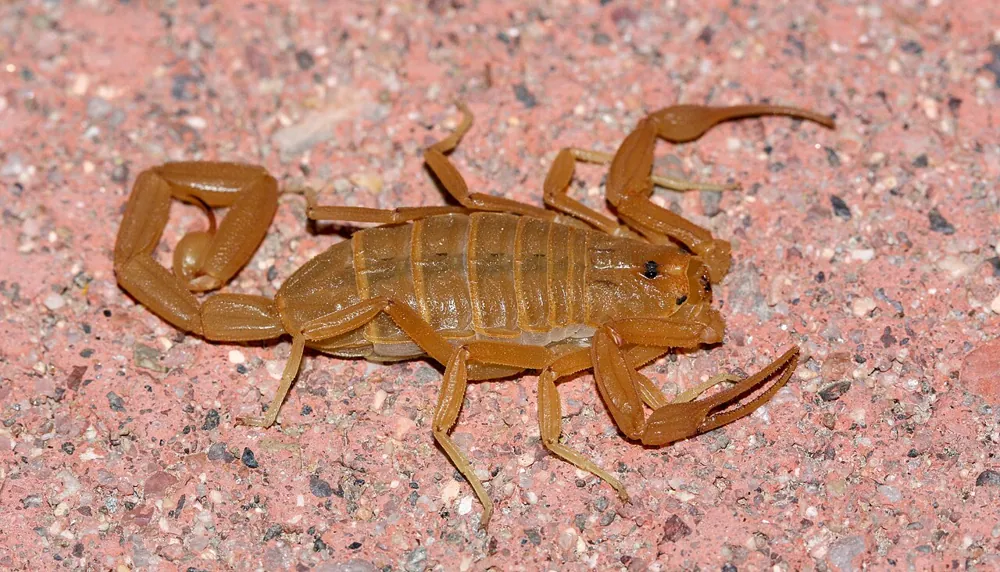
 Sɛdeɛ wobɛhunu no
- Small and light brown, tan or light beige in colour1
- Adults are up to 8 cm long (males) or up to 7 cm long (females)1
- Glows (fluoresces) under a blacklight, so it can be spotted at night from about six feet away with a UV flashlight1
- Can climb walls, trees and other rough surfaces, and often sits on the underside of objects1
Bɔre ahoɔden
Bɔre fi ne dua ano nsɔe (stinger) mu ba.
Ne bɔre yɛ dɛn?
The venom causes severe pain in adults, along with numbness, tingling and vomiting. These symptoms typically last between 24 and 72 hours. The stung area may stop working for a time, so a hand or arm can be temporarily immobilised or have convulsions. Some victims also feel short breaths and electrical jolts.1
Ne asiane ma nnipa te sɛn?
Asiane ma nnipa: Ɛyɛ denSɛ ɛwɔ wo a, kɔ dɔkota nkyɛn. Ɛntaa nkum obi koraa.Two deaths have been recorded in Arizona since 1968. Thousands of people are estimated to be stung each year in Arizona and New Mexico. Young children are at particular risk of severe symptoms.1
 Asɛmpa: dɔkotafoɔ wɔ aduro (antivenom) anaa ayaresa ma yei.1
Ɛyɛ dɛn bere a ehu aka no?
It will not seek out humans unless it is provoked or defending its young.1
 Sɛ ɛwɔ a
- Clean the sting site with soap and water, then apply a cool compress. You can take acetaminophen (paracetamol) or ibuprofen for pain and swelling. Get medical attention straight away if severe symptoms occur, especially in young children.1
- Fa ice pack dwo baabi a ɛwɔɔ no, na ma onipa no ntena dinn. Hwehwɛ dɔkota mmoa ntɛm, titiriw ma mmofra: akekantwerɛ bi tumi kum mmofra.
Di kan frɛ wo ahohiahia nɔma (112, 000, 911). Yei yɛ mmoa a ɛdi kan ho akwankyerɛ, ɛnyɛ dɔkota afotuo. Mmoa a ɛdi kan ho nsɛm titiriw
 Hwɛ wo ho so
- Mfa wo nsa nka wiram aboa biara, nkyere no na mfa no nni agorɔ, sɛ ɔyɛ ketewa mpo, na sɛ ɛte sɛ ɔrededa anaa wawu mpo a.
- Ma no kwan. Sɛ wohyia baako a, ma wo bo nnwo, san w'akyi brɛoo na ma ɔnkɔ ne kwan.
- Sɛ baako wɔ wo a: ma wo bo nnwo, tena dinn, frɛ wo ahohiahia nɔma (112, 000, 911) anaa kɔ ayaresabea ntɛm. Kae sɛdeɛ na ɛte, mfonini bɛboa.
Ɛnhwehwɛ wo sɛ ɛbɛpira wo. Ɛde ne bɔre kyere aduane anaa ɛbɔ ne ho ban, na ɛpɛ sɛ ɛhinta sene biribiara. Nsɛm pii fa ahobammɔ ho
Wiase mu baabi bɛn?
Ne kɛseɛ te sɛn?
Ne tenten te sɛn?
 ne tenten te sɛ agodeɛ blɔk 2,5 a wɔde to ntoatoasoɔ mu
 ɛbɛtumi atu mita 100 wɔ anibu 220 mu (onipa a ɔwɔ ntɛm sen biara hia 9.6)
Arizona bark scorpion kɛseɛ te sɛn sɛ wode toto WO ho a?
Akontabuo kɛkɛ wɔ wo browser mu. Wɔnkora hwee, na wɔmfa hwee nkɔ baabiara.
Ne ntɛm te sɛn?


Nsɛm
Scorpions, including this species, were found near ground zero during American nuclear tests, with no recorded harmful effects.1
Its venom has little effect on grasshopper mice, which scientists found use the toxin as a pain reducer rather than a pain trigger.1
It is the only scorpion genus in the Southwest that can climb rough walls and trees.1
Layers of wax on its outer shell help it resist water loss in the desert.1
Newly moulted scorpions do not glow under UV light for a few days.1
Young scorpions are gently guided onto their mother's back, where they stay after birth.1
Atosɛm sɛefoɔ
Atosɛm: Scorpions go looking for people to sting them.
Nokorɛ: They will not seek out humans unless they are provoked or defending their young. Many stings happen when people touch a scorpion on the underside of an object, where it is hiding.1
Ma bɔre ho animdefoɔ
- Nyansahu din
- Centruroides sculpturatus
- Kuo
- Akekantwerɛ
- Abusua
- Buthidae2
- Nhyehyɛeɛ (Order)
- Scorpiones
- Asaase akɛseɛ
- Amerika Atifi
- Mmofra nketewa
- The young are born live, usually 25 to 35 at a time, and ride on their mother's back until their first moult.1
- Mfeɛ a ɔtena ase
- bɛyɛ mfeɛ 61
- Asiane ma nnipa
- 3 / 5: Ɛyɛ den3
Baabi a nsɛm no fi
- Arizona bark scorpion (Wikipedia (CC BY-SA 4.0))
- Centruroides sculpturatus (iNaturalist): din ne nkyekyɛmu.
- Venom Wiki: asiane gyinabea, kɛseɛ a ɛtaa yɛ ne ntɛm susuo no yɛ yɛn ankasa deɛ. Hwɛ sɛdeɛ yɛbu no: Sɛdeɛ yɛkyerɛ asiane gyinabea.
Nsɛm biara a ɛwɔ kratafa yi so wɔ nɔma a ɛkyerɛ ne fibea. Sɛ yɛfom biribi a, kafra, yɛyɛ mmoa ho akɔnnɔfoɔ, ɛnyɛ nyansahu nwoma. Ka kyerɛ yɛn wɔ [email protected] na yɛbɛsiesie.
 Ɔkɔm de akekantwerɛ no! Onipa baako na ɔyɛ Venom Wiki: ɛyɛ kwa, dawurubɔ nni so na biribiara nni so a ɛdi w'akyi. Akyɛdeɛ ketewa bi boa ma ɛkɔ so tena internet so.Ma akekantwere no aduane
 Cuban blue scorpion
 Striped bark scorpion
 Giant desert hairy scorpion
 Colima scorpion
 Durango scorpion
 Mexican bark scorpion
 Terciopelo
 Eastern coral snake
 Eastern diamondback rattlesnake
 Eyelash viper
 Timber rattlesnake
 Western diamondback rattlesnake