
 Abibirem
 Asia
Asia Yuropu
 Amerika Anaafoɔ
 Australia ne Oceania
 Antarctica
 Pacific Po
 Atlantic Po
 India Po
 Arctic Po
 Mediterranean Po
 Po Kɔkɔɔ
 Caribbean Po
 Coral Po
 China Anaafoɔ Po
 Philippine Po
 Andaman Po
 Atifi Po
 Timor ne Arafura Po
 Bengal Ɛpo Ano
 California Ɛpo Ano
Western diamondback rattlesnake
 Ka
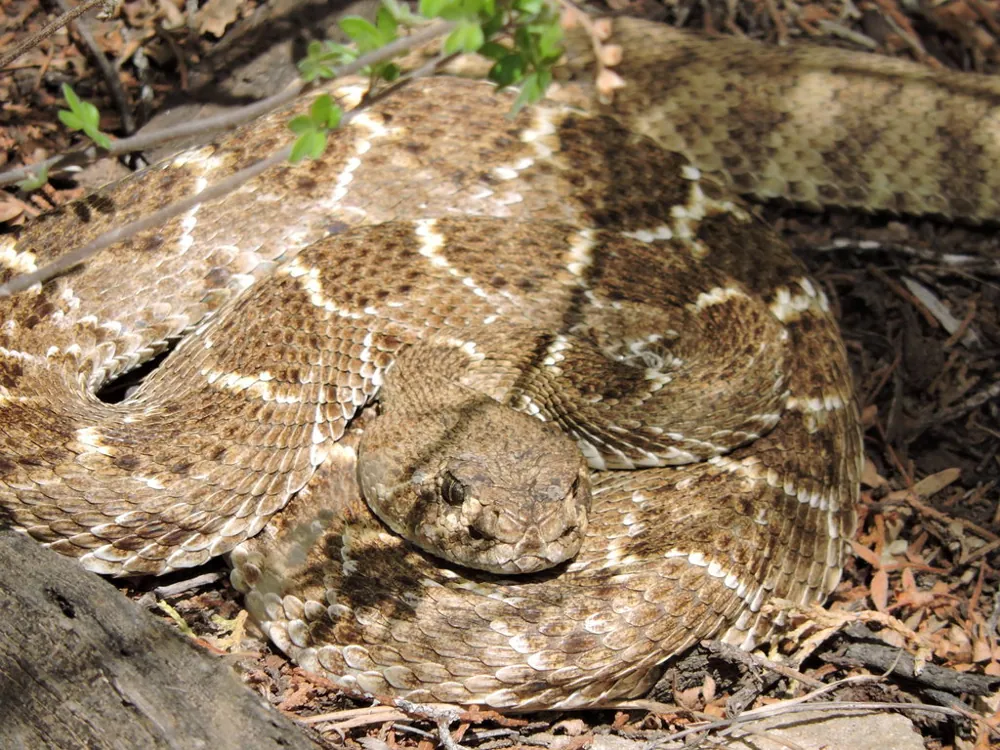
KaThe western diamondback rattlesnake is a large, venomous pit viper that lives in the southwestern United States and the northern half of Mexico. It is thought to cause most snakebite deaths in northern Mexico and more snakebites in the United States than any other snake. Its diamond-shaped back markings and loud rattle make it easier to recognise, but it should always be given plenty of space.1



 Sɛdeɛ wobɛhunu no
- Usually khaki in colour, though it may also be pinkish, brick red, yellowish blonde or white.1
- A row of 23 to 45 brown or dark umber blotches runs along the back, becoming diamond-shaped towards the middle of the body.1
- The tail has two to eight black bands, usually four to six, separated by white or grey.1
- A grey or umber stripe runs diagonally from the eye across the side of the head, usually edged below by a white stripe.1
Wɔtaa fa no sɛ: The Mojave rattlesnake also has banded tail rings, but its black rings are narrow compared with the pale ones. The timber rattlesnake has no tail rings, and the black-tailed rattlesnake has a uniform black tail or indistinct rings.1
Bɔre ahoɔden
Bɔre fi ne se mu ba bere a ɔka.
Ne bɔre yɛ dɛn?
Its venom is mainly hemotoxic, which means it mainly damages blood vessels, blood cells and the heart. It contains enzymes that break down tissue, along with cytotoxins and myotoxins that destroy cells and muscle. Local effects include pain, heavy internal bleeding, severe swelling, muscle damage, bruising, blistering and tissue death, and general effects may include headache, nausea and vomiting.1
Ne asiane ma nnipa te sɛn?
Asiane ma nnipa: Asiane kɛseɛ womƐtumi kum onipa a wɔnhwɛ no yareɛ.It is thought to be responsible for most snakebite deaths in northern Mexico and for the greatest number of snakebites in the United States. It can deliver a large amount of venom in one bite.1
Ɛyɛ dɛn bere a ehu aka no?
When threatened it usually coils and rattles to warn off attackers, and it is unusually willing to stand its ground. If rattling does not work, it will strike.1
 Sɛ ɛka a
- Ma onipa no ntena dinn na ne bo nnwo, ma nsa anaa nan a ɛkaa no no nna pɛpɛɛpɛ ne ne koma (ɛnkɔ soro, ɛnsiane fam), yi kawa ne nneɛma a ɛkyere no den, na kɔ ayaresabea ntɛm.
Di kan frɛ wo ahohiahia nɔma (112, 000, 911). Yei yɛ mmoa a ɛdi kan ho akwankyerɛ, ɛnyɛ dɔkota afotuo. Mmoa a ɛdi kan ho nsɛm titiriw
 Hwɛ wo ho so
- Mfa wo nsa nka wiram aboa biara, nkyere no na mfa no nni agorɔ, sɛ ɔyɛ ketewa mpo, na sɛ ɛte sɛ ɔrededa anaa wawu mpo a.
- Ma no kwan. Sɛ wohyia baako a, ma wo bo nnwo, san w'akyi brɛoo na ma ɔnkɔ ne kwan.
- Sɛ baako ka wo a: ma wo bo nnwo, tena dinn, frɛ wo ahohiahia nɔma (112, 000, 911) anaa kɔ ayaresabea ntɛm. Kae sɛdeɛ na ɛte, mfonini bɛboa.
Ɛnhwehwɛ wo sɛ ɛbɛpira wo. Ɛde ne bɔre kyere aduane anaa ɛbɔ ne ho ban, na ɛpɛ sɛ ɛhinta sene biribiara. Nsɛm pii fa ahobammɔ ho
Wiase mu baabi bɛn?
Ne kɛseɛ te sɛn?
Ne tenten te sɛn?
Ne mu duru te sɛn?
 ne tenten te sɛ fie agyinamoa 4 a wɔde hwene ne dua to ntoatoasoɔ mu
 ne tenten te sɛ kwadu 12 a wɔde to ntoatoasoɔ mune mu duru bɛyɛ sɛ fie agyinamoa
 ɛbɛtumi atu mita 100 wɔ anibu 92 mu (onipa a ɔwɔ ntɛm sen biara hia 9.6)
Western diamondback rattlesnake kɛseɛ te sɛn sɛ wode toto WO ho a?
Akontabuo kɛkɛ wɔ wo browser mu. Wɔnkora hwee, na wɔmfa hwee nkɔ baabiara.
Ne ntɛm te sɛn?


Nsɛm
It can go up to two years without food in the wild. In a starvation study, snakes cut their energy use by an average of 80% and still grew, as they put resources into muscle and bone.1
A juvenile was once found dead after trying to swallow a horned lizard, whose horns punctured its gullet.1
It is likely the second largest rattlesnake species, behind only its close relative the eastern diamondback rattlesnake.1
It is one of the few snake species that scavenges for food.1
Among rattlesnakes, it may be the most adaptable to towns and suburbs, and it thrives deep within developed areas.1
It is an important predator of small rodents, rabbits and birds, and it is itself eaten by coyotes, foxes, hawks and owls.1
Baabi a nsɛm no fi
- Western diamondback rattlesnake (Wikipedia (CC BY-SA 4.0))
- Crotalus atrox (iNaturalist): din ne nkyekyɛmu.
- Venom Wiki: asiane gyinabea, kɛseɛ a ɛtaa yɛ ne ntɛm susuo no yɛ yɛn ankasa deɛ. Hwɛ sɛdeɛ yɛbu no: Sɛdeɛ yɛkyerɛ asiane gyinabea.
Nsɛm biara a ɛwɔ kratafa yi so wɔ nɔma a ɛkyerɛ ne fibea. Sɛ yɛfom biribi a, kafra, yɛyɛ mmoa ho akɔnnɔfoɔ, ɛnyɛ nyansahu nwoma. Ka kyerɛ yɛn wɔ [email protected] na yɛbɛsiesie.
 Ɔkɔm de akekantwerɛ no! Onipa baako na ɔyɛ Venom Wiki: ɛyɛ kwa, dawurubɔ nni so na biribiara nni so a ɛdi w'akyi. Akyɛdeɛ ketewa bi boa ma ɛkɔ so tena internet so.Ma akekantwere no aduane
 Eastern diamondback rattlesnake
 Timber rattlesnake
 Sidewinder
 Mojave rattlesnake
 Aruba rattlesnake
 Black-tailed rattlesnake
 Terciopelo
 Eastern coral snake
 Eyelash viper
 Arizona bark scorpion
 Brown recluse
 Cane toad