
 Abibirem
 Asia
Asia Yuropu
 Amerika Anaafoɔ
 Australia ne Oceania
 Antarctica
 Pacific Po
 Atlantic Po
 India Po
 Arctic Po
 Mediterranean Po
 Po Kɔkɔɔ
 Caribbean Po
 Coral Po
 China Anaafoɔ Po
 Philippine Po
 Andaman Po
 Atifi Po
 Timor ne Arafura Po
 Bengal Ɛpo Ano
 California Ɛpo Ano
Australian box jellyfish
 Nhama (tentacles) a ɛwɔ
The Australian box jellyfish is one of the most venomous animals in the world. It lives in the warm coastal waters of northern Australia and nearby parts of Southeast Asia. Its sting can cause extreme pain and can be deadly, so it is important to know how to recognise it and what to do.1



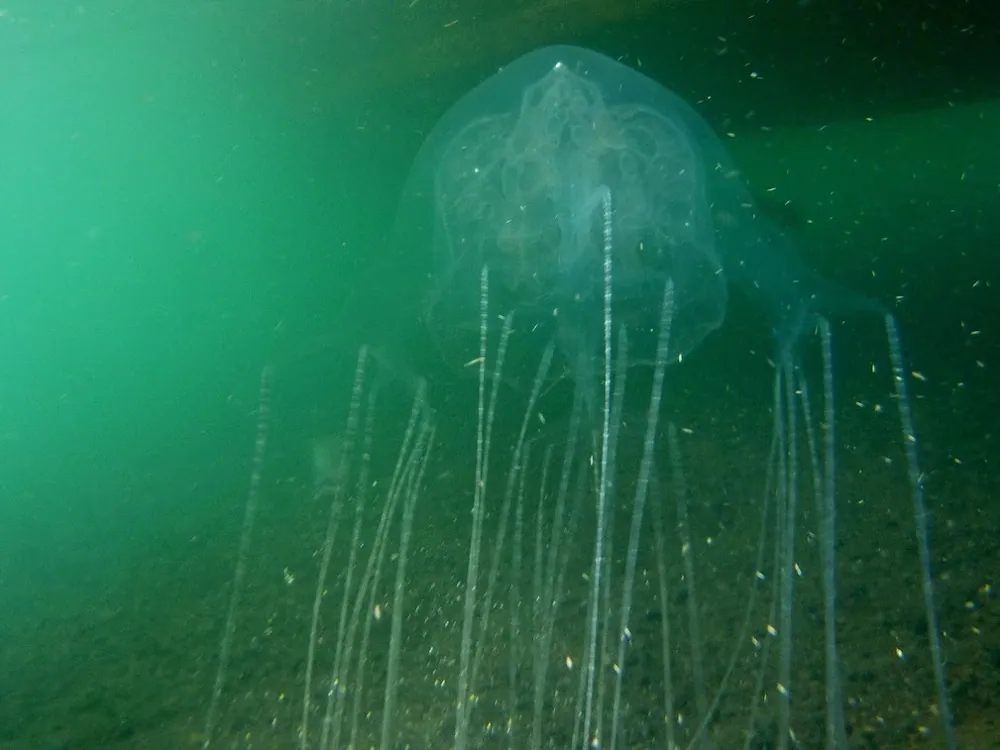
 Sɛdeɛ wobɛhunu no
- The bell is box-shaped and pale blue, with faint markings.1
- The bell is usually about 16 cm across and can reach 35 cm.1
- A cluster of 15 tentacles hangs from each of the four corners of the bell.1
- It is almost completely transparent, so it is very hard to see in the water.1
- When hunting, its tentacles can stretch to about 3 m long.1
Bɔre ahoɔden
Nwowaa (cells) nketewa mpempem a ɛwɔ tow wɔn bɔre bere a biribi de ne ho ka wɔn.
Ne bɔre yɛ dɛn?
Its venom makes cells porous, so potassium leaks out of them. This causes hyperkalemia, a dangerous build-up of potassium in the blood, which can lead to heart and circulation failure. Stings cause excruciating pain and a burning feeling, and an untreated victim can die within two to five minutes.1
Ne asiane ma nnipa te sɛn?
Asiane ma nnipa: ƐkumMmoa a asiane wɔ wɔn ho sen biara wɔ wiase no mu baako.At least 64 deaths have been recorded in Australia. Most deaths in recent decades have been children, because their smaller bodies are at higher risk. Most stings are mild, but one animal's venom is said to be enough to kill 60 adults.1
 Asɛmpa: dɔkotafoɔ wɔ aduro (antivenom) anaa ayaresa ma yei.1
 Sɛ ɛwɔ a
- Diluted acetic acid, such as vinegar, is the recommended treatment, because it deactivates stinging cells that have not yet fired. Some North American toxicologists advise applying it for around 30 seconds. Pressure bandages are no longer recommended, because they can cause more stinging cells to fire.1
- Fi nsuo no mu na yi nhama (tentacles) biara a ɛda so (fa nsa kotokuo anaa ntoma).
- Box jellyfish a ɛwɔ nsuo hyew mu: hwie vinegar gu baabi a ɛwɔɔ no so anibu 30 anaa deɛ ɛsen saa, frɛ ma wɔmmɛboa na siesie wo ho sɛ wobɛyɛ CPR. Bluebottles ne afoforɔ dodoɔ no: fa ɛpo nsuo hohoro, na afei nsuo hyew ma yaw no.
Di kan frɛ wo ahohiahia nɔma (112, 000, 911). Yei yɛ mmoa a ɛdi kan ho akwankyerɛ, ɛnyɛ dɔkota afotuo. Mmoa a ɛdi kan ho nsɛm titiriw
 Hwɛ wo ho so
- Mfa wo nsa nka wiram aboa biara, nkyere no na mfa no nni agorɔ, sɛ ɔyɛ ketewa mpo, na sɛ ɛte sɛ ɔrededa anaa wawu mpo a.
- Ma no kwan. Sɛ wohyia baako a, ma wo bo nnwo, san w'akyi brɛoo na ma ɔnkɔ ne kwan.
- Sɛ baako wɔ wo a: ma wo bo nnwo, tena dinn, frɛ wo ahohiahia nɔma (112, 000, 911) anaa kɔ ayaresabea ntɛm. Kae sɛdeɛ na ɛte, mfonini bɛboa.
Ɛnhwehwɛ wo sɛ ɛbɛpira wo. Ɛde ne bɔre kyere aduane anaa ɛbɔ ne ho ban, na ɛpɛ sɛ ɛhinta sene biribiara. Nsɛm pii fa ahobammɔ ho
Wiase mu baabi bɛn?
Ne kɛseɛ te sɛn?
Ne tenten te sɛn?
 ne tenten te sɛ agodeɛ blɔk 11 a wɔde to ntoatoasoɔ mu
 ɛbɛtumi aguare aguare tare kɛseɛ tenten (50 m) wɔ anibu 26 mu
Australian box jellyfish kɛseɛ te sɛn sɛ wode toto WO ho a?
Akontabuo kɛkɛ wɔ wo browser mu. Wɔnkora hwee, na wɔmfa hwee nkɔ baabiara.
Ne ntɛm te sɛn?
Nsɛm
It has four clusters of eyes with 24 eyes in total, even though it has no central nervous system.1
Its tentacles are covered with millions of stinging cells that fire microscopic darts carrying venom.1
Its only known predators are green sea turtles and leatherback turtles, whose thick skin protects them from its stings.1
It is attracted to blue light, which makes it stream out its tentacles, while black objects make it move away.1
From certain angles, its pale blue bell looks like a human head or skull.1
Its name, 'hand of death', comes from its four appendages, which look like hands.1
Atosɛm sɛefoɔ
Atosɛm: Pressure bandages are the best first aid for a box jellyfish sting.
Nokorɛ: Pressure bandages were used until 2005, but health authorities no longer recommend them because they can trigger more venom release. Diluted vinegar is the recommended treatment.1
Ma bɔre ho animdefoɔ
- Nyansahu din
- Chironex fleckeri
- Kuo
- Jellyfish ne ɛpo mu mmoa a wɔwɔ
- Abusua
- Chirodropidae2
- Nhyehyɛeɛ (Order)
- Chirodropida
- Asaase akɛseɛ
- India Po, Pacific Po, Coral Po, China Anaafoɔ Po, Philippine Po, Timor ne Arafura Po, Po akɛseɛ
- Mmofra nketewa
- It lays eggs, and fertilised eggs develop into tiny polyps that bud into new young jellyfish, which return to the ocean.1
- Asiane ma nnipa
- 5 / 5: Ɛkum3
Baabi a nsɛm no fi
- Chironex fleckeri (Wikipedia (CC BY-SA 4.0))
- Chironex fleckeri (iNaturalist): din ne nkyekyɛmu.
- Venom Wiki: asiane gyinabea, kɛseɛ a ɛtaa yɛ ne ntɛm susuo no yɛ yɛn ankasa deɛ. Hwɛ sɛdeɛ yɛbu no: Sɛdeɛ yɛkyerɛ asiane gyinabea.
Nsɛm biara a ɛwɔ kratafa yi so wɔ nɔma a ɛkyerɛ ne fibea. Sɛ yɛfom biribi a, kafra, yɛyɛ mmoa ho akɔnnɔfoɔ, ɛnyɛ nyansahu nwoma. Ka kyerɛ yɛn wɔ [email protected] na yɛbɛsiesie.
 Ɔkɔm de akekantwerɛ no! Onipa baako na ɔyɛ Venom Wiki: ɛyɛ kwa, dawurubɔ nni so na biribiara nni so a ɛdi w'akyi. Akyɛdeɛ ketewa bi boa ma ɛkɔ so tena internet so.Ma akekantwere no aduane
Pii fi kuo korɔ no mu: Jellyfish ne ɛpo mu mmoa a wɔwɔ
 Irukandji jellyfishJellyfish ne ɛpo mu mmoa a wɔwɔƐtumi kumMfa wo nsa nka
 Portuguese man o' warJellyfish ne ɛpo mu mmoa a wɔwɔƐhia dɔkotaMfa wo nsa nka
 Lion's mane jellyfishJellyfish ne ɛpo mu mmoa a wɔwɔƐyɛ yaw kɛkɛMfa wo nsa nka
 Moon jellyfishJellyfish ne ɛpo mu mmoa a wɔwɔƐnni asiane
 Common kingslayerJellyfish ne ɛpo mu mmoa a wɔwɔƐtumi kumMfa wo nsa nka
 Hell's fire anemoneJellyfish ne ɛpo mu mmoa a wɔwɔƐhia dɔkotaMfa wo nsa nka
Ɔte nso wɔ: India Po
 Geography coneCone snails ne octopusƐkum
 Greater blue-ringed octopusCone snails ne octopusƐkum
 Southern blue-ringed octopusCone snails ne octopusƐkum
 Hawksbill sea turtleMmoa afoforɔ a wɔn ho yɛ awuduroƐtumi kum
 Reef stonefishApataa a wɔwɔ bɔreƐtumi kumMfa wo nsa nka
 Crown-of-thorns starfishSea urchins, ɛpo nsoromma ne sonsonoƐhia dɔkotaMfa wo nsa nka