
 Abibirem
 Asia
Asia Yuropu
 Amerika Anaafoɔ
 Australia ne Oceania
 Antarctica
 Pacific Po
 Atlantic Po
 India Po
 Arctic Po
 Mediterranean Po
 Po Kɔkɔɔ
 Caribbean Po
 Coral Po
 China Anaafoɔ Po
 Philippine Po
 Andaman Po
 Atifi Po
 Timor ne Arafura Po
 Bengal Ɛpo Ano
 California Ɛpo Ano
Hawksbill sea turtle
 Ɛyɛ awuduro sɛ wodi aƆdi: Biribiara kakraNe ho yɛ awuduro, onni bɔre
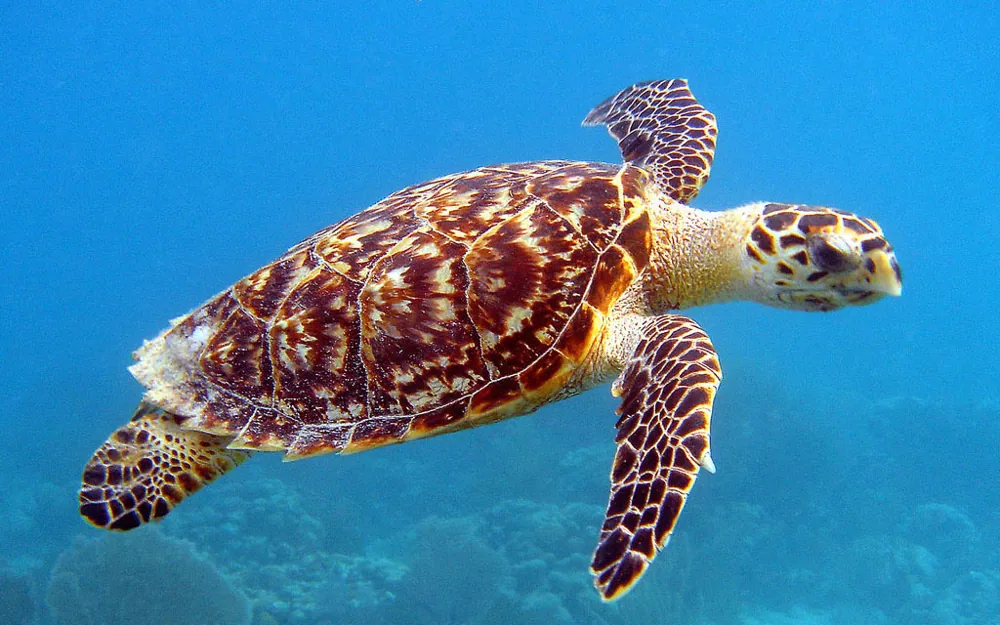
The hawksbill sea turtle is a sea turtle with a sharp, hooked beak and a shell with a saw-edged rear. It lives mainly in warm tropical reefs in the Atlantic, Indian and Pacific Oceans. It is critically endangered, and its flesh can become toxic to eat.1


 Sɛdeɛ wobɛhunu no
- Sharp, curving, hooked beak-like mouth1
- Shell edge at the rear looks serrated, like a saw or steak knife1
- Shell has an amber background with light and dark streaks, and black or mottled-brown colours at the sides1
- Two visible claws on each front flipper1
- Shell colour changes slightly with water temperature1
Awuduro ahoɔden
Ɛyɛ asiane bere a biribi adi no nko ara.
Ne asiane ma nnipa te sɛn?
Asiane ma nnipa: Asiane kɛseɛ womƐtumi kum onipa a wɔnhwɛ no yareɛ.The main risk to people is from eating its flesh, which can become toxic after the turtle eats venomous cnidarians (jellyfish-like animals). The sources give no figures for illness or deaths.1
Ɛyɛ dɛn bere a ehu aka no?
It uses its strong shell to squeeze into tight spaces in reefs, and it may seek places where it can camouflage or hide from predators.1
 Sɛ obi de ne nsa ka anaa ɔdi a
- Sɛ obi adi bi anaa ne ho anyɛ no dɛ bere a wadi akyi a: frɛ wo ahohiahia nɔma anaa awuduro ho mmoa adwumayɛbea (poison centre) ntɛm ara.
Di kan frɛ wo ahohiahia nɔma (112, 000, 911). Yei yɛ mmoa a ɛdi kan ho akwankyerɛ, ɛnyɛ dɔkota afotuo. Mmoa a ɛdi kan ho nsɛm titiriw
 Hwɛ wo ho so
- Mfa wo nsa nka wiram aboa biara, nkyere no na mfa no nni agorɔ, sɛ ɔyɛ ketewa mpo, na sɛ ɛte sɛ ɔrededa anaa wawu mpo a.
- Ma no kwan. Sɛ wohyia baako a, ma wo bo nnwo, san w'akyi brɛoo na ma ɔnkɔ ne kwan.
- Sɛ wode wo nsa kaa no anaa wodii a: mfa wo nsa ntwitwi w'ani anaa w'ano, hohoro wo nsa na hwehwɛ dɔkota mmoa.
Ɛnhwehwɛ wo sɛ ɛbɛpira wo. Ne ho awuduro no wɔ hɔ sɛdeɛ ɛbɛyɛ a biribiara renni no. Nsɛm pii fa ahobammɔ ho
Wiase mu baabi bɛn?
Ne kɛseɛ te sɛn?
Ne tenten te sɛn?
Ne mu duru te sɛn?

 ne tenten te sɛ fie agyinamoa 2 a wɔde hwene ne dua to ntoatoasoɔ mu
 ne tenten te sɛ kwadu 6 a wɔde to ntoatoasoɔ mu
 ɛbɛtumi aguare aguare tare kɛseɛ tenten (50 m) wɔ anibu 7,5 mu
Hawksbill sea turtle kɛseɛ te sɛn sɛ wode toto WO ho a?
Akontabuo kɛkɛ wɔ wo browser mu. Wɔnkora hwee, na wɔmfa hwee nkɔ baabiara.
Ne ntɛm te sɛn?

Nsɛm
It is biofluorescent and is the first reptile recorded with this trait, meaning it glows under certain light.1
Some sponges it eats are highly toxic to other animals, and it can eat them without harm.1
It closes its unprotected eyes when feeding on stinging animals, and the Portuguese man o' war's stinging cells cannot pierce its armoured head.1
Sponges make up most of its food, which makes it the only primarily sponge-eating reptile among sea turtles.1
Its shell was the main source of tortoiseshell used for decorative items.1
In the eastern Pacific, it nests and feeds mainly in mangrove estuaries rather than on reefs.1
Ma bɔre ho animdefoɔ
- Nyansahu din
- Eretmochelys imbricata
- Kuo
- Mmoa afoforɔ a wɔn ho yɛ awuduro
- Abusua
- Cheloniidae2
- Nhyehyɛeɛ (Order)
- Testudines
- Asaase akɛseɛ
- Pacific Po, Atlantic Po, India Po, Po Kɔkɔɔ, Caribbean Po, Coral Po, China Anaafoɔ Po, Philippine Po, Mexico Ɛpo Ano, Andaman Po, Arabia Po ne Persia Ɛpo Ano, Timor ne Arafura Po, Bengal Ɛpo Ano, California Ɛpo Ano, Po akɛseɛ
- Mmofra nketewa
- Hawksbills nest on beaches, and young hatch from the nests. In 2018, around 120 juveniles recently hatched at Pulau Satumu, Singapore.1
- Sɛdeɛ ɔte wɔ kwaem
- Critically endangered1
- Asiane ma nnipa
- 4 / 5: Asiane kɛseɛ wom3
Baabi a nsɛm no fi
- Hawksbill sea turtle (Wikipedia (CC BY-SA 4.0))
- Eretmochelys imbricata (iNaturalist): din ne nkyekyɛmu.
- Venom Wiki: asiane gyinabea, kɛseɛ a ɛtaa yɛ ne ntɛm susuo no yɛ yɛn ankasa deɛ. Hwɛ sɛdeɛ yɛbu no: Sɛdeɛ yɛkyerɛ asiane gyinabea.
Nsɛm biara a ɛwɔ kratafa yi so wɔ nɔma a ɛkyerɛ ne fibea. Sɛ yɛfom biribi a, kafra, yɛyɛ mmoa ho akɔnnɔfoɔ, ɛnyɛ nyansahu nwoma. Ka kyerɛ yɛn wɔ [email protected] na yɛbɛsiesie.
 Ɔkɔm de akekantwerɛ no! Onipa baako na ɔyɛ Venom Wiki: ɛyɛ kwa, dawurubɔ nni so na biribiara nni so a ɛdi w'akyi. Akyɛdeɛ ketewa bi boa ma ɛkɔ so tena internet so.Ma akekantwere no aduane
Pii fi kuo korɔ no mu: Mmoa afoforɔ a wɔn ho yɛ awuduro
 Japanese pufferfishMmoa afoforɔ a wɔn ho yɛ awuduroƐkum
 Greenland sharkMmoa afoforɔ a wɔn ho yɛ awuduroƐyɛ yaw kɛkɛ
 Silver-cheeked toadfishMmoa afoforɔ a wɔn ho yɛ awuduroƐkum
 Blackspotted pufferMmoa afoforɔ a wɔn ho yɛ awuduroƐtumi kum
 White-spotted pufferMmoa afoforɔ a wɔn ho yɛ awuduroƐtumi kum
 Long-spine porcupinefishMmoa afoforɔ a wɔn ho yɛ awuduroƐhia dɔkota
Ɔte nso wɔ: Pacific Po
 Australian box jellyfishJellyfish ne ɛpo mu mmoa a wɔwɔƐkumMfa wo nsa nka
 Geography coneCone snails ne octopusƐkum
 Greater blue-ringed octopusCone snails ne octopusƐkum
 Southern blue-ringed octopusCone snails ne octopusƐkum
 Irukandji jellyfishJellyfish ne ɛpo mu mmoa a wɔwɔƐtumi kumMfa wo nsa nka
 Reef stonefishApataa a wɔwɔ bɔreƐtumi kumMfa wo nsa nka