
 Abibirem
 Asia
Asia Yuropu
 Amerika Anaafoɔ
 Australia ne Oceania
 Antarctica
 Pacific Po
 Atlantic Po
 India Po
 Arctic Po
 Mediterranean Po
 Po Kɔkɔɔ
 Caribbean Po
 Coral Po
 China Anaafoɔ Po
 Philippine Po
 Andaman Po
 Atifi Po
 Timor ne Arafura Po
 Bengal Ɛpo Ano
 California Ɛpo Ano
Black long-spined urchin
 Nsɔe a bɔre wom
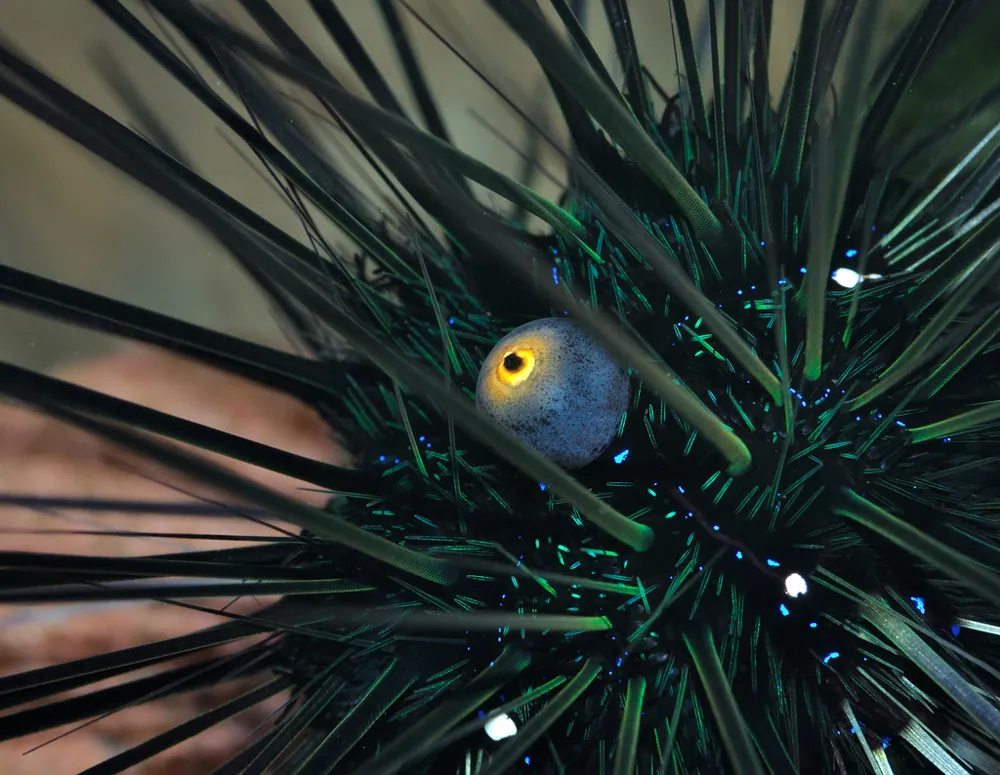
The black long-spined urchin is a sea urchin with very long, hollow spines. It lives on coral reefs, sand flats and seagrass beds across the Indo-Pacific, and it is one of the most widespread sea urchins in that region. Its spines can deliver a mild venom, so it is best to watch where you put your feet.1


 Sɛdeɛ wobɛhunu no
- Black, near-spherical body (test) with extremely long, narrow, hollow spines, often black but sometimes brown-banded1
- Five white spots on the body, which separate it from other Diadema species1
- A bright orange ring around the periproctal cone (the 'anal cone'), which is often mistaken for an eye1
- Bluish spots on the genital plates and a line of blue spots along the body1
- Adults are no more than 70 mm across the body and about 40 mm high1
Wɔtaa fa no sɛ: Other Diadema species are similar in shape and spines, but they lack the five white spots that mark this species. Its orange ring and blue spots also help to tell it apart.1
Bɔre ahoɔden
Nsɔe a ano yɛ nnam na ɛkura bɔre no. Sɛ wotiatia so anaa wosɔ mu a, ɛyɛ yaw.
Ne bɔre yɛ dɛn?
The spines are hollow and contain a mild venom. The toxin mostly causes swelling and pain, which spreads gradually over several hours. The venom is not fatal to humans. The spines themselves are a bigger problem, because they are brittle and needle-like, break off in flesh and are difficult to remove.1
Ne asiane ma nnipa te sɛn?
Asiane ma nnipa: Ɛyɛ yawƐtumi yɛ yaw paa, nanso ɛkame ayɛ sɛ ɛnyɛ asiane kɛseɛ da.The venom is only mild, and the species is not considered a serious threat to humans. Stepping on it can cause painful stings.1
Ɛyɛ dɛn bere a ehu aka no?
When threatened by a sudden impact or by spines snapping, it rapidly flips its body over and 'runs' on the tips of its longest spines.1
 Sɛ ne nsɔe hyɛ wo mu a
- Fa kuro no hyɛ nsuo hyew mu, ɛnyɛ hyew sene deɛ onipa no betumi agyina a ɛnhye no, na hwehwɛ dɔkota mmoa na wɔayi nsɔe no. Mmɔ mmɔden sɛ wo ankasa wobɛtutu wɔn.
Di kan frɛ wo ahohiahia nɔma (112, 000, 911). Yei yɛ mmoa a ɛdi kan ho akwankyerɛ, ɛnyɛ dɔkota afotuo. Mmoa a ɛdi kan ho nsɛm titiriw
 Hwɛ wo ho so
- Mfa wo nsa nka wiram aboa biara, nkyere no na mfa no nni agorɔ, sɛ ɔyɛ ketewa mpo, na sɛ ɛte sɛ ɔrededa anaa wawu mpo a.
- Ma no kwan. Sɛ wohyia baako a, ma wo bo nnwo, san w'akyi brɛoo na ma ɔnkɔ ne kwan.
- Sɛ ne nsɔe hyɛ wo mu a: ma wo bo nnwo, tena dinn, frɛ wo ahohiahia nɔma (112, 000, 911) anaa kɔ ayaresabea ntɛm. Kae sɛdeɛ na ɛte, mfonini bɛboa.
Ɛnhwehwɛ wo sɛ ɛbɛpira wo. Ɛde ne bɔre kyere aduane anaa ɛbɔ ne ho ban, na ɛpɛ sɛ ɛhinta sene biribiara. Nsɛm pii fa ahobammɔ ho
Wiase mu baabi bɛn?
Ne kɛseɛ te sɛn?
Ne tenten te sɛn?
Ne mu duru te sɛn?

 ne tenten te sɛ agodeɛ blɔk 2 a wɔde to ntoatoasoɔ mu
 ɛyɛ brɛoo sen nwa a ɔte turom
Black long-spined urchin kɛseɛ te sɛn sɛ wode toto WO ho a?
Akontabuo kɛkɛ wɔ wo browser mu. Wɔnkora hwee, na wɔmfa hwee nkɔ baabiara.
Ne ntɛm te sɛn?

Nsɛm
It can move 760 mm in just 7 seconds by rolling and walking on the tips of its spines.1
It has no eye, but it has a diffuse light-sensing system that lets it detect light levels and the size and colour of objects.1
In 2006, living specimens were found off Turkey, making it the first invasive Erythrean sea urchin recorded in the Mediterranean.1
Goose barnacles of the genus Microlepas are known to live on it as parasites.1
It is considered one of the oldest living species in its genus, Diadema.1
Atosɛm sɛefoɔ
Atosɛm: Black long-spined urchins are deadly and their stings can kill people.
Nokorɛ: Their venom is mild and is not fatal to humans. The main problems are pain, swelling and spines that break off in the skin.1
Ma bɔre ho animdefoɔ
- Nyansahu din
- Diadema setosum
- Kuo
- Sea urchins, ɛpo nsoromma ne sonsono
- Abusua
- Diadematidae2
- Nhyehyɛeɛ (Order)
- Diadematoida
- Asaase akɛseɛ
- India Po, Pacific Po, Po Kɔkɔɔ, Coral Po, Philippine Po, Arabia Po ne Persia Ɛpo Ano, Timor ne Arafura Po, Bengal Ɛpo Ano, Po akɛseɛ
- Mmofra nketewa
- It is a broadcast spawner, releasing eggs and sperm into the water. Spawning happens seasonally or year-round depending on the location, and in some places it follows the full moon.1
- Asiane ma nnipa
- 2 / 5: Ɛyɛ yaw3
Baabi a nsɛm no fi
- Diadema setosum (Wikipedia (CC BY-SA 4.0))
- Diadema setosum (iNaturalist): din ne nkyekyɛmu.
- Venom Wiki: asiane gyinabea, kɛseɛ a ɛtaa yɛ ne ntɛm susuo no yɛ yɛn ankasa deɛ. Hwɛ sɛdeɛ yɛbu no: Sɛdeɛ yɛkyerɛ asiane gyinabea.
Nsɛm biara a ɛwɔ kratafa yi so wɔ nɔma a ɛkyerɛ ne fibea. Sɛ yɛfom biribi a, kafra, yɛyɛ mmoa ho akɔnnɔfoɔ, ɛnyɛ nyansahu nwoma. Ka kyerɛ yɛn wɔ [email protected] na yɛbɛsiesie.
 Ɔkɔm de akekantwerɛ no! Onipa baako na ɔyɛ Venom Wiki: ɛyɛ kwa, dawurubɔ nni so na biribiara nni so a ɛdi w'akyi. Akyɛdeɛ ketewa bi boa ma ɛkɔ so tena internet so.Ma akekantwere no aduane
Pii fi kuo korɔ no mu: Sea urchins, ɛpo nsoromma ne sonsono
 Crown-of-thorns starfishSea urchins, ɛpo nsoromma ne sonsonoƐhia dɔkotaMfa wo nsa nka
 Flower urchinSea urchins, ɛpo nsoromma ne sonsonoƐtumi kum
 Fire urchinSea urchins, ɛpo nsoromma ne sonsonoƐhia dɔkotaMfa wo nsa nka
 Bearded firewormSea urchins, ɛpo nsoromma ne sonsonoƐyɛ yaw kɛkɛMfa wo nsa nka
 BloodwormSea urchins, ɛpo nsoromma ne sonsonoƐyɛ yaw kɛkɛ
 Bobbit wormSea urchins, ɛpo nsoromma ne sonsonoƐyɛ yaw kɛkɛ
Ɔte nso wɔ: India Po
 Australian box jellyfishJellyfish ne ɛpo mu mmoa a wɔwɔƐkumMfa wo nsa nka
 Geography coneCone snails ne octopusƐkum
 Greater blue-ringed octopusCone snails ne octopusƐkum
 Southern blue-ringed octopusCone snails ne octopusƐkum
 Hawksbill sea turtleMmoa afoforɔ a wɔn ho yɛ awuduroƐtumi kum
 Irukandji jellyfishJellyfish ne ɛpo mu mmoa a wɔwɔƐtumi kumMfa wo nsa nka