
 Abibirem
 Asia
Asia Yuropu
 Amerika Anaafoɔ
 Australia ne Oceania
 Antarctica
 Pacific Po
 Atlantic Po
 India Po
 Arctic Po
 Mediterranean Po
 Po Kɔkɔɔ
 Caribbean Po
 Coral Po
 China Anaafoɔ Po
 Philippine Po
 Andaman Po
 Atifi Po
 Timor ne Arafura Po
 Bengal Ɛpo Ano
 California Ɛpo Ano
Brazilian lancehead
 Ka
KaThe Brazilian lancehead is a highly venomous snake, a type of pit viper, found in South America. It lives in forests and open woodland in Brazil and nearby countries, and it hunts mostly at night. Its venom damages muscle and blood, so bites need urgent medical care.1



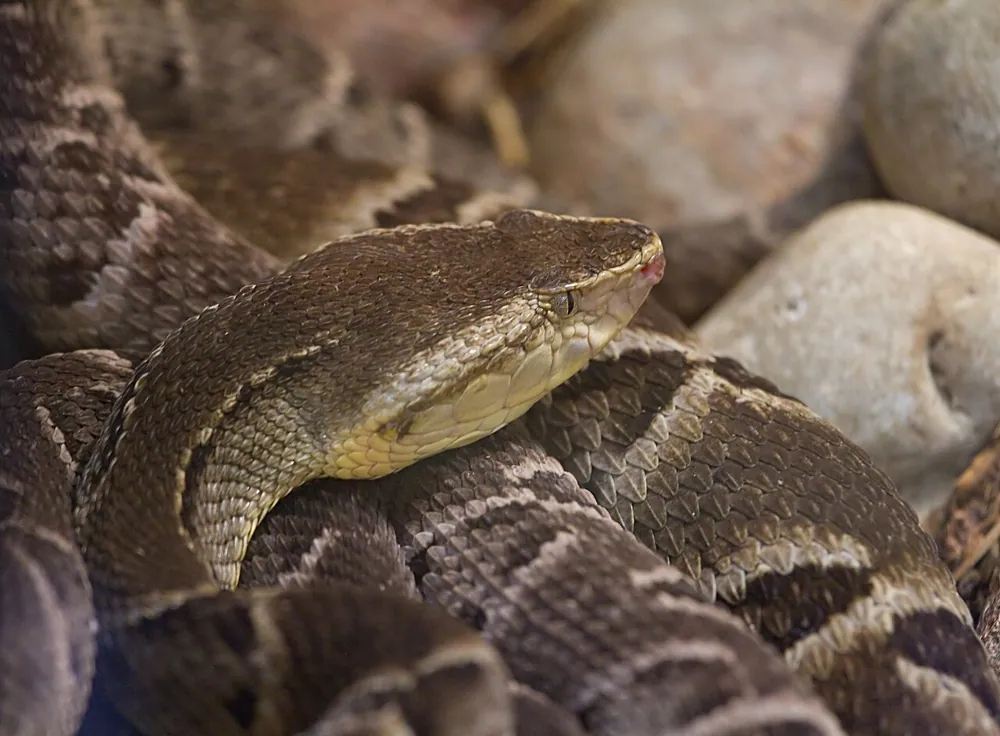
 Sɛdeɛ wobɛhunu no
- Tan, grey-brown or olive-grey body with 14–21 trapezoidal side markings that are dark grey or black.1
- Belly is usually white or cream, with scattered dark grey spots.1
- Broad head is flattened into a lance shape when seen from above, and is distinct from the narrow neck.1
- Eyes have vertically elliptical (cat-like) pupils.1
- Juveniles have a white tail.1
Bɔre ahoɔden
Bɔre fi ne se mu ba bere a ɔka.
Ne bɔre yɛ dɛn?
Its venom is haemolytic (it breaks down red blood cells) and proteolytic (it breaks down proteins). A muscle-damaging component causes necrosis, meaning the muscle tissue dies, and the venom also stops blood from clotting. Symptoms may include intense local pain, swelling and muscle death, and the venom can cause severe bleeding and strokes.1
Ne asiane ma nnipa te sɛn?
Asiane ma nnipa: Asiane kɛseɛ womƐtumi kum onipa a wɔnhwɛ no yareɛ.This snake is highly venomous. Its venom can cause severe haemorrhage (serious bleeding) and strokes.1
Ɛyɛ dɛn bere a ehu aka no?
It is considered very defensive.1
 Sɛ ɛka a
- Ma onipa no ntena dinn na ne bo nnwo, ma nsa anaa nan a ɛkaa no no nna pɛpɛɛpɛ ne ne koma (ɛnkɔ soro, ɛnsiane fam), yi kawa ne nneɛma a ɛkyere no den, na kɔ ayaresabea ntɛm.
Di kan frɛ wo ahohiahia nɔma (112, 000, 911). Yei yɛ mmoa a ɛdi kan ho akwankyerɛ, ɛnyɛ dɔkota afotuo. Mmoa a ɛdi kan ho nsɛm titiriw
 Hwɛ wo ho so
- Mfa wo nsa nka wiram aboa biara, nkyere no na mfa no nni agorɔ, sɛ ɔyɛ ketewa mpo, na sɛ ɛte sɛ ɔrededa anaa wawu mpo a.
- Ma no kwan. Sɛ wohyia baako a, ma wo bo nnwo, san w'akyi brɛoo na ma ɔnkɔ ne kwan.
- Sɛ baako ka wo a: ma wo bo nnwo, tena dinn, frɛ wo ahohiahia nɔma (112, 000, 911) anaa kɔ ayaresabea ntɛm. Kae sɛdeɛ na ɛte, mfonini bɛboa.
Ɛnhwehwɛ wo sɛ ɛbɛpira wo. Ɛde ne bɔre kyere aduane anaa ɛbɔ ne ho ban, na ɛpɛ sɛ ɛhinta sene biribiara. Nsɛm pii fa ahobammɔ ho
Wiase mu baabi bɛn?
Ne kɛseɛ te sɛn?
Ne tenten te sɛn?
 ne tenten te sɛ fie agyinamoa 5 a wɔde hwene ne dua to ntoatoasoɔ mu
 ne tenten te sɛ kwadu 13 a wɔde to ntoatoasoɔ mu
 ɛbɛtumi atu mita 100 wɔ anibu 90 mu (onipa a ɔwɔ ntɛm sen biara hia 9.6)
Brazilian lancehead kɛseɛ te sɛn sɛ wode toto WO ho a?
Akontabuo kɛkɛ wɔ wo browser mu. Wɔnkora hwee, na wɔmfa hwee nkɔ baabiara.
Ne ntɛm te sɛn?


Nsɛm
The venom contains a clotting-related enzyme that can trigger disseminated intravascular coagulation, a serious condition where blood clots and bleeds at the same time.1
Its venom contains a wide range of enzymes, including a muscle-damaging myotoxin.1
The venom yield of adult females averages 335 mg, while newborns average 63 mg.1
It is one of several pit vipers with heat-sensing pits, which help it find prey in the dark.1
It is nocturnal, so it is most active at night.1
Ma bɔre ho animdefoɔ
- Nyansahu din
- Bothrops moojeni
- Kuo
- Pit viper
- Abusua
- Viperidae2
- Nhyehyɛeɛ (Order)
- Squamata
- Asaase akɛseɛ
- Amerika Anaafoɔ
- Mmofra nketewa
- It gives birth to live young (viviparous). Gestation lasts around four months, it happens once a year, and a litter is usually 12–14 newborns.1
- Mfeɛ a ɔtena ase
- bɛyɛ mfeɛ 151
- Asiane ma nnipa
- 4 / 5: Asiane kɛseɛ wom3
Baabi a nsɛm no fi
- Bothrops moojeni (Wikipedia (CC BY-SA 4.0))
- Bothrops moojeni (iNaturalist): din ne nkyekyɛmu.
- Venom Wiki: asiane gyinabea, kɛseɛ a ɛtaa yɛ ne ntɛm susuo no yɛ yɛn ankasa deɛ. Hwɛ sɛdeɛ yɛbu no: Sɛdeɛ yɛkyerɛ asiane gyinabea.
Nsɛm biara a ɛwɔ kratafa yi so wɔ nɔma a ɛkyerɛ ne fibea. Sɛ yɛfom biribi a, kafra, yɛyɛ mmoa ho akɔnnɔfoɔ, ɛnyɛ nyansahu nwoma. Ka kyerɛ yɛn wɔ [email protected] na yɛbɛsiesie.
 Ɔkɔm de akekantwerɛ no! Onipa baako na ɔyɛ Venom Wiki: ɛyɛ kwa, dawurubɔ nni so na biribiara nni so a ɛdi w'akyi. Akyɛdeɛ ketewa bi boa ma ɛkɔ so tena internet so.Ma akekantwere no aduane
Pii fi kuo korɔ no mu: Pit viper
 Terciopelo
 Eyelash viper
 Golden lancehead
 South American bushmaster
 Common lancehead
 Jararaca
Ɔte nso wɔ: Amerika Anaafoɔ
 Golden poison frogApɔtorɔwa a wɔn ho yɛ awuduro, apɔtorɔ ne newtƐkumMfa wo nsa nka
 Brazilian wandering spiderAnanseƐtumi kum
 Cane toadApɔtorɔwa a wɔn ho yɛ awuduro, apɔtorɔ ne newtƐhia dɔkotaMfa wo nsa nka
 Peruvian giant centipedeCentipedeƐhia dɔkota
 Bullet antTɛteaƐyɛ yaw kɛkɛ
 Common vampire batNufoɔ mmoa a wɔwɔ bɔreƐyɛ yaw kɛkɛ