
 Abibirem
 Asia
Asia Yuropu
 Amerika Anaafoɔ
 Australia ne Oceania
 Antarctica
 Pacific Po
 Atlantic Po
 India Po
 Arctic Po
 Mediterranean Po
 Po Kɔkɔɔ
 Caribbean Po
 Coral Po
 China Anaafoɔ Po
 Philippine Po
 Andaman Po
 Atifi Po
 Timor ne Arafura Po
 Bengal Ɛpo Ano
 California Ɛpo Ano
Bullet ant
 Ɛwɔ
ƐwɔThe bullet ant is a large rainforest ant with a sting that is famously painful. It lives in humid lowland rainforests in Central and South America. Its sting ranks as the most painful of all insect stings on one informal pain scale.1

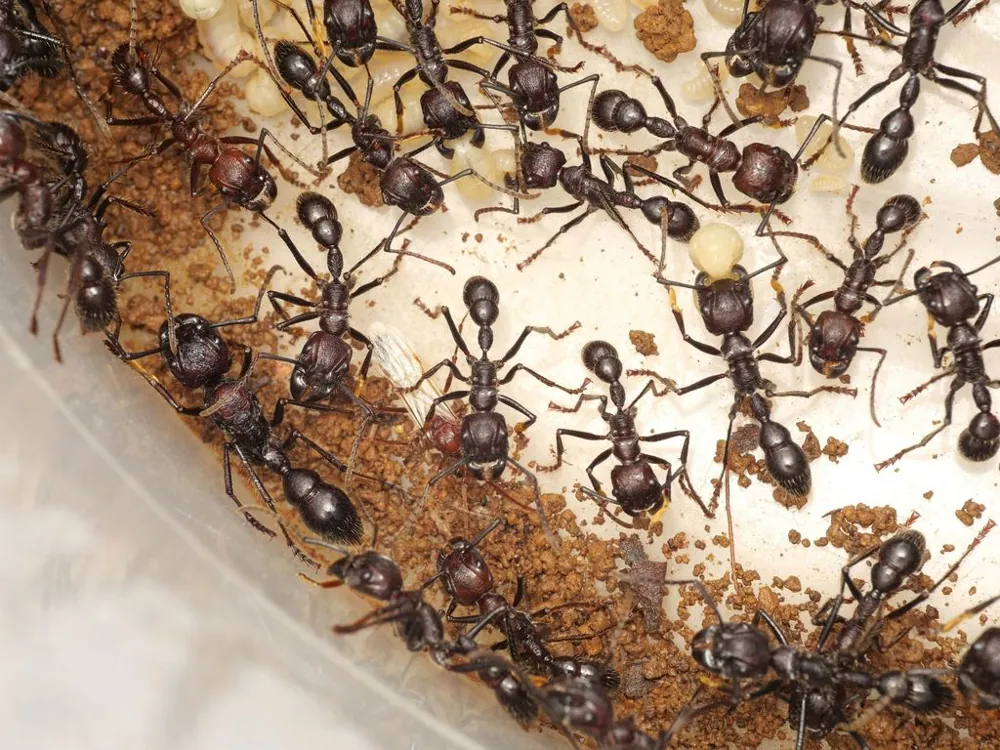
 Sɛdeɛ wobɛhunu no
Bɔre ahoɔden
Bɔre fi ne dua ano nsɔe (stinger) mu ba.
Ne bɔre yɛ dɛn?
The sting delivers poneratoxin, a paralysing neurotoxic peptide (a small protein that attacks the nerves). It affects sodium ion channels, which are needed to send nerve signals, and blocks signal transmission in the central nervous system. Common symptoms from even one sting include swollen lymph nodes, swelling (oedema), a fast heartbeat (tachycardia) and fresh blood in the faeces.1
Ne asiane ma nnipa te sɛn?
Asiane ma nnipa: Ɛyɛ yawƐtumi yɛ yaw paa, nanso ɛkame ayɛ sɛ ɛnyɛ asiane kɛseɛ da.The pain is described as burning, throbbing and all-consuming, and it can last for up to 24 hours. Workers are vicious when defending the nest, so people who disturb a nest risk being stung.1
Ɛyɛ dɛn bere a ehu aka no?
The ants are not aggressive in general, but they defend the nest viciously, producing a stridulating sound and stinging with ferocity.1
 Sɛ ɛwɔ a
- Hohoro baabi a ɛwɔɔ no na dwo.
- Sɛ onipa no ntumi nhome yie, n'anim anaa ne mene mu hono, anaa ɛyɛ no sɛ ɔrebɛtɔ piti a, ɛyɛ allergy ahohiahia: frɛ wo ahohiahia nɔma.
Di kan frɛ wo ahohiahia nɔma (112, 000, 911). Yei yɛ mmoa a ɛdi kan ho akwankyerɛ, ɛnyɛ dɔkota afotuo. Mmoa a ɛdi kan ho nsɛm titiriw
 Hwɛ wo ho so
- Mfa wo nsa nka wiram aboa biara, nkyere no na mfa no nni agorɔ, sɛ ɔyɛ ketewa mpo, na sɛ ɛte sɛ ɔrededa anaa wawu mpo a.
- Ma no kwan. Sɛ wohyia baako a, ma wo bo nnwo, san w'akyi brɛoo na ma ɔnkɔ ne kwan.
- Sɛ baako wɔ wo a: ma wo bo nnwo, tena dinn, frɛ wo ahohiahia nɔma (112, 000, 911) anaa kɔ ayaresabea ntɛm. Kae sɛdeɛ na ɛte, mfonini bɛboa.
Ɛnhwehwɛ wo sɛ ɛbɛpira wo. Ɛde ne bɔre kyere aduane anaa ɛbɔ ne ho ban, na ɛpɛ sɛ ɛhinta sene biribiara. Nsɛm pii fa ahobammɔ ho
Wiase mu baabi bɛn?
Ne kɛseɛ te sɛn?
Ne tenten te sɛn?
 ne tenten bɛyɛ sɛ paper clip
Bullet ant kɛseɛ te sɛn sɛ wode toto WO ho a?
Akontabuo kɛkɛ wɔ wo browser mu. Wɔnkora hwee, na wɔmfa hwee nkɔ baabiara.
Ne ntɛm te sɛn?


Nsɛm
Its sting is compared to walking over flaming charcoal with a three-inch nail in your heel, and some victims say it feels like being shot, which gives the ant its name.1
The Sateré-Mawé people of Brazil use bullet ant stings in initiation rites for becoming warriors or leaders. Ants are sedated and woven into gloves, and the initiate wears them for 5 to 10 minutes or longer.1
A flying fly parasite, Apocephalus paraponerae, lays eggs in injured bullet ants, and a crushed ant can attract flies within two to three minutes.1
Poneratoxin from its venom is being investigated for possible medical uses.1
The glasswing butterfly, Greta oto, is a predator of the bullet ant. Its larvae make chemical extracts that these ants find unpalatable.1
Fossils of relatives were found in Dominican amber. The extinct Paraponera dieteri lived 15 to 45 million years ago in the Early Miocene.1
Baabi a nsɛm no fi
- Paraponera clavata (Wikipedia (CC BY-SA 4.0))
- Paraponera clavata (iNaturalist): din ne nkyekyɛmu.
- Venom Wiki: asiane gyinabea, kɛseɛ a ɛtaa yɛ ne ntɛm susuo no yɛ yɛn ankasa deɛ. Hwɛ sɛdeɛ yɛbu no: Sɛdeɛ yɛkyerɛ asiane gyinabea.
Nsɛm biara a ɛwɔ kratafa yi so wɔ nɔma a ɛkyerɛ ne fibea. Sɛ yɛfom biribi a, kafra, yɛyɛ mmoa ho akɔnnɔfoɔ, ɛnyɛ nyansahu nwoma. Ka kyerɛ yɛn wɔ [email protected] na yɛbɛsiesie.
 Ɔkɔm de akekantwerɛ no! Onipa baako na ɔyɛ Venom Wiki: ɛyɛ kwa, dawurubɔ nni so na biribiara nni so a ɛdi w'akyi. Akyɛdeɛ ketewa bi boa ma ɛkɔ so tena internet so.Ma akekantwere no aduane
 Red imported fire ant
 Army ant
 Giant Amazonian ant
 Maricopa harvester ant
 Trap-jaw ant
 Acacia ant
 Terciopelo
 Eastern coral snake
 Eastern diamondback rattlesnake
 Eyelash viper
 Timber rattlesnake
 Western diamondback rattlesnake