
 Abibirem
 Asia
Asia Yuropu
 Amerika Anaafoɔ
 Australia ne Oceania
 Antarctica
 Pacific Po
 Atlantic Po
 India Po
 Arctic Po
 Mediterranean Po
 Po Kɔkɔɔ
 Caribbean Po
 Coral Po
 China Anaafoɔ Po
 Philippine Po
 Andaman Po
 Atifi Po
 Timor ne Arafura Po
 Bengal Ɛpo Ano
 California Ɛpo Ano
Discus ray
 Ɛwɔ
ƐwɔThe discus ray is a large freshwater stingray that lives in the Amazon river basin in South America. It has a flat, round body shaped like a lily pad, and it is one of the biggest rays in its family. It is a top predator in its river home.1
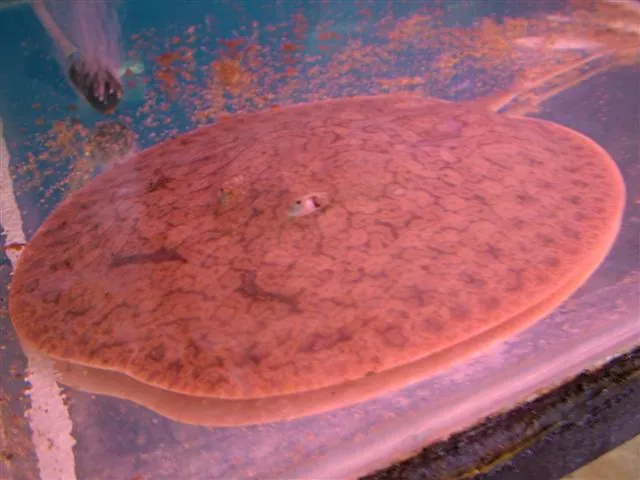
 Sɛdeɛ wobɛhunu no
Bɔre ahoɔden
Bɔre fi ne dua ano nsɔe (stinger) mu ba.
Ne asiane ma nnipa te sɛn?
Asiane ma nnipa: Ɛyɛ denSɛ ɛwɔ wo a, kɔ dɔkota nkyɛn. Ɛntaa nkum obi koraa. Sɛ ɛwɔ a
- Fa kuro no hyɛ nsuo hyew mu, ɛnyɛ hyew sene deɛ onipa no betumi agyina a ɛnhye no (fa wo ankasa wo nsa sɔ hwɛ), simma 30 kɔsi 90. Hwehwɛ dɔkota mmoa, titiriw ma stonefish ne stingray.
Di kan frɛ wo ahohiahia nɔma (112, 000, 911). Yei yɛ mmoa a ɛdi kan ho akwankyerɛ, ɛnyɛ dɔkota afotuo. Mmoa a ɛdi kan ho nsɛm titiriw
 Hwɛ wo ho so
- Mfa wo nsa nka wiram aboa biara, nkyere no na mfa no nni agorɔ, sɛ ɔyɛ ketewa mpo, na sɛ ɛte sɛ ɔrededa anaa wawu mpo a.
- Ma no kwan. Sɛ wohyia baako a, ma wo bo nnwo, san w'akyi brɛoo na ma ɔnkɔ ne kwan.
- Sɛ baako wɔ wo a: ma wo bo nnwo, tena dinn, frɛ wo ahohiahia nɔma (112, 000, 911) anaa kɔ ayaresabea ntɛm. Kae sɛdeɛ na ɛte, mfonini bɛboa.
Ɛnhwehwɛ wo sɛ ɛbɛpira wo. Ɛde ne bɔre kyere aduane anaa ɛbɔ ne ho ban, na ɛpɛ sɛ ɛhinta sene biribiara. Nsɛm pii fa ahobammɔ ho
Wiase mu baabi bɛn?
Ne kɛseɛ te sɛn?
Ne tenten te sɛn?
Ne mu duru te sɛn?

 ne tenten te sɛ fie agyinamoa 3 a wɔde hwene ne dua to ntoatoasoɔ mu
 ne tenten te sɛ kwadu 9 a wɔde to ntoatoasoɔ mu
 ɛbɛtumi aguare aguare tare kɛseɛ tenten (50 m) wɔ anibu 7,5 mu
Discus ray kɛseɛ te sɛn sɛ wode toto WO ho a?
Akontabuo kɛkɛ wɔ wo browser mu. Wɔnkora hwee, na wɔmfa hwee nkɔ baabiara.
Ne ntɛm te sɛn?

Nsɛm
It can weigh up to 110 kg.1
It is a top predator in its river habitat.1
The female carries her young for nine months and gives birth to an average of two.1
The discus ray is one of the largest species in its family of stingrays.1
Its disc is shaped roughly like a lily pad, which gives it its name.1
Atosɛm sɛefoɔ
Atosɛm: Discus rays grow much larger than 1.6 m across.
Nokorɛ: Reports of much larger individuals are unconfirmed and are considered highly questionable. Most individuals do not grow wider than 1.3 m across the disc.1
Ma bɔre ho animdefoɔ
Baabi a nsɛm no fi
- Paratrygon aiereba (Wikipedia (CC BY-SA 4.0))
- Paratrygon aiereba (iNaturalist): din ne nkyekyɛmu.
- Venom Wiki: asiane gyinabea, kɛseɛ a ɛtaa yɛ ne ntɛm susuo no yɛ yɛn ankasa deɛ. Hwɛ sɛdeɛ yɛbu no: Sɛdeɛ yɛkyerɛ asiane gyinabea.
Nsɛm biara a ɛwɔ kratafa yi so wɔ nɔma a ɛkyerɛ ne fibea. Sɛ yɛfom biribi a, kafra, yɛyɛ mmoa ho akɔnnɔfoɔ, ɛnyɛ nyansahu nwoma. Ka kyerɛ yɛn wɔ [email protected] na yɛbɛsiesie.
 Ɔkɔm de akekantwerɛ no! Onipa baako na ɔyɛ Venom Wiki: ɛyɛ kwa, dawurubɔ nni so na biribiara nni so a ɛdi w'akyi. Akyɛdeɛ ketewa bi boa ma ɛkɔ so tena internet so.Ma akekantwere no aduane
Pii fi kuo korɔ no mu: Apataa a wɔwɔ bɔre
 Ocellate river stingrayApataa a wɔwɔ bɔreƐhia dɔkota
 Xingu River rayApataa a wɔwɔ bɔreƐhia dɔkota
 Largespot river stingrayApataa a wɔwɔ bɔreƐhia dɔkota
 Smooth back river stingrayApataa a wɔwɔ bɔreƐhia dɔkota
 Amazon toadfishApataa a wɔwɔ bɔreƐyɛ yaw kɛkɛMfa wo nsa nka
 Reef stonefishApataa a wɔwɔ bɔreƐtumi kumMfa wo nsa nka
 Golden poison frog
 Terciopelo
 Brazilian wandering spider
 Eyelash viper
 Golden lancehead
 South American bushmaster