
 Abibirem
 Asia
Asia Yuropu
 Amerika Anaafoɔ
 Australia ne Oceania
 Antarctica
 Pacific Po
 Atlantic Po
 India Po
 Arctic Po
 Mediterranean Po
 Po Kɔkɔɔ
 Caribbean Po
 Coral Po
 China Anaafoɔ Po
 Philippine Po
 Andaman Po
 Atifi Po
 Timor ne Arafura Po
 Bengal Ɛpo Ano
 California Ɛpo Ano
Giant desert centipede
 Ka
KaThe giant desert centipede is the largest centipede in North America. It lives in dry deserts and rocky woodlands in the southwestern United States and northern Mexico. Its bright colours warn predators to keep away, and its bite is very painful.1



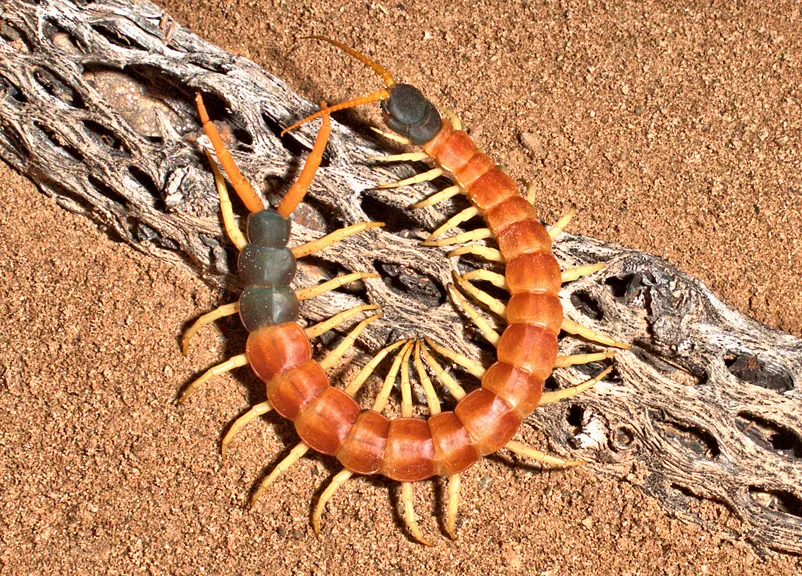
 Sɛdeɛ wobɛhunu no
Bɔre ahoɔden
Bɔre fi ne se mu ba bere a ɔka.
Ne bɔre yɛ dɛn?
Its venom is similar to that of other Scolopendra centipedes. It acts as a cytolysin, which damages cell membranes and ruptures cells, and it contains heart-affecting (cardiotoxic) proteins. The exact effects of the venom have not been fully studied, because it is hard to collect in useful amounts and breaks down quickly once processed.1
Ne asiane ma nnipa te sɛn?
Asiane ma nnipa: Ɛyɛ yawƐtumi yɛ yaw paa, nanso ɛkame ayɛ sɛ ɛnyɛ asiane kɛseɛ da.Bites cause sharp, searing pain and swelling in people, and there have never been any confirmed deaths from this species. Occasional symptoms include nausea, headache and localised skin death (necrosis). Severe cases, including kidney failure from muscle breakdown and heart attack, have been reported from Scolopendra bites in general.1
Ɛyɛ dɛn bere a ehu aka no?
Its bright warning colours are a signal to predators to leave it alone.1
 Sɛ ɛka a
- Hohoro baabi a ɛkaa no, dwo anaa fa hyɛ nsuo a ɛyɛ hyew kakra mu ma yaw no, na hwehwɛ dɔkota mmoa sɛ ɛyɛ den kɔ so a.
Di kan frɛ wo ahohiahia nɔma (112, 000, 911). Yei yɛ mmoa a ɛdi kan ho akwankyerɛ, ɛnyɛ dɔkota afotuo. Mmoa a ɛdi kan ho nsɛm titiriw
 Hwɛ wo ho so
- Mfa wo nsa nka wiram aboa biara, nkyere no na mfa no nni agorɔ, sɛ ɔyɛ ketewa mpo, na sɛ ɛte sɛ ɔrededa anaa wawu mpo a.
- Ma no kwan. Sɛ wohyia baako a, ma wo bo nnwo, san w'akyi brɛoo na ma ɔnkɔ ne kwan.
- Sɛ baako ka wo a: ma wo bo nnwo, tena dinn, frɛ wo ahohiahia nɔma (112, 000, 911) anaa kɔ ayaresabea ntɛm. Kae sɛdeɛ na ɛte, mfonini bɛboa.
Ɛnhwehwɛ wo sɛ ɛbɛpira wo. Ɛde ne bɔre kyere aduane anaa ɛbɔ ne ho ban, na ɛpɛ sɛ ɛhinta sene biribiara. Nsɛm pii fa ahobammɔ ho
Wiase mu baabi bɛn?
Ne kɛseɛ te sɛn?
Ne tenten te sɛn?
 ne tenten te sɛ agodeɛ blɔk 6 a wɔde to ntoatoasoɔ mu
 ɛbɛtumi atu mita 100 wɔ anibu 190 mu (onipa a ɔwɔ ntɛm sen biara hia 9.6)
Giant desert centipede kɛseɛ te sɛn sɛ wode toto WO ho a?
Akontabuo kɛkɛ wɔ wo browser mu. Wɔnkora hwee, na wɔmfa hwee nkɔ baabiara.
Ne ntɛm te sɛn?


Nsɛm
It can grab small flying insects out of the air.1
It is the largest centipede found in North America.1
Its colours change between variants, and the red-headed form found in Arkansas, Missouri and Texas is especially well known.1
It is a slow-growing species that can live for more than a decade.1
It grows slowly, and it keeps the same number of body segments for its whole life.1
Atosɛm sɛefoɔ
Atosɛm: A bite from this centipede is deadly.
Nokorɛ: No deaths from its bites have been confirmed. For people, the bite usually causes sharp pain and swelling in the area bitten.1
Baabi a nsɛm no fi
- Scolopendra heros (Wikipedia (CC BY-SA 4.0))
- Scolopendra heros (iNaturalist): din ne nkyekyɛmu.
- Venom Wiki: asiane gyinabea, kɛseɛ a ɛtaa yɛ ne ntɛm susuo no yɛ yɛn ankasa deɛ. Hwɛ sɛdeɛ yɛbu no: Sɛdeɛ yɛkyerɛ asiane gyinabea.
Nsɛm biara a ɛwɔ kratafa yi so wɔ nɔma a ɛkyerɛ ne fibea. Sɛ yɛfom biribi a, kafra, yɛyɛ mmoa ho akɔnnɔfoɔ, ɛnyɛ nyansahu nwoma. Ka kyerɛ yɛn wɔ [email protected] na yɛbɛsiesie.
 Ɔkɔm de akekantwerɛ no! Onipa baako na ɔyɛ Venom Wiki: ɛyɛ kwa, dawurubɔ nni so na biribiara nni so a ɛdi w'akyi. Akyɛdeɛ ketewa bi boa ma ɛkɔ so tena internet so.Ma akekantwere no aduane
 Common desert centipede
 Green centipede
 Haitian giant centipede
 Eastern red centipede
 Florida blue centipede
 Peruvian giant centipede
 Terciopelo
 Eastern coral snake
 Eastern diamondback rattlesnake
 Eyelash viper
 Timber rattlesnake
 Western diamondback rattlesnake