
 Abibirem
 Asia
Asia Yuropu
 Amerika Anaafoɔ
 Australia ne Oceania
 Antarctica
 Pacific Po
 Atlantic Po
 India Po
 Arctic Po
 Mediterranean Po
 Po Kɔkɔɔ
 Caribbean Po
 Coral Po
 China Anaafoɔ Po
 Philippine Po
 Andaman Po
 Atifi Po
 Timor ne Arafura Po
 Bengal Ɛpo Ano
 California Ɛpo Ano
Giant vinegaroon
 Ɔpete anaa ɔtu
The giant vinegaroon is a large, harmless-to-people relative of the scorpion, known for the vinegar smell it gives off when threatened. It lives in the southern United States and Mexico, where it hunts insects and other small creatures at night. It is useful to people because it eats scorpions and other pests.1



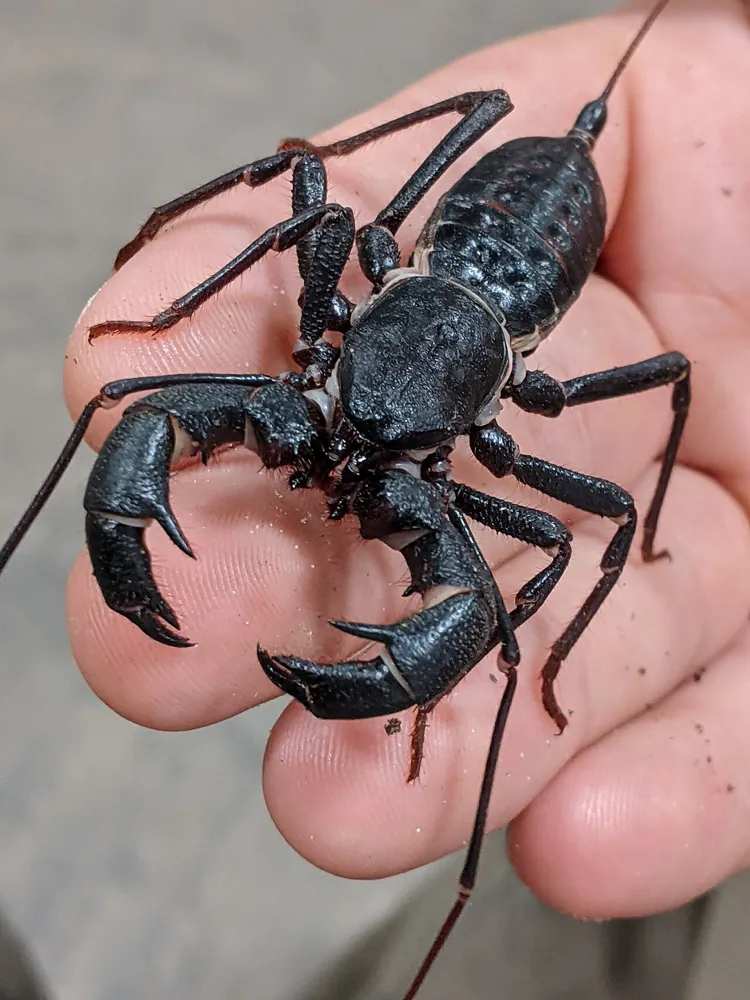
 Sɛdeɛ wobɛhunu no
- Body length is 40 to 60 millimetres, not counting the tail.1
- Has a long, thin, whip-like tail at the back.1
- Has two long front legs that it uses to feel around and sense vibrations.1
- Has two large pedipalps (front limbs) modified into claws for crushing prey.1
- When sprayed, it smells strongly of vinegar.1
Bɔre ahoɔden
Ɛpete anaa ɛtu nsuo bi a ɛhye honam gu wɔn a wɔto hyɛ no so.
Ne bɔre yɛ dɛn?
It is not venomous. From the base of its tail it sprays a liquid made of 85% acetic acid, the main component of vinegar. If the spray gets into mucous membranes or cuts, it can sting, and it can irritate the eyes.1
Ne asiane ma nnipa te sɛn?
Asiane ma nnipa: Ɛnyɛ denƐte sɛ wowa wɔ anaa ɛnnu saa. Ɛkame ayɛ sɛ ɛnni asiane ma nnipa.It seldom bites or pinches people. Its main risk is the acid spray, which can sting and cause eye irritation.1
Ɛyɛ dɛn bere a ehu aka no?
When threatened, it sprays acetic acid from the base of its tail.1
 Sɛ ɛpete gu wo so a
- Caterpillar nwi a ɛwɔ: fa sticky tape yi firi so, na afei hohoro honam no. Ntwitwi.
- Ka ho: hohoro na dwo. Hwehwɛ dɔkota mmoa sɛ onipa no ho ntɔ no anaa mogya tu no ntɛm a.
Di kan frɛ wo ahohiahia nɔma (112, 000, 911). Yei yɛ mmoa a ɛdi kan ho akwankyerɛ, ɛnyɛ dɔkota afotuo. Mmoa a ɛdi kan ho nsɛm titiriw
 Hwɛ wo ho so
- Mfa wo nsa nka wiram aboa biara, nkyere no na mfa no nni agorɔ, sɛ ɔyɛ ketewa mpo, na sɛ ɛte sɛ ɔrededa anaa wawu mpo a.
- Ma no kwan. Sɛ wohyia baako a, ma wo bo nnwo, san w'akyi brɛoo na ma ɔnkɔ ne kwan.
- Sɛ baako pete gu wo so a: ma wo bo nnwo, tena dinn, frɛ wo ahohiahia nɔma (112, 000, 911) anaa kɔ ayaresabea ntɛm. Kae sɛdeɛ na ɛte, mfonini bɛboa.
Ɛnhwehwɛ wo sɛ ɛbɛpira wo. Ɛde ne bɔre kyere aduane anaa ɛbɔ ne ho ban, na ɛpɛ sɛ ɛhinta sene biribiara. Nsɛm pii fa ahobammɔ ho
Wiase mu baabi bɛn?
Ne kɛseɛ te sɛn?
Ne tenten te sɛn?
 ne tenten te sɛ agodeɛ blɔk 2 a wɔde to ntoatoasoɔ mu
Giant vinegaroon kɛseɛ te sɛn sɛ wode toto WO ho a?
Akontabuo kɛkɛ wɔ wo browser mu. Wɔnkora hwee, na wɔmfa hwee nkɔ baabiara.
Ne ntɛm te sɛn?


Nsɛm
Its common name 'vinegaroon' comes from the vinegar smell of the acid it sprays.1
It is an efficient predator of scorpions, and it is sometimes bought for that purpose.1
Males fight each other at night in fierce battles for the chance to mate with a female.1
It has eight eyes, but they are very weak, so it finds its way mostly by feeling with its front legs, tail and pedipalps.1
Raccoons, coatis, armadillos, skunks, bears, roadrunners, lizards and tarantulas may all eat it.1
It is sold in the exotic animal trade as a pet.1
Atosɛm sɛefoɔ
Atosɛm: Giant vinegaroons are dangerous and venomous to people.
Nokorɛ: They are non-venomous and seldom bite or pinch people. The main risk is the acid spray, which can irritate the eyes or sting if it reaches cuts or mucous membranes.1
Ma bɔre ho animdefoɔ
- Nyansahu din
- Mastigoproctus giganteus
- Kuo
- Caterpillar ne mmoawa
- Abusua
- Thelyphonidae2
- Nhyehyɛeɛ (Order)
- Uropygi
- Asaase akɛseɛ
- Amerika Atifi
- Mmofra nketewa
- The female produces about 40 offspring, which she protects and feeds during their early lives. She reproduces only once.1
- Mfeɛ a ɔtena ase
- bɛyɛ mfeɛ 71
- Asiane ma nnipa
- 1 / 5: Ɛnyɛ den3
Baabi a nsɛm no fi
- Mastigoproctus giganteus (Wikipedia (CC BY-SA 4.0))
- Mastigoproctus giganteus (iNaturalist): din ne nkyekyɛmu.
- Venom Wiki: asiane gyinabea, kɛseɛ a ɛtaa yɛ ne ntɛm susuo no yɛ yɛn ankasa deɛ. Hwɛ sɛdeɛ yɛbu no: Sɛdeɛ yɛkyerɛ asiane gyinabea.
Nsɛm biara a ɛwɔ kratafa yi so wɔ nɔma a ɛkyerɛ ne fibea. Sɛ yɛfom biribi a, kafra, yɛyɛ mmoa ho akɔnnɔfoɔ, ɛnyɛ nyansahu nwoma. Ka kyerɛ yɛn wɔ [email protected] na yɛbɛsiesie.
 Ɔkɔm de akekantwerɛ no! Onipa baako na ɔyɛ Venom Wiki: ɛyɛ kwa, dawurubɔ nni so na biribiara nni so a ɛdi w'akyi. Akyɛdeɛ ketewa bi boa ma ɛkɔ so tena internet so.Ma akekantwere no aduane
Pii fi kuo korɔ no mu: Caterpillar ne mmoawa
 Giant water bugCaterpillar ne mmoawaƐyɛ yaw kɛkɛ
 Puss caterpillarCaterpillar ne mmoawaƐyɛ yaw kɛkɛMfa wo nsa nka
 Saddleback caterpillarCaterpillar ne mmoawaƐyɛ yaw kɛkɛMfa wo nsa nka
 Wheel bugCaterpillar ne mmoawaƐyɛ yaw kɛkɛ
 Rhodnius kissing bugCaterpillar ne mmoawaƐhia dɔkota
 Black-waved flannel mothCaterpillar ne mmoawaƐyɛ yaw kɛkɛMfa wo nsa nka
 Terciopelo
 Eastern coral snake
 Eastern diamondback rattlesnake
 Eyelash viper
 Timber rattlesnake
 Western diamondback rattlesnake
_face.jpg)