
 Abibirem
 Asia
Asia Yuropu
 Amerika Anaafoɔ
 Australia ne Oceania
 Antarctica
 Pacific Po
 Atlantic Po
 India Po
 Arctic Po
 Mediterranean Po
 Po Kɔkɔɔ
 Caribbean Po
 Coral Po
 China Anaafoɔ Po
 Philippine Po
 Andaman Po
 Atifi Po
 Timor ne Arafura Po
 Bengal Ɛpo Ano
 California Ɛpo Ano
Mexican beaded lizard
 Ka
KaThe Mexican beaded lizard is a venomous lizard found mainly in Mexico and southern Guatemala. It is one of only a few lizards known to have evolved a true venom delivery system. Its venom is also being studied for possible medicines.1



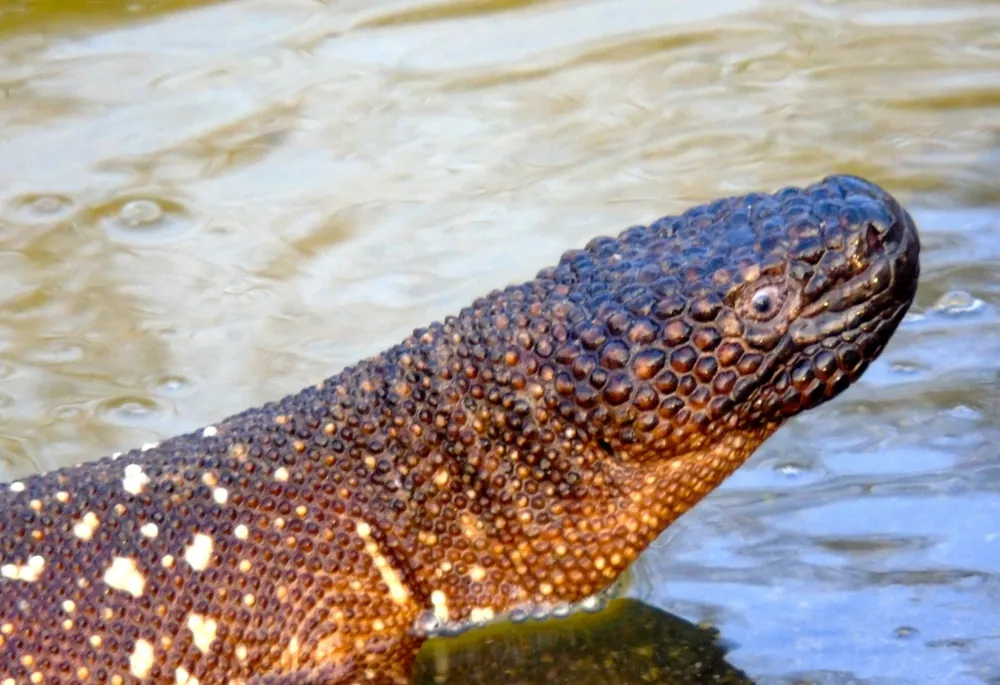
 Sɛdeɛ wobɛhunu no
- Black with yellowish spots or bands.1
- Small, beadlike scales that do not overlap, which give it its name.1
- Stocky body with a broad head.1
- Short tail that stores fat, and does not regrow if broken.1
- Adults are 57 to 91 cm long.1
Wɔtaa fa no sɛ: The Gila monster is its closest relative and looks similar. The Mexican beaded lizard is larger, and its colours are duller, black with yellowish bands.1
Bɔre ahoɔden
Bɔre fi ne se mu ba bere a ɔka.
Ne bɔre yɛ dɛn?
Its venom is a weak hemotoxin, meaning it attacks blood and tissue. It can cause respiratory failure, which is when breathing fails. In humans, bites cause severe pain that can spread well beyond the bite and last up to 24 hours, along with swelling, weakness, sweating and a rapid drop in blood pressure.1
Ne asiane ma nnipa te sɛn?
Asiane ma nnipa: Ɛyɛ denSɛ ɛka wo a, kɔ dɔkota nkyɛn. Ɛntaa nkum obi koraa.Human deaths from its bites are rare. Eight human bites were documented in the past century, and almost all happened when people prodded captive lizards with a finger or bare foot.1
 Sɛ ɛka a
- Hohoro kuro no, ma onipa no bo nnwo na hwehwɛ dɔkota mmoa.
Di kan frɛ wo ahohiahia nɔma (112, 000, 911). Yei yɛ mmoa a ɛdi kan ho akwankyerɛ, ɛnyɛ dɔkota afotuo. Mmoa a ɛdi kan ho nsɛm titiriw
 Hwɛ wo ho so
- Mfa wo nsa nka wiram aboa biara, nkyere no na mfa no nni agorɔ, sɛ ɔyɛ ketewa mpo, na sɛ ɛte sɛ ɔrededa anaa wawu mpo a.
- Ma no kwan. Sɛ wohyia baako a, ma wo bo nnwo, san w'akyi brɛoo na ma ɔnkɔ ne kwan.
- Sɛ baako ka wo a: ma wo bo nnwo, tena dinn, frɛ wo ahohiahia nɔma (112, 000, 911) anaa kɔ ayaresabea ntɛm. Kae sɛdeɛ na ɛte, mfonini bɛboa.
Ɛnhwehwɛ wo sɛ ɛbɛpira wo. Ɛde ne bɔre kyere aduane anaa ɛbɔ ne ho ban, na ɛpɛ sɛ ɛhinta sene biribiara. Nsɛm pii fa ahobammɔ ho
Wiase mu baabi bɛn?
Ne kɛseɛ te sɛn?
Ne tenten te sɛn?
Ne mu duru te sɛn?
 ne tenten te sɛ fie agyinamoa 2 a wɔde hwene ne dua to ntoatoasoɔ mu
 ne tenten te sɛ kwadu 5 a wɔde to ntoatoasoɔ mune mu duru bɛyɛ sɛ fie agyinamoa
 ɛbɛtumi atu mita 100 wɔ anibu 140 mu (onipa a ɔwɔ ntɛm sen biara hia 9.6)
Mexican beaded lizard kɛseɛ te sɛn sɛ wode toto WO ho a?
Akontabuo kɛkɛ wɔ wo browser mu. Wɔnkora hwee, na wɔmfa hwee nkɔ baabiara.
Ne ntɛm te sɛn?


Nsɛm
It is one of only two venomous beaded lizard species, and the only lizards known to have evolved an overt venom delivery system, along with the rest of its genus.1
Some compounds in its venom are being studied for possible treatments of diabetes, Alzheimer's disease and HIV. One of them, exendin-3, is the basis of the drug exenatide.1
The beaded lizard is immune to the effects of its own venom.1
It is larger than the Gila monster, with an average adult weight of 800 g, and large specimens exceed 2,000 g.1
Beaded lizards have forked pink tongues that they use to smell, with the help of a Jacobson's organ.1
Young beaded lizards are rarely seen, as they are believed to spend much of their early lives underground.1
Atosɛm sɛefoɔ
Atosɛm: The beaded lizard is more venomous than a rattlesnake, can cause lightning strikes with its tail, or can make a pregnant woman miscarry by looking at her.
Nokorɛ: These beliefs are incorrect. Its venom is weak, and human deaths are rare.1
Ma bɔre ho animdefoɔ
- Nyansahu din
- Heloderma horridum
- Kuo
- Koterɛ a wɔwɔ bɔre
- Abusua
- Helodermatidae2
- Nhyehyɛeɛ (Order)
- Squamata
- Asaase akɛseɛ
- Amerika Atifi
- Mmofra nketewa
- It lays clutches of 2 to 30 eggs in late summer or early fall, and the eggs hatch the following spring or summer.1
- Sɛdeɛ ɔte wɔ kwaem
- Threatened (Mexican law, category A). Listed on Appendix II of CITES.1
- Asiane ma nnipa
- 3 / 5: Ɛyɛ den3
Baabi a nsɛm no fi
- Mexican beaded lizard (Wikipedia (CC BY-SA 4.0))
- Heloderma horridum (iNaturalist): din ne nkyekyɛmu.
- Venom Wiki: asiane gyinabea, kɛseɛ a ɛtaa yɛ ne ntɛm susuo no yɛ yɛn ankasa deɛ. Hwɛ sɛdeɛ yɛbu no: Sɛdeɛ yɛkyerɛ asiane gyinabea.
Nsɛm biara a ɛwɔ kratafa yi so wɔ nɔma a ɛkyerɛ ne fibea. Sɛ yɛfom biribi a, kafra, yɛyɛ mmoa ho akɔnnɔfoɔ, ɛnyɛ nyansahu nwoma. Ka kyerɛ yɛn wɔ [email protected] na yɛbɛsiesie.
 Ɔkɔm de akekantwerɛ no! Onipa baako na ɔyɛ Venom Wiki: ɛyɛ kwa, dawurubɔ nni so na biribiara nni so a ɛdi w'akyi. Akyɛdeɛ ketewa bi boa ma ɛkɔ so tena internet so.Ma akekantwere no aduane
 Gila monster
 Chiapan beaded lizard
 Guatemalan beaded lizard
 Rio Fuerte beaded lizard
 Komodo dragon
 Desert monitor
 Terciopelo
 Eastern coral snake
 Eastern diamondback rattlesnake
 Eyelash viper
 Timber rattlesnake
 Western diamondback rattlesnake