
 Abibirem
 Asia
Asia Yuropu
 Amerika Anaafoɔ
 Australia ne Oceania
 Antarctica
 Pacific Po
 Atlantic Po
 India Po
 Arctic Po
 Mediterranean Po
 Po Kɔkɔɔ
 Caribbean Po
 Coral Po
 China Anaafoɔ Po
 Philippine Po
 Andaman Po
 Atifi Po
 Timor ne Arafura Po
 Bengal Ɛpo Ano
 California Ɛpo Ano
Neuwied's lancehead
 Ka
KaNeuwied's lancehead is a highly venomous pit viper found in South America. It is a relatively small snake, but it is a major cause of snakebites in Argentina. It lives east of the Andes, mostly in Brazil, Bolivia, Paraguay, Argentina and Uruguay.1
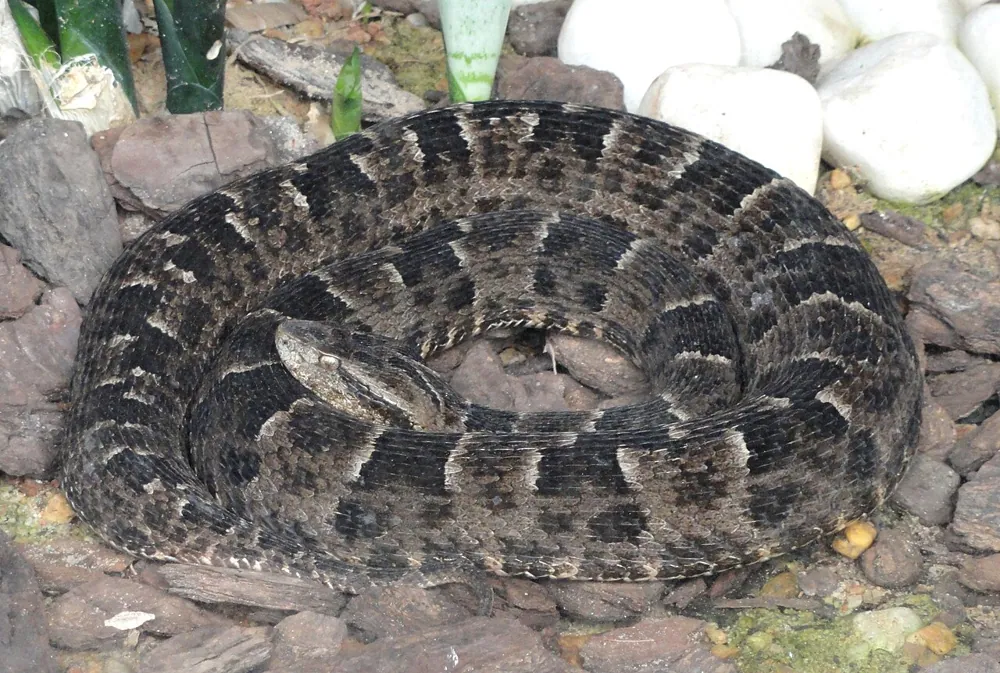
 Sɛdeɛ wobɛhunu no
- Adults average 60–70 cm in total length, including the tail, but can grow to about 100 cm.1
- The ground colour is brown or dark brown.1
- A row of 16–27 dark brown or black blotches runs along the body, each edged in white.1
- The belly is white or yellow with grey speckling.1
- Young snakes have a white tail tip.1
Bɔre ahoɔden
Bɔre fi ne se mu ba bere a ɔka.
Ne bɔre yɛ dɛn?
This snake is highly venomous. Its venom causes pain, swelling, bruising and necrosis (death of body tissue), and it can also lead to abscesses. The venom disturbs blood clotting: the venom has thrombin-like proteases, which slow the clotting of fibrinogen, a protein needed to form clots. Bites can also cause high blood pressure and collapse.1
Ne asiane ma nnipa te sɛn?
Asiane ma nnipa: Asiane kɛseɛ womƐtumi kum onipa a wɔnhwɛ no yareɛ.This species is one of the main causes of snakebite in Argentina. Between 1960 and 1975, about 500 cases were reported there each year, and 80% of them were attributed to one subspecies, B. n. diporus. In a study of 18 bite cases admitted to a hospital in São Paulo from 1975 to 1992, all patients had pain, 83% had swelling, 50% had bruising, 17% had necrosis and 12% developed coagulopathy (a clotting disorder).1
 Asɛmpa: dɔkotafoɔ wɔ aduro (antivenom) anaa ayaresa ma yei.1
 Sɛ ɛka a
- Three antivenins made by the Instituto Butantan in Brazil can be used to treat bites from this species. Treatment with heparin might help the clotting problems caused by the venom.1
- Ma onipa no ntena dinn na ne bo nnwo, ma nsa anaa nan a ɛkaa no no nna pɛpɛɛpɛ ne ne koma (ɛnkɔ soro, ɛnsiane fam), yi kawa ne nneɛma a ɛkyere no den, na kɔ ayaresabea ntɛm.
Di kan frɛ wo ahohiahia nɔma (112, 000, 911). Yei yɛ mmoa a ɛdi kan ho akwankyerɛ, ɛnyɛ dɔkota afotuo. Mmoa a ɛdi kan ho nsɛm titiriw
 Hwɛ wo ho so
- Mfa wo nsa nka wiram aboa biara, nkyere no na mfa no nni agorɔ, sɛ ɔyɛ ketewa mpo, na sɛ ɛte sɛ ɔrededa anaa wawu mpo a.
- Ma no kwan. Sɛ wohyia baako a, ma wo bo nnwo, san w'akyi brɛoo na ma ɔnkɔ ne kwan.
- Sɛ baako ka wo a: ma wo bo nnwo, tena dinn, frɛ wo ahohiahia nɔma (112, 000, 911) anaa kɔ ayaresabea ntɛm. Kae sɛdeɛ na ɛte, mfonini bɛboa.
Ɛnhwehwɛ wo sɛ ɛbɛpira wo. Ɛde ne bɔre kyere aduane anaa ɛbɔ ne ho ban, na ɛpɛ sɛ ɛhinta sene biribiara. Nsɛm pii fa ahobammɔ ho
Wiase mu baabi bɛn?
Ne kɛseɛ te sɛn?
Ne tenten te sɛn?
 ne tenten te sɛ fie agyinamoa 2 a wɔde hwene ne dua to ntoatoasoɔ mu
 ne tenten te sɛ kwadu 6 a wɔde to ntoatoasoɔ mu
 ɛbɛtumi atu mita 100 wɔ anibu 100 mu (onipa a ɔwɔ ntɛm sen biara hia 9.6)
Neuwied's lancehead kɛseɛ te sɛn sɛ wode toto WO ho a?
Akontabuo kɛkɛ wɔ wo browser mu. Wɔnkora hwee, na wɔmfa hwee nkɔ baabiara.
Ne ntɛm te sɛn?


Nsɛm
Baabi a nsɛm no fi
- Bothrops neuwiedi (Wikipedia (CC BY-SA 4.0))
- Bothrops neuwiedi (iNaturalist): din ne nkyekyɛmu.
- Venom Wiki: asiane gyinabea, kɛseɛ a ɛtaa yɛ ne ntɛm susuo no yɛ yɛn ankasa deɛ. Hwɛ sɛdeɛ yɛbu no: Sɛdeɛ yɛkyerɛ asiane gyinabea.
Nsɛm biara a ɛwɔ kratafa yi so wɔ nɔma a ɛkyerɛ ne fibea. Sɛ yɛfom biribi a, kafra, yɛyɛ mmoa ho akɔnnɔfoɔ, ɛnyɛ nyansahu nwoma. Ka kyerɛ yɛn wɔ [email protected] na yɛbɛsiesie.
 Ɔkɔm de akekantwerɛ no! Onipa baako na ɔyɛ Venom Wiki: ɛyɛ kwa, dawurubɔ nni so na biribiara nni so a ɛdi w'akyi. Akyɛdeɛ ketewa bi boa ma ɛkɔ so tena internet so.Ma akekantwere no aduane
Pii fi kuo korɔ no mu: Pit viper
 Terciopelo
 Eyelash viper
 Golden lancehead
 South American bushmaster
 Common lancehead
 Jararaca
Ɔte nso wɔ: Amerika Anaafoɔ
 Golden poison frogApɔtorɔwa a wɔn ho yɛ awuduro, apɔtorɔ ne newtƐkumMfa wo nsa nka
 Brazilian wandering spiderAnanseƐtumi kum
 Cane toadApɔtorɔwa a wɔn ho yɛ awuduro, apɔtorɔ ne newtƐhia dɔkotaMfa wo nsa nka
 Peruvian giant centipedeCentipedeƐhia dɔkota
 Bullet antTɛteaƐyɛ yaw kɛkɛ
 Common vampire batNufoɔ mmoa a wɔwɔ bɔreƐyɛ yaw kɛkɛ