
 Abibirem
 Asia
Asia Yuropu
 Amerika Anaafoɔ
 Australia ne Oceania
 Antarctica
 Pacific Po
 Atlantic Po
 India Po
 Arctic Po
 Mediterranean Po
 Po Kɔkɔɔ
 Caribbean Po
 Coral Po
 China Anaafoɔ Po
 Philippine Po
 Andaman Po
 Atifi Po
 Timor ne Arafura Po
 Bengal Ɛpo Ano
 California Ɛpo Ano
Paraguayan three-striped scorpion
 Ɛwɔ
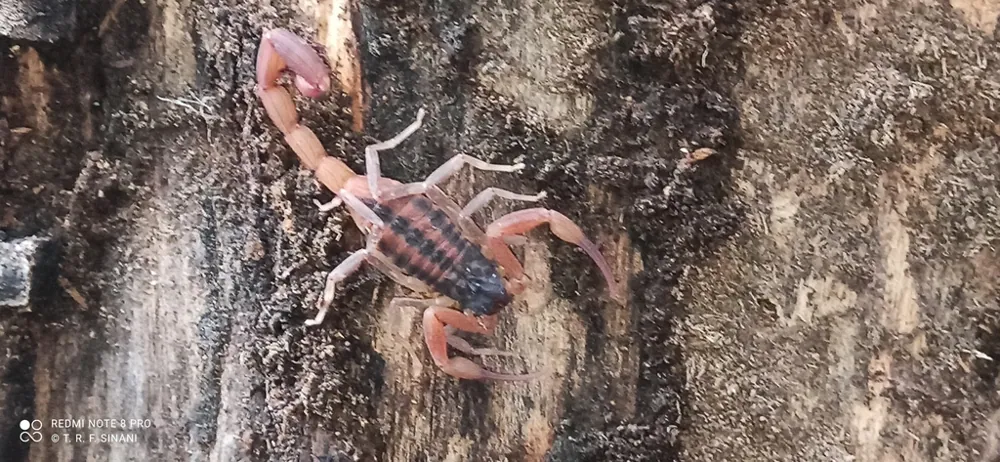
ƐwɔThis is a scorpion from South America, also called the Brazilian red house scorpion. It lives in Brazil, Argentina, Paraguay and Uruguay, and it is often found in people's homes. Its sting can cause serious symptoms, so it is important to know what it looks like.1

 Sɛdeɛ wobɛhunu no
- The back of the body is yellow or reddish-yellow.1
- The legs, pedipalps (the front limbs used like tweezers) and tail are pale yellow or yellow-brown.1
- The legs and pedipalps may have dark segmented marks.1
- Young scorpions are reddish, with dark spots on the legs.1
- It is nocturnal, so it is mostly active at night.1
Bɔre ahoɔden
Bɔre fi ne dua ano nsɔe (stinger) mu ba.
Ne bɔre yɛ dɛn?
The venom causes pain in most cases, and swelling, burning, redness and itching around the sting are also common. Neurological symptoms include tingling, cramps, excitement and headache. Other reported symptoms include pale skin, a fast heartbeat, difficulty breathing, low blood pressure, an irregular heartbeat and chest pain, along with low body temperature in some cases. Vomiting, nausea and sweating can also occur.1
Ne asiane ma nnipa te sɛn?
Asiane ma nnipa: Ɛyɛ denSɛ ɛwɔ wo a, kɔ dɔkota nkyɛn. Ɛntaa nkum obi koraa.It is the main cause of more serious scorpion accidents in Argentina. It is not usually aggressive. How severe a sting is depends on the age of the person stung and the amount of venom injected.1
Ɛyɛ dɛn bere a ehu aka no?
It can sting to defend itself when it is handled, stepped on, or hidden in clothing when someone is getting dressed.1
 Sɛ ɛwɔ a
- Fa ice pack dwo baabi a ɛwɔɔ no, na ma onipa no ntena dinn. Hwehwɛ dɔkota mmoa ntɛm, titiriw ma mmofra: akekantwerɛ bi tumi kum mmofra.
Di kan frɛ wo ahohiahia nɔma (112, 000, 911). Yei yɛ mmoa a ɛdi kan ho akwankyerɛ, ɛnyɛ dɔkota afotuo. Mmoa a ɛdi kan ho nsɛm titiriw
 Hwɛ wo ho so
- Mfa wo nsa nka wiram aboa biara, nkyere no na mfa no nni agorɔ, sɛ ɔyɛ ketewa mpo, na sɛ ɛte sɛ ɔrededa anaa wawu mpo a.
- Ma no kwan. Sɛ wohyia baako a, ma wo bo nnwo, san w'akyi brɛoo na ma ɔnkɔ ne kwan.
- Sɛ baako wɔ wo a: ma wo bo nnwo, tena dinn, frɛ wo ahohiahia nɔma (112, 000, 911) anaa kɔ ayaresabea ntɛm. Kae sɛdeɛ na ɛte, mfonini bɛboa.
Ɛnhwehwɛ wo sɛ ɛbɛpira wo. Ɛde ne bɔre kyere aduane anaa ɛbɔ ne ho ban, na ɛpɛ sɛ ɛhinta sene biribiara. Nsɛm pii fa ahobammɔ ho
Wiase mu baabi bɛn?
Ne kɛseɛ te sɛn?
Ne tenten te sɛn?
 ne tenten te sɛ agodeɛ blɔk 2 a wɔde to ntoatoasoɔ mu
 ɛbɛtumi atu mita 100 wɔ anibu 260 mu (onipa a ɔwɔ ntɛm sen biara hia 9.6)
Paraguayan three-striped scorpion kɛseɛ te sɛn sɛ wode toto WO ho a?
Akontabuo kɛkɛ wɔ wo browser mu. Wɔnkora hwee, na wɔmfa hwee nkɔ baabiara.
Ne ntɛm te sɛn?


Nsɛm
In Argentina it is the species behind most of the more serious scorpion stings.1
It uses its pedipalps like tweezers to hold prey before it stings.1
It is found only in South America, where it is common in houses.1
It hides in small gaps such as cracks, pipes, under floors and behind baseboards.1
Its young are reddish with dark spots on their legs, unlike the yellow-brown adults.1
Baabi a nsɛm no fi
- Tityus trivittatus (Wikipedia (CC BY-SA 4.0))
- Tityus trivittatus (iNaturalist): din ne nkyekyɛmu.
- Venom Wiki: asiane gyinabea, kɛseɛ a ɛtaa yɛ ne ntɛm susuo no yɛ yɛn ankasa deɛ. Hwɛ sɛdeɛ yɛbu no: Sɛdeɛ yɛkyerɛ asiane gyinabea.
Nsɛm biara a ɛwɔ kratafa yi so wɔ nɔma a ɛkyerɛ ne fibea. Sɛ yɛfom biribi a, kafra, yɛyɛ mmoa ho akɔnnɔfoɔ, ɛnyɛ nyansahu nwoma. Ka kyerɛ yɛn wɔ [email protected] na yɛbɛsiesie.
 Ɔkɔm de akekantwerɛ no! Onipa baako na ɔyɛ Venom Wiki: ɛyɛ kwa, dawurubɔ nni so na biribiara nni so a ɛdi w'akyi. Akyɛdeɛ ketewa bi boa ma ɛkɔ so tena internet so.Ma akekantwere no aduane
 Brazilian yellow scorpion
 Amazonian black scorpion
 Caracas scorpion
 Panamanian black scorpion
 Zulia scorpion
 Amazon forest scorpion
 Golden poison frog
 Terciopelo
 Brazilian wandering spider
 Eyelash viper
 Golden lancehead
 South American bushmaster