
 Abibirem
 Asia
Asia Yuropu
 Amerika Anaafoɔ
 Australia ne Oceania
 Antarctica
 Pacific Po
 Atlantic Po
 India Po
 Arctic Po
 Mediterranean Po
 Po Kɔkɔɔ
 Caribbean Po
 Coral Po
 China Anaafoɔ Po
 Philippine Po
 Andaman Po
 Atifi Po
 Timor ne Arafura Po
 Bengal Ɛpo Ano
 California Ɛpo Ano
Queensland whistling tarantula
 Ka
KaThe Queensland whistling tarantula is a large, shy spider from the east coast of Queensland in Australia. It is the largest spider in Australia, and it makes a hissing sound when it feels threatened. Its bite is venomous, but it is not fatal to people.1


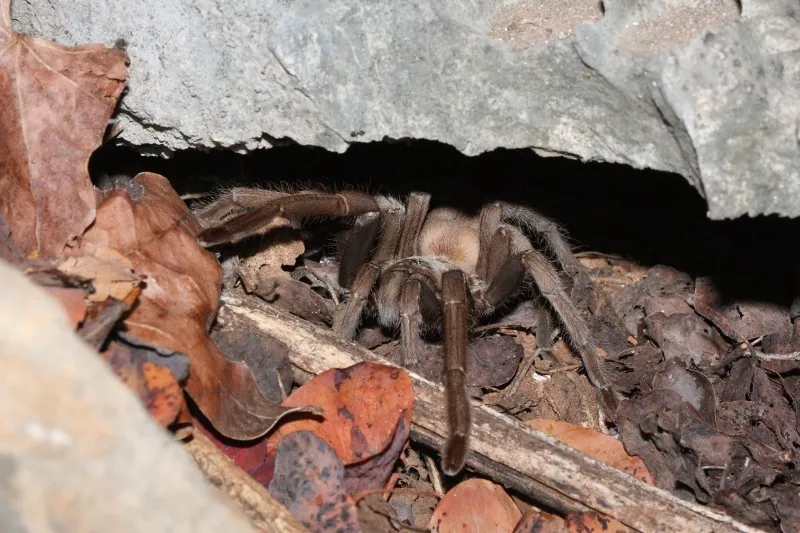
 Sɛdeɛ wobɛhunu no
Bɔre ahoɔden
Bɔre fi ne se mu ba bere a ɔka.
Ne bɔre yɛ dɛn?
It has venomous fangs up to 1 cm long. A bite can cause up to six hours of vomiting in people. In a 2010 case, a scientist bitten on a finger had intense pain, and the finger and hand became swollen and very sensitive within one hour. The swelling and pain were limited to the hand and lower arm, and eased after 26 hours. The venom can kill a dog or cat within thirty minutes.1
Ne asiane ma nnipa te sɛn?
Asiane ma nnipa: Ɛyɛ yawƐtumi yɛ yaw paa, nanso ɛkame ayɛ sɛ ɛnyɛ asiane kɛseɛ da.The bite is not fatal to humans. It can cause severe pain, swelling and up to six hours of vomiting. The venom can cause death in dogs and cats within thirty minutes.1
Ɛyɛ dɛn bere a ehu aka no?
When provoked, it makes a hissing noise by rubbing a patch of hairs (setae) on its chelicerae, which are its mouthparts.1
 Sɛ ɛka a
- Hohoro baabi a ɛkaa no na dwo. Hwehwɛ dɔkota mmoa sɛ yaw no mu yɛ den anaa onipa no ho ntɔ no a.
- Wɔ Australia, ananse tuntum kɛseɛ biara ka no, hwɛ no sɛ funnel-web ka: Pressure immobilisation: fa elastic bandage a ɛyɛ den kyekyere baabi a ɛkaa no so, na afei kyekyere kɔ soro wɔ nsa anaa nan no nyinaa so, fa splint kyekyere ho, na ma onipa no ntena dinn koraa kosi sɛ mmoa bɛba.
Di kan frɛ wo ahohiahia nɔma (112, 000, 911). Yei yɛ mmoa a ɛdi kan ho akwankyerɛ, ɛnyɛ dɔkota afotuo. Mmoa a ɛdi kan ho nsɛm titiriw
 Hwɛ wo ho so
- Mfa wo nsa nka wiram aboa biara, nkyere no na mfa no nni agorɔ, sɛ ɔyɛ ketewa mpo, na sɛ ɛte sɛ ɔrededa anaa wawu mpo a.
- Ma no kwan. Sɛ wohyia baako a, ma wo bo nnwo, san w'akyi brɛoo na ma ɔnkɔ ne kwan.
- Sɛ baako ka wo a: ma wo bo nnwo, tena dinn, frɛ wo ahohiahia nɔma (112, 000, 911) anaa kɔ ayaresabea ntɛm. Kae sɛdeɛ na ɛte, mfonini bɛboa.
Ɛnhwehwɛ wo sɛ ɛbɛpira wo. Ɛde ne bɔre kyere aduane anaa ɛbɔ ne ho ban, na ɛpɛ sɛ ɛhinta sene biribiara. Nsɛm pii fa ahobammɔ ho
Wiase mu baabi bɛn?
Ne kɛseɛ te sɛn?
Ne tenten te sɛn?
 ne tenten te sɛ agodeɛ blɔk 7 a wɔde to ntoatoasoɔ mu
 ɛbɛtumi atu mita 100 wɔ anibu 170 mu (onipa a ɔwɔ ntɛm sen biara hia 9.6)
Queensland whistling tarantula kɛseɛ te sɛn sɛ wode toto WO ho a?
Akontabuo kɛkɛ wɔ wo browser mu. Wɔnkora hwee, na wɔmfa hwee nkɔ baabiara.
Ne ntɛm te sɛn?


Nsɛm
It is often called the barking spider because of the hissing sound it makes when approached.1
It is the largest spider in Australia, and its body can be up to 9 cm long.1
Adults dig silk-lined burrows up to 2 metres long, with a side tunnel leading up to an air pocket chamber that can last a few days.1
Females can live up to thirty years, while males live up to eight years.1
Many of these spiders are taken from the wild, often illegally, which threatens the wild population.1
It is a fast-growing spider and is widely sought after as a pet.1
Atosɛm sɛefoɔ
Atosɛm: It is a bird-eating spider.
Nokorɛ: This nocturnal ground dweller is not likely to ever encounter or feed on birds. It mainly eats insects, other spiders, and small animals such as geckos, skinks and frogs.1
Baabi a nsɛm no fi
- Selenocosmia crassipes (Wikipedia (CC BY-SA 4.0))
- Selenocosmia crassipes (iNaturalist): din ne nkyekyɛmu.
- Venom Wiki: asiane gyinabea, kɛseɛ a ɛtaa yɛ ne ntɛm susuo no yɛ yɛn ankasa deɛ. Hwɛ sɛdeɛ yɛbu no: Sɛdeɛ yɛkyerɛ asiane gyinabea.
Nsɛm biara a ɛwɔ kratafa yi so wɔ nɔma a ɛkyerɛ ne fibea. Sɛ yɛfom biribi a, kafra, yɛyɛ mmoa ho akɔnnɔfoɔ, ɛnyɛ nyansahu nwoma. Ka kyerɛ yɛn wɔ [email protected] na yɛbɛsiesie.
 Ɔkɔm de akekantwerɛ no! Onipa baako na ɔyɛ Venom Wiki: ɛyɛ kwa, dawurubɔ nni so na biribiara nni so a ɛdi w'akyi. Akyɛdeɛ ketewa bi boa ma ɛkɔ so tena internet so.Ma akekantwere no aduane
Pii fi kuo korɔ no mu: Tarantula ne funnel-web
 Sydney funnel-web spiderTarantula ne funnel-webƐkum
 Northern tree-dwelling funnel-web spiderTarantula ne funnel-webƐkum
 Red-headed mouse spiderTarantula ne funnel-webƐhia dɔkota
 Blue Mountains funnel-web spiderTarantula ne funnel-webƐtumi kum
 Darling Downs funnel-web spiderTarantula ne funnel-webƐtumi kum
 Illawarra funnel-web spiderTarantula ne funnel-webƐtumi kum
 Coastal taipan
 Common death adder
 Eastern brown snake
 Taipan a ɔwɔ Australia mfinimfini
 Ɔwɔ a ɔte sɛ ɔsebɔ (Tiger snake)
 Redback spider