
 Abibirem
 Asia
Asia Yuropu
 Amerika Anaafoɔ
 Australia ne Oceania
 Antarctica
 Pacific Po
 Atlantic Po
 India Po
 Arctic Po
 Mediterranean Po
 Po Kɔkɔɔ
 Caribbean Po
 Coral Po
 China Anaafoɔ Po
 Philippine Po
 Andaman Po
 Atifi Po
 Timor ne Arafura Po
 Bengal Ɛpo Ano
 California Ɛpo Ano
Sonoran lyre snake
 Ka
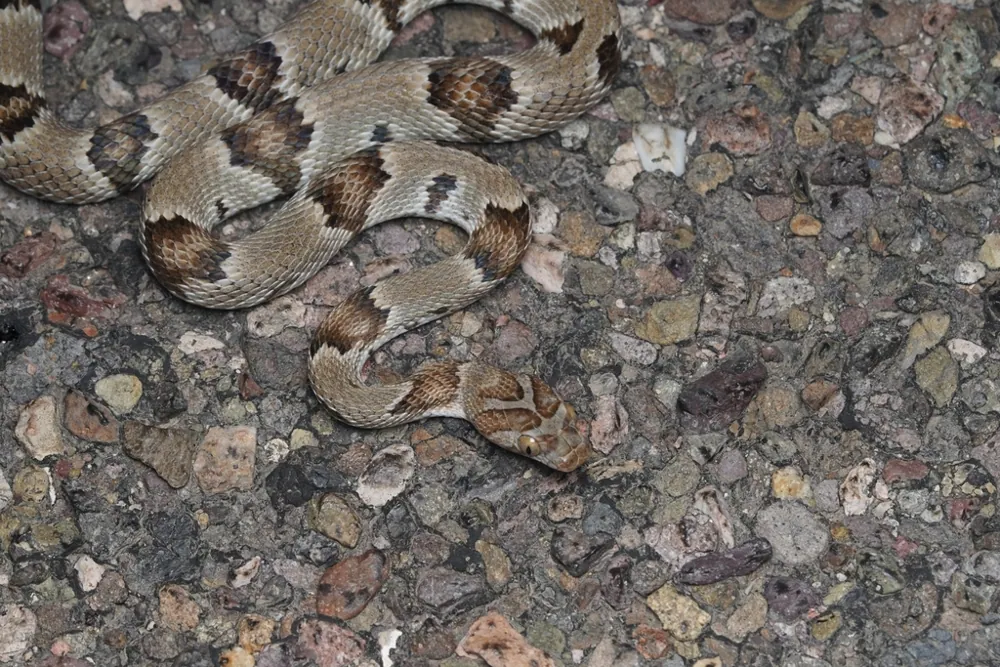
KaThe Sonoran lyre snake is a slender, medium to large snake with a distinctive V-shaped mark on top of its head. It lives among rocks in the American Southwest and northwestern Mexico. It is a rear-fanged snake, so its fangs sit at the back of its mouth.1



 Sɛdeɛ wobɛhunu no
- A V-shaped or lyre-like mark on the top of the head, which gives it its name1
- Pale grey, tan or light brown ground colour1
- 18 to 31 dark brown saddles or blotches along the back, with pale edges1
- A dark bar across the snout between the eyes1
- A broad, flat head that is clearly wider than its slim neck, with large eyes that have vertical pupils1
Bɔre ahoɔden
Bɔre fi ne se mu ba bere a ɔka.
Ne bɔre yɛ dɛn?
It is a rear-fanged (opisthoglyphous) snake, meaning its fangs are at the back of the mouth. Its venom is relatively mild and is adapted to subdue small, fast lizards and mammals. Because the fangs are at the back, it usually has to chew on its target to inject enough venom.1
Ne asiane ma nnipa te sɛn?
Asiane ma nnipa: Ɛnyɛ denƐte sɛ wowa wɔ anaa ɛnnu saa. Ɛkame ayɛ sɛ ɛnni asiane ma nnipa.The venom is generally considered harmless to people. A bite may cause mild pain and swelling around the bite, but it is not medically significant.1
 Sɛ ɛka a
- Hohoro baabi a ɛkaa no, ma onipa no bo nnwo na hwehwɛ dɔkota mmoa. Awɔ bi (te sɛ boomslang) betumi akum nnɔnhwerew pii akyi.
Di kan frɛ wo ahohiahia nɔma (112, 000, 911). Yei yɛ mmoa a ɛdi kan ho akwankyerɛ, ɛnyɛ dɔkota afotuo. Mmoa a ɛdi kan ho nsɛm titiriw
 Hwɛ wo ho so
- Mfa wo nsa nka wiram aboa biara, nkyere no na mfa no nni agorɔ, sɛ ɔyɛ ketewa mpo, na sɛ ɛte sɛ ɔrededa anaa wawu mpo a.
- Ma no kwan. Sɛ wohyia baako a, ma wo bo nnwo, san w'akyi brɛoo na ma ɔnkɔ ne kwan.
- Sɛ baako ka wo a: ma wo bo nnwo, tena dinn, frɛ wo ahohiahia nɔma (112, 000, 911) anaa kɔ ayaresabea ntɛm. Kae sɛdeɛ na ɛte, mfonini bɛboa.
Ɛnhwehwɛ wo sɛ ɛbɛpira wo. Ɛde ne bɔre kyere aduane anaa ɛbɔ ne ho ban, na ɛpɛ sɛ ɛhinta sene biribiara. Nsɛm pii fa ahobammɔ ho
Wiase mu baabi bɛn?
Ne kɛseɛ te sɛn?
Ne tenten te sɛn?
 ne tenten te sɛ fie agyinamoa 2 a wɔde hwene ne dua to ntoatoasoɔ mu
 ne tenten te sɛ kwadu 5 a wɔde to ntoatoasoɔ mu
 ɛbɛtumi atu mita 100 wɔ anibu 71 mu (onipa a ɔwɔ ntɛm sen biara hia 9.6)
Sonoran lyre snake kɛseɛ te sɛn sɛ wode toto WO ho a?
Akontabuo kɛkɛ wɔ wo browser mu. Wɔnkora hwee, na wɔmfa hwee nkɔ baabiara.
Ne ntɛm te sɛn?


Nsɛm
Its front teeth are long and curved, its middle teeth are shorter, and its rear fangs are long and grooved.1
Its genus name, Trimorphodon, means 'three-shaped teeth', because it has three kinds of teeth in its upper jaw.1
Although it is mostly a rock dweller, it can climb steep cliffs and sometimes trees or shrubs.1
Ma bɔre ho animdefoɔ
- Nyansahu din
- Trimorphodon lambda
- Kuo
- Awɔ a wɔn bɔre se wɔ akyi
- Abusua
- Colubridae2
- Nhyehyɛeɛ (Order)
- Squamata
- Asaase akɛseɛ
- Amerika Atifi
- Mmofra nketewa
- It lays eggs. A female lays a clutch of 7 to 20 eggs in summer, and the young hatch in late summer to early fall.1
- Sɛdeɛ ɔte wɔ kwaem
- Least Concern (IUCN Red List)1
- Asiane ma nnipa
- 1 / 5: Ɛnyɛ den3
Baabi a nsɛm no fi
- Trimorphodon lambda (Wikipedia (CC BY-SA 4.0))
- Trimorphodon lambda (iNaturalist): din ne nkyekyɛmu.
- Venom Wiki: asiane gyinabea, kɛseɛ a ɛtaa yɛ ne ntɛm susuo no yɛ yɛn ankasa deɛ. Hwɛ sɛdeɛ yɛbu no: Sɛdeɛ yɛkyerɛ asiane gyinabea.
Nsɛm biara a ɛwɔ kratafa yi so wɔ nɔma a ɛkyerɛ ne fibea. Sɛ yɛfom biribi a, kafra, yɛyɛ mmoa ho akɔnnɔfoɔ, ɛnyɛ nyansahu nwoma. Ka kyerɛ yɛn wɔ [email protected] na yɛbɛsiesie.
 Ɔkɔm de akekantwerɛ no! Onipa baako na ɔyɛ Venom Wiki: ɛyɛ kwa, dawurubɔ nni so na biribiara nni so a ɛdi w'akyi. Akyɛdeɛ ketewa bi boa ma ɛkɔ so tena internet so.Ma akekantwere no aduane
Pii fi kuo korɔ no mu: Awɔ a wɔn bɔre se wɔ akyi
 Western hognose snakeAwɔ a wɔn bɔre se wɔ akyiƐnni asiane
 Brown vine snakeAwɔ a wɔn bɔre se wɔ akyiƐnni asiane
 Eastern hognose snakeAwɔ a wɔn bɔre se wɔ akyiƐnni asiane
 Green vine snakeAwɔ a wɔn bɔre se wɔ akyiƐnni asiane
 Desert night snakeAwɔ a wɔn bɔre se wɔ akyiƐnni asiane
 Night snakeAwɔ a wɔn bɔre se wɔ akyiƐnni asiane
 Terciopelo
 Eastern coral snake
 Eastern diamondback rattlesnake
 Eyelash viper
 Timber rattlesnake
 Western diamondback rattlesnake