
 Abibirem
 Asia
Asia Yuropu
 Amerika Anaafoɔ
 Australia ne Oceania
 Antarctica
 Pacific Po
 Atlantic Po
 India Po
 Arctic Po
 Mediterranean Po
 Po Kɔkɔɔ
 Caribbean Po
 Coral Po
 China Anaafoɔ Po
 Philippine Po
 Andaman Po
 Atifi Po
 Timor ne Arafura Po
 Bengal Ɛpo Ano
 California Ɛpo Ano
Tarantula hawk
 Ɛwɔ
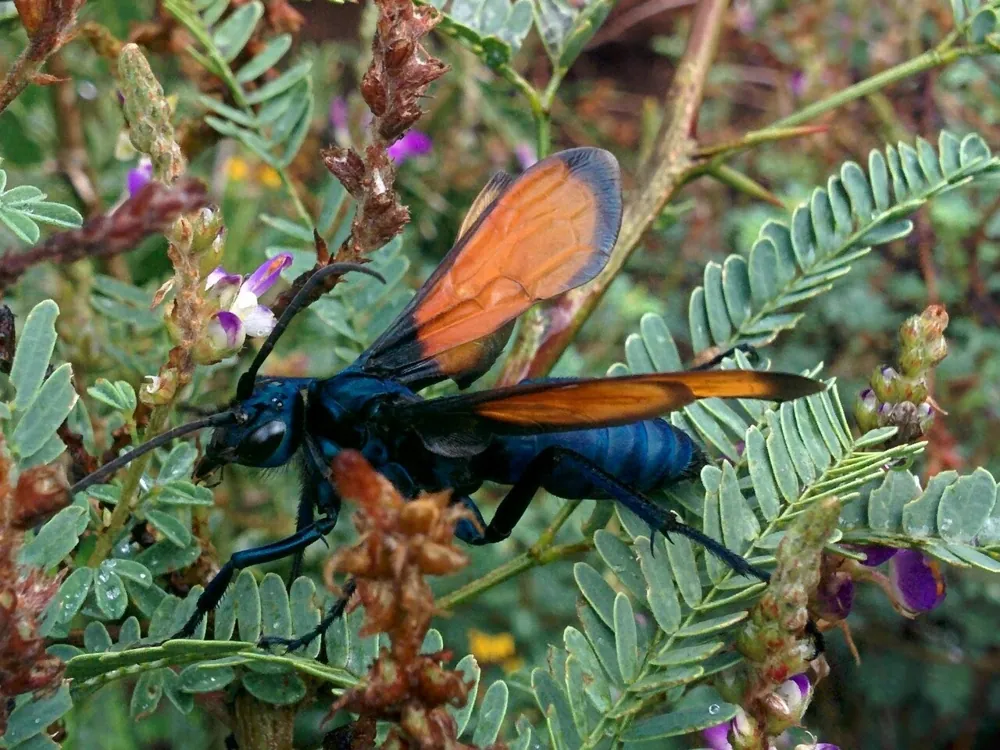
ƐwɔThe tarantula hawk is a very large wasp that hunts tarantulas, which are big hairy spiders. It lives from the southern United States through Mexico and Central America to northern South America, and also on the Caribbean islands. Its sting is among the most painful of any insect.1
 Sɛdeɛ wobɛhunu no
- Black and orange colours, with several colour forms: an orange-winged form, a black-winged form, and in northern South America a form with a dark wing base, dark amber patches and a pale wing tip1
- Females are 30–51 mm long; males are 24–40 mm long1
- Jerky movements and a strong odour1
- Males have 12 antennal segments, which separates them from other Pepsis species, which have 131
Wɔtaa fa no sɛ: The black-winged form is hard to tell apart from Pepsis mexicana, but that species is always noticeably smaller. The robber fly Wyliea mydas copies the tarantula hawk's black body and bright orange wings, and makes stinging movements, but it cannot sting.1
Bɔre ahoɔden
Bɔre fi ne dua ano nsɔe (stinger) mu ba.
Ne bɔre yɛ dɛn?
Tarantula hawks produce large amounts of venom. A sting causes immediate, intense pain that is short-lived, and it is among the greatest pain recorded for any stinging insect. The venom itself is not very toxic, so its defence works almost entirely through pain.1
Ne asiane ma nnipa te sɛn?
Asiane ma nnipa: Ɛyɛ yawƐtumi yɛ yaw paa, nanso ɛkame ayɛ sɛ ɛnyɛ asiane kɛseɛ da.Only females can sting. The sting is considered the second most painful of any insect sting, scoring 4.0 on the Schmidt sting pain index, compared with 4.0+ for the bullet ant.1
Ɛyɛ dɛn bere a ehu aka no?
Its black and orange colours, jerky behaviour and strong odour warn predators that it can sting.1
 Sɛ ɛwɔ a
- Fa biribi twitwiw wowa no dua (stinger) no fi mu, na dwo baabi no.
- Sɛ onipa no ntumi nhome yie, n'anim anaa ne mene mu hono, anaa ɛyɛ no sɛ ɔrebɛtɔ piti a, ɛyɛ allergy ahohiahia: frɛ wo ahohiahia nɔma na fa n'adrenaline pen (auto-injector) wɔ no sɛ ɔwɔ bi a.
Di kan frɛ wo ahohiahia nɔma (112, 000, 911). Yei yɛ mmoa a ɛdi kan ho akwankyerɛ, ɛnyɛ dɔkota afotuo. Mmoa a ɛdi kan ho nsɛm titiriw
 Hwɛ wo ho so
- Mfa wo nsa nka wiram aboa biara, nkyere no na mfa no nni agorɔ, sɛ ɔyɛ ketewa mpo, na sɛ ɛte sɛ ɔrededa anaa wawu mpo a.
- Ma no kwan. Sɛ wohyia baako a, ma wo bo nnwo, san w'akyi brɛoo na ma ɔnkɔ ne kwan.
- Sɛ baako wɔ wo a: ma wo bo nnwo, tena dinn, frɛ wo ahohiahia nɔma (112, 000, 911) anaa kɔ ayaresabea ntɛm. Kae sɛdeɛ na ɛte, mfonini bɛboa.
Ɛnhwehwɛ wo sɛ ɛbɛpira wo. Ɛde ne bɔre kyere aduane anaa ɛbɔ ne ho ban, na ɛpɛ sɛ ɛhinta sene biribiara. Nsɛm pii fa ahobammɔ ho
Wiase mu baabi bɛn?
Ne kɛseɛ te sɛn?
Ne tenten te sɛn?
 ɛyɛ tiaa sen wo nsateaa ketewa
 ɛbɛtumi atu atwa bɔɔlobɔ agodibea mu nyinaa wɔ anibu 8,4 mu
Tarantula hawk kɛseɛ te sɛn sɛ wode toto WO ho a?
Akontabuo kɛkɛ wɔ wo browser mu. Wɔnkora hwee, na wɔmfa hwee nkɔ baabiara.
Ne ntɛm te sɛn?


Nsɛm
The female chooses the spider's size and sex for her eggs. Fertilised eggs go on large spiders and become females, and unfertilised eggs go on male spiders and become males.1
Roadrunners sometimes steal the tarantula from a wasp and leave the wasp unharmed. Others beat the wasp against the ground before eating it.1
The tarantula hawk is the state insect of New Mexico. Almost 10,000 schoolchildren voted for it, and it was made official by a law signed in 1989.1
Wasps of the genus Pepsis are important pollinators of milkweeds, which are poisonous to grazing livestock.1
Atosɛm sɛefoɔ
Atosɛm: The tarantula hawk's sting is dangerous mainly because its venom is strongly poisonous.
Nokorɛ: The venom itself is not very toxic. Its main defence is the intense pain of the sting.1
Ma bɔre ho animdefoɔ
- Nyansahu din
- Pepsis grossa
- Kuo
- Wowa, kotokurodu ne kotokurodu akɛseɛ
- Abusua
- Pompilidae2
- Nhyehyɛeɛ (Order)
- Hymenoptera
- Asaase akɛseɛ
- Amerika Atifi, Amerika Anaafoɔ
- Mmofra nketewa
- The female lays a single egg on a paralysed spider and seals it in a chamber, and the larva eats the spider.1
- Asiane ma nnipa
- 2 / 5: Ɛyɛ yaw3
Baabi a nsɛm no fi
- Pepsis grossa (Wikipedia (CC BY-SA 4.0))
- Pepsis grossa (iNaturalist): din ne nkyekyɛmu.
- Venom Wiki: asiane gyinabea, kɛseɛ a ɛtaa yɛ ne ntɛm susuo no yɛ yɛn ankasa deɛ. Hwɛ sɛdeɛ yɛbu no: Sɛdeɛ yɛkyerɛ asiane gyinabea.
Nsɛm biara a ɛwɔ kratafa yi so wɔ nɔma a ɛkyerɛ ne fibea. Sɛ yɛfom biribi a, kafra, yɛyɛ mmoa ho akɔnnɔfoɔ, ɛnyɛ nyansahu nwoma. Ka kyerɛ yɛn wɔ [email protected] na yɛbɛsiesie.
 Ɔkɔm de akekantwerɛ no! Onipa baako na ɔyɛ Venom Wiki: ɛyɛ kwa, dawurubɔ nni so na biribiara nni so a ɛdi w'akyi. Akyɛdeɛ ketewa bi boa ma ɛkɔ so tena internet so.Ma akekantwere no aduane
Pii fi kuo korɔ no mu: Wowa, kotokurodu ne kotokurodu akɛseɛ
 Executioner waspWowa, kotokurodu ne kotokurodu akɛseɛƐhia dɔkota
 Warrior waspWowa, kotokurodu ne kotokurodu akɛseɛƐhia dɔkota
 Bald-faced hornetWowa, kotokurodu ne kotokurodu akɛseɛƐyɛ yaw kɛkɛ
 Cow killer velvet antWowa, kotokurodu ne kotokurodu akɛseɛƐyɛ yaw kɛkɛ
 Eastern cicada killerWowa, kotokurodu ne kotokurodu akɛseɛƐnni asiane
 Armadillo waspWowa, kotokurodu ne kotokurodu akɛseɛƐhia dɔkota
 Terciopelo
 Eastern coral snake
 Eastern diamondback rattlesnake
 Eyelash viper
 Timber rattlesnake
 Western diamondback rattlesnake
.jpg)