
 Abibirem
 Asia
Asia Yuropu
 Amerika Anaafoɔ
 Australia ne Oceania
 Antarctica
 Pacific Po
 Atlantic Po
 India Po
 Arctic Po
 Mediterranean Po
 Po Kɔkɔɔ
 Caribbean Po
 Coral Po
 China Anaafoɔ Po
 Philippine Po
 Andaman Po
 Atifi Po
 Timor ne Arafura Po
 Bengal Ɛpo Ano
 California Ɛpo Ano
Texas lyre snake
 Ka
KaThe Texas lyre snake is a medium-sized, mildly venomous snake that lives in deserts and rocky land in the south-western United States and northern Mexico. It is secretive and hides in rock crevices during the day, so it is often hard to spot.1



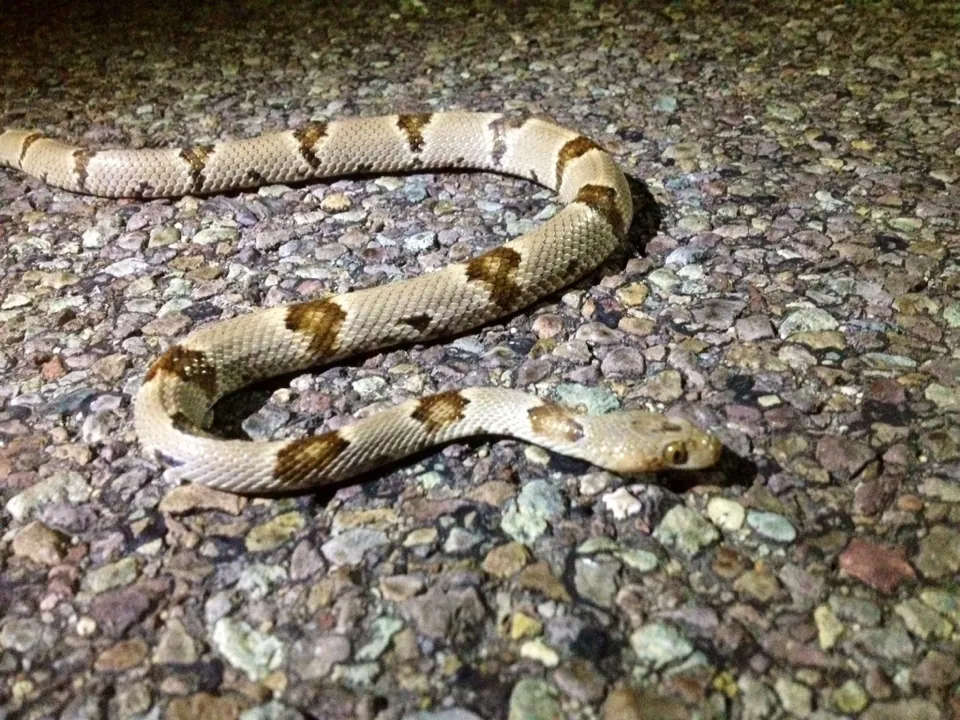
 Sɛdeɛ wobɛhunu no
- Brown, tan or grey, with 17 to 24 dark brown blotches down the back1
- Large eyes with vertical pupils1
- Medium-sized, reaching about 1 metre in total length, including the tail1
- No V-shaped mark on the head, unlike other lyre snakes1
Wɔtaa fa no sɛ: Other lyre snakes in the genus Trimorphodon have a V-shaped pattern on the head that looks like a lyre. This subspecies does not have that mark.1
Bɔre ahoɔden
Bɔre fi ne se mu ba bere a ɔka.
Ne bɔre yɛ dɛn?
This snake is mildly venomous and is rear-fanged, meaning its fangs are at the back of the mouth. Its venom is not considered harmful to humans.1
Ne asiane ma nnipa te sɛn?
Asiane ma nnipa: Ɛnyɛ denƐte sɛ wowa wɔ anaa ɛnnu saa. Ɛkame ayɛ sɛ ɛnni asiane ma nnipa.Its venom is not considered harmful to people. The snake is secretive and often difficult to find.1
 Sɛ ɛka a
- Hohoro baabi a ɛkaa no, ma onipa no bo nnwo na hwehwɛ dɔkota mmoa. Awɔ bi (te sɛ boomslang) betumi akum nnɔnhwerew pii akyi.
Di kan frɛ wo ahohiahia nɔma (112, 000, 911). Yei yɛ mmoa a ɛdi kan ho akwankyerɛ, ɛnyɛ dɔkota afotuo. Mmoa a ɛdi kan ho nsɛm titiriw
 Hwɛ wo ho so
- Mfa wo nsa nka wiram aboa biara, nkyere no na mfa no nni agorɔ, sɛ ɔyɛ ketewa mpo, na sɛ ɛte sɛ ɔrededa anaa wawu mpo a.
- Ma no kwan. Sɛ wohyia baako a, ma wo bo nnwo, san w'akyi brɛoo na ma ɔnkɔ ne kwan.
- Sɛ baako ka wo a: ma wo bo nnwo, tena dinn, frɛ wo ahohiahia nɔma (112, 000, 911) anaa kɔ ayaresabea ntɛm. Kae sɛdeɛ na ɛte, mfonini bɛboa.
Ɛnhwehwɛ wo sɛ ɛbɛpira wo. Ɛde ne bɔre kyere aduane anaa ɛbɔ ne ho ban, na ɛpɛ sɛ ɛhinta sene biribiara. Nsɛm pii fa ahobammɔ ho
Wiase mu baabi bɛn?
Ne kɛseɛ te sɛn?
Ne tenten te sɛn?
 ne tenten te sɛ fie agyinamoa 2 a wɔde hwene ne dua to ntoatoasoɔ mu
 ne tenten te sɛ kwadu 6 a wɔde to ntoatoasoɔ mu
 ɛbɛtumi atu mita 100 wɔ anibu 71 mu (onipa a ɔwɔ ntɛm sen biara hia 9.6)
Texas lyre snake kɛseɛ te sɛn sɛ wode toto WO ho a?
Akontabuo kɛkɛ wɔ wo browser mu. Wɔnkora hwee, na wɔmfa hwee nkɔ baabiara.
Ne ntɛm te sɛn?


Nsɛm
Despite its name, this subspecies has no V-shaped mark on its head, which is the pattern that gives lyre snakes their name.1
It is nocturnal, spending the day hidden in rock crevices and coming out to feed at night.1
It is seemingly common throughout its habitat, even though it is hard to find.1
It was once listed as Threatened in Texas, but it was removed from that list in 2020.1
Atosɛm sɛefoɔ
Atosɛm: The name 'lyre snake' means every lyre snake has a lyre-shaped V mark on its head.
Nokorɛ: This subspecies has no V mark on the head, even though the name refers to that pattern in other lyre snakes.1
Ma bɔre ho animdefoɔ
- Nyansahu din
- Trimorphodon vilkinsonii
- Kuo
- Awɔ a wɔn bɔre se wɔ akyi
- Abusua
- Colubridae2
- Nhyehyɛeɛ (Order)
- Squamata
- Asaase akɛseɛ
- Amerika Atifi
- Mmofra nketewa
- It lays eggs (it is oviparous), with about a dozen eggs per clutch.1
- Sɛdeɛ ɔte wɔ kwaem
- Removed from the Threatened list in Texas in 20201
- Asiane ma nnipa
- 1 / 5: Ɛnyɛ den3
Baabi a nsɛm no fi
- Texas lyre snake (Wikipedia (CC BY-SA 4.0))
- Trimorphodon vilkinsonii (iNaturalist): din ne nkyekyɛmu.
- Venom Wiki: asiane gyinabea, kɛseɛ a ɛtaa yɛ ne ntɛm susuo no yɛ yɛn ankasa deɛ. Hwɛ sɛdeɛ yɛbu no: Sɛdeɛ yɛkyerɛ asiane gyinabea.
Nsɛm biara a ɛwɔ kratafa yi so wɔ nɔma a ɛkyerɛ ne fibea. Sɛ yɛfom biribi a, kafra, yɛyɛ mmoa ho akɔnnɔfoɔ, ɛnyɛ nyansahu nwoma. Ka kyerɛ yɛn wɔ [email protected] na yɛbɛsiesie.
 Ɔkɔm de akekantwerɛ no! Onipa baako na ɔyɛ Venom Wiki: ɛyɛ kwa, dawurubɔ nni so na biribiara nni so a ɛdi w'akyi. Akyɛdeɛ ketewa bi boa ma ɛkɔ so tena internet so.Ma akekantwere no aduane
Pii fi kuo korɔ no mu: Awɔ a wɔn bɔre se wɔ akyi
 Western hognose snakeAwɔ a wɔn bɔre se wɔ akyiƐnni asiane
 Brown vine snakeAwɔ a wɔn bɔre se wɔ akyiƐnni asiane
 Eastern hognose snakeAwɔ a wɔn bɔre se wɔ akyiƐnni asiane
 Green vine snakeAwɔ a wɔn bɔre se wɔ akyiƐnni asiane
 Desert night snakeAwɔ a wɔn bɔre se wɔ akyiƐnni asiane
 Night snakeAwɔ a wɔn bɔre se wɔ akyiƐnni asiane
 Terciopelo
 Eastern coral snake
 Eastern diamondback rattlesnake
 Eyelash viper
 Timber rattlesnake
 Western diamondback rattlesnake