
 Abibirem
 Asia
Asia Yuropu
 Amerika Anaafoɔ
 Australia ne Oceania
 Antarctica
 Pacific Po
 Atlantic Po
 India Po
 Arctic Po
 Mediterranean Po
 Po Kɔkɔɔ
 Caribbean Po
 Coral Po
 China Anaafoɔ Po
 Philippine Po
 Andaman Po
 Atifi Po
 Timor ne Arafura Po
 Bengal Ɛpo Ano
 California Ɛpo Ano
Trinidad chevron tarantula
 Ka
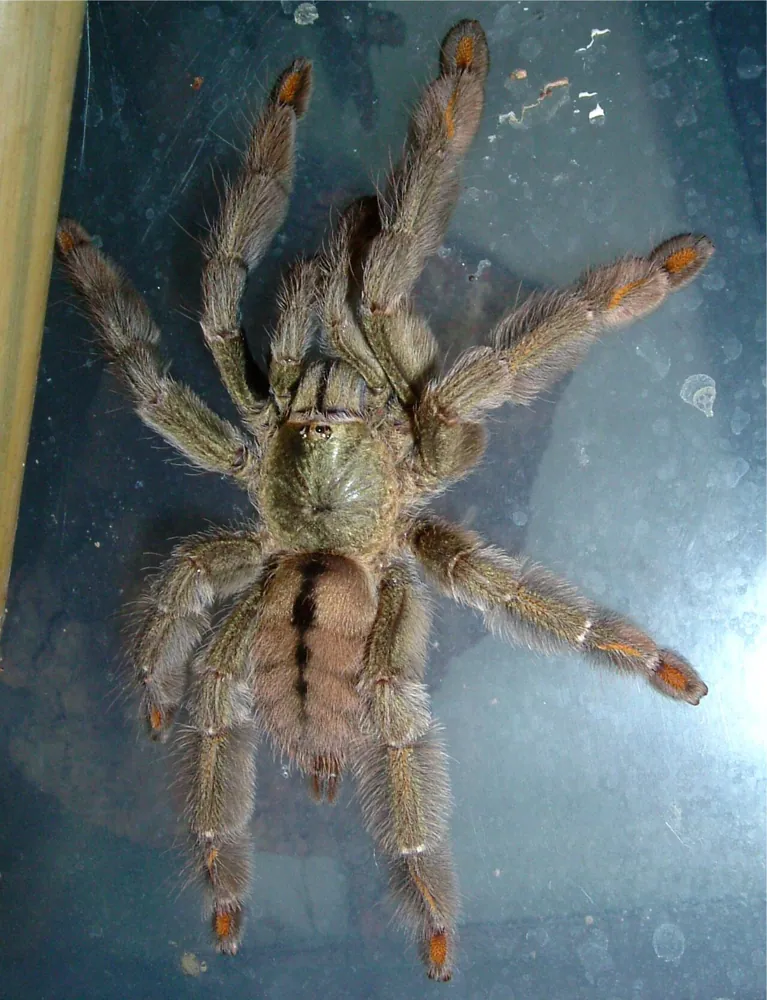
KaThe Trinidad chevron tarantula is a large hairy spider that lives only on the island of Trinidad. It spends much of its life in tree bark and crevices, and it is also a popular pet in many countries because it is easy to breed in captivity.1

 Sɛdeɛ wobɛhunu no
- Females have dark, chevron-shaped (V-shaped) markings on the abdomen.1
- Females are green, tan or brown, with orange markings on the legs.1
- Males are a more uniform grey or brown, with long legs in proportion to their body.1
- Males keep orange markings on the latter part of their legs.1
- Spiderlings are mostly dark, with pale orange bands on the legs that look like leg warmers. These bands fade as the spider grows.1
Wɔtaa fa no sɛ: The female's orange leg markings are similar to those of P. irminia, another species in the same genus.1
Bɔre ahoɔden
Bɔre fi ne se mu ba bere a ɔka.
Ne bɔre yɛ dɛn?
The venom has been studied for possible medical uses, including pain relief and the management of glioma, breast cancer and stroke. It is also of interest for managing cartilage damage in rheumatoid arthritis. The main active compound studied is psalmotoxin.1
Ne asiane ma nnipa te sɛn?
Asiane ma nnipa: Ɛyɛ yawƐtumi yɛ yaw paa, nanso ɛkame ayɛ sɛ ɛnyɛ asiane kɛseɛ da. Sɛ ɛka a
- Hohoro baabi a ɛkaa no na dwo. Hwehwɛ dɔkota mmoa sɛ yaw no mu yɛ den anaa onipa no ho ntɔ no a.
Di kan frɛ wo ahohiahia nɔma (112, 000, 911). Yei yɛ mmoa a ɛdi kan ho akwankyerɛ, ɛnyɛ dɔkota afotuo. Mmoa a ɛdi kan ho nsɛm titiriw
 Hwɛ wo ho so
- Mfa wo nsa nka wiram aboa biara, nkyere no na mfa no nni agorɔ, sɛ ɔyɛ ketewa mpo, na sɛ ɛte sɛ ɔrededa anaa wawu mpo a.
- Ma no kwan. Sɛ wohyia baako a, ma wo bo nnwo, san w'akyi brɛoo na ma ɔnkɔ ne kwan.
- Sɛ baako ka wo a: ma wo bo nnwo, tena dinn, frɛ wo ahohiahia nɔma (112, 000, 911) anaa kɔ ayaresabea ntɛm. Kae sɛdeɛ na ɛte, mfonini bɛboa.
Ɛnhwehwɛ wo sɛ ɛbɛpira wo. Ɛde ne bɔre kyere aduane anaa ɛbɔ ne ho ban, na ɛpɛ sɛ ɛhinta sene biribiara. Nsɛm pii fa ahobammɔ ho
Wiase mu baabi bɛn?
Ne kɛseɛ te sɛn?
Ne tenten te sɛn?
 ne tenten te sɛ agodeɛ blɔk 5 a wɔde to ntoatoasoɔ mu
 ɛbɛtumi atu mita 100 wɔ anibu 200 mu (onipa a ɔwɔ ntɛm sen biara hia 9.6)
Trinidad chevron tarantula kɛseɛ te sɛn sɛ wode toto WO ho a?
Akontabuo kɛkɛ wɔ wo browser mu. Wɔnkora hwee, na wɔmfa hwee nkɔ baabiara.
Ne ntɛm te sɛn?


Nsɛm
The venom is being studied for possible uses in medicine, including pain relief and treatments for some cancers and stroke.1
Spiderlings have pale orange bands on their legs that look like leg warmers. These fade as they grow.1
Males have a much shorter lifespan than females. Their life ends soon after they mature and reproduce.1
P. cambridgei has stridulatory setae (called lyra) on its maxillae. This trait was once seen only in Asian and African species.1
Baabi a nsɛm no fi
- Psalmopoeus cambridgei (Wikipedia (CC BY-SA 4.0))
- Psalmopoeus cambridgei (iNaturalist): din ne nkyekyɛmu.
- Venom Wiki: asiane gyinabea, kɛseɛ a ɛtaa yɛ ne ntɛm susuo no yɛ yɛn ankasa deɛ. Hwɛ sɛdeɛ yɛbu no: Sɛdeɛ yɛkyerɛ asiane gyinabea.
Nsɛm biara a ɛwɔ kratafa yi so wɔ nɔma a ɛkyerɛ ne fibea. Sɛ yɛfom biribi a, kafra, yɛyɛ mmoa ho akɔnnɔfoɔ, ɛnyɛ nyansahu nwoma. Ka kyerɛ yɛn wɔ [email protected] na yɛbɛsiesie.
 Ɔkɔm de akekantwerɛ no! Onipa baako na ɔyɛ Venom Wiki: ɛyɛ kwa, dawurubɔ nni so na biribiara nni so a ɛdi w'akyi. Akyɛdeɛ ketewa bi boa ma ɛkɔ so tena internet so.Ma akekantwere no aduane
Pii fi kuo korɔ no mu: Tarantula ne funnel-web
 Mexican redknee tarantulaTarantula ne funnel-webƐnni asiane
 Arizona blond tarantulaTarantula ne funnel-webƐnni asiane
 Ravine trapdoor spiderTarantula ne funnel-webƐnni asiane
 Antilles pinktoe tarantulaTarantula ne funnel-webƐnni asiane
 California trapdoor spiderTarantula ne funnel-webƐnni asiane
 Costa Rican zebra tarantulaTarantula ne funnel-webƐnni asiane
 Terciopelo
 Eastern coral snake
 Eastern diamondback rattlesnake
 Eyelash viper
 Timber rattlesnake
 Western diamondback rattlesnake