
 Abibirem
 Asia
Asia Yuropu
 Amerika Anaafoɔ
 Australia ne Oceania
 Antarctica
 Pacific Po
 Atlantic Po
 India Po
 Arctic Po
 Mediterranean Po
 Po Kɔkɔɔ
 Caribbean Po
 Coral Po
 China Anaafoɔ Po
 Philippine Po
 Andaman Po
 Atifi Po
 Timor ne Arafura Po
 Bengal Ɛpo Ano
 California Ɛpo Ano
Vinchuca kissing bug
 Ka
KaThe vinchuca, also called the kissing bug, is a blood-sucking bug found in South America. It is the most important carrier of a parasite that causes Chagas disease, and it is common in homes in the Southern Cone region.1

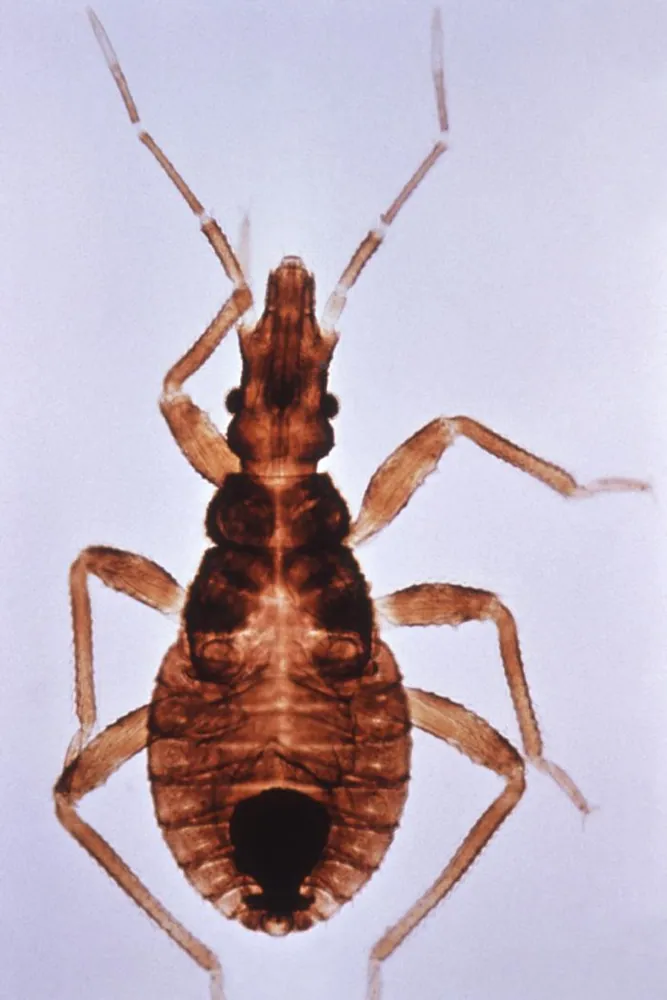
 Sɛdeɛ wobɛhunu no
Bɔre ahoɔden
Bɔre fi ne se mu ba bere a ɔka.
Ne asiane ma nnipa te sɛn?
Asiane ma nnipa: Ɛyɛ denSɛ ɛka wo a, kɔ dɔkota nkyɛn. Ɛntaa nkum obi koraa.It is the most important carrier of the parasite Trypanosoma cruzi, which can lead to Chagas disease. The parasite is passed on through the bug's faeces, not through feeding. Darwin is speculated to have died from chronic Chagas disease. A regional control programme, the Southern Cone Initiative managed by PAHO, works to control it.1
 Sɛ ɛka a
- Caterpillar nwi a ɛwɔ: fa sticky tape yi firi so, na afei hohoro honam no. Ntwitwi.
- Ka ho: hohoro na dwo. Hwehwɛ dɔkota mmoa sɛ onipa no ho ntɔ no anaa mogya tu no ntɛm a.
Di kan frɛ wo ahohiahia nɔma (112, 000, 911). Yei yɛ mmoa a ɛdi kan ho akwankyerɛ, ɛnyɛ dɔkota afotuo. Mmoa a ɛdi kan ho nsɛm titiriw
 Hwɛ wo ho so
- Mfa wo nsa nka wiram aboa biara, nkyere no na mfa no nni agorɔ, sɛ ɔyɛ ketewa mpo, na sɛ ɛte sɛ ɔrededa anaa wawu mpo a.
- Ma no kwan. Sɛ wohyia baako a, ma wo bo nnwo, san w'akyi brɛoo na ma ɔnkɔ ne kwan.
- Sɛ baako ka wo a: ma wo bo nnwo, tena dinn, frɛ wo ahohiahia nɔma (112, 000, 911) anaa kɔ ayaresabea ntɛm. Kae sɛdeɛ na ɛte, mfonini bɛboa.
Ɛnhwehwɛ wo sɛ ɛbɛpira wo. Ɛde ne bɔre kyere aduane anaa ɛbɔ ne ho ban, na ɛpɛ sɛ ɛhinta sene biribiara. Nsɛm pii fa ahobammɔ ho
Wiase mu baabi bɛn?
Ne kɛseɛ te sɛn?
Ne tenten te sɛn?
 ne tenten bɛyɛ sɛ paper clip
Vinchuca kissing bug kɛseɛ te sɛn sɛ wode toto WO ho a?
Akontabuo kɛkɛ wɔ wo browser mu. Wɔnkora hwee, na wɔmfa hwee nkɔ baabiara.
Ne ntɛm te sɛn?


Nsɛm
Charles Darwin wrote about being attacked by one on 26 March 1835, during the Beagle survey voyage.1
Transmission of the parasite happens through its faeces, not through the act of feeding.1
Transmission rates are higher in areas with few bugs, because bugs in crowded areas interrupt each other's meals and often do not get a full blood meal.1
It tends to displace other Triatominae vectors of Chagas, such as Panstrongylus megistus and T. sordida.1
Brazil's spread of this bug between 1955 and 1964 is likely due to immigrants moving north from the south.1
Baabi a nsɛm no fi
- Triatoma infestans (Wikipedia (CC BY-SA 4.0))
- Triatoma infestans (iNaturalist): din ne nkyekyɛmu.
- Venom Wiki: asiane gyinabea, kɛseɛ a ɛtaa yɛ ne ntɛm susuo no yɛ yɛn ankasa deɛ. Hwɛ sɛdeɛ yɛbu no: Sɛdeɛ yɛkyerɛ asiane gyinabea.
Nsɛm biara a ɛwɔ kratafa yi so wɔ nɔma a ɛkyerɛ ne fibea. Sɛ yɛfom biribi a, kafra, yɛyɛ mmoa ho akɔnnɔfoɔ, ɛnyɛ nyansahu nwoma. Ka kyerɛ yɛn wɔ [email protected] na yɛbɛsiesie.
 Ɔkɔm de akekantwerɛ no! Onipa baako na ɔyɛ Venom Wiki: ɛyɛ kwa, dawurubɔ nni so na biribiara nni so a ɛdi w'akyi. Akyɛdeɛ ketewa bi boa ma ɛkɔ so tena internet so.Ma akekantwere no aduane
Pii fi kuo korɔ no mu: Caterpillar ne mmoawa
 Giant silkworm moth caterpillarCaterpillar ne mmoawaƐtumi kumMfa wo nsa nka
 Venezuelan fire caterpillarCaterpillar ne mmoawaƐtumi kumMfa wo nsa nka
 Pararama caterpillarCaterpillar ne mmoawaƐhia dɔkotaMfa wo nsa nka
 Rhodnius kissing bugCaterpillar ne mmoawaƐhia dɔkota
 Yellowtail moth of the mangrovesCaterpillar ne mmoawaƐyɛ yaw kɛkɛMfa wo nsa nka
 Milkweed assassin bugCaterpillar ne mmoawaƐnni asiane
 Golden poison frog
 Terciopelo
 Brazilian wandering spider
 Eyelash viper
 Golden lancehead
 South American bushmaster