
 Bitten or stung?
 All animals
 Pick a continent
 Africa
 Asia
 Europe
 South America
 Australia & Oceania
 Antarctica
 Pacific Ocean
 Atlantic Ocean
 Indian Ocean
 Arctic Ocean
 Mediterranean Sea
 Red Sea
 Caribbean Sea
 Coral Sea
 South China Sea
 Philippine Sea
 Andaman Sea
 North Sea
 Timor & Arafura Sea
 Bay of Bengal
 Gulf of California
 Games
 Venom battle
 Animal race
 Field notebook
 Venom TOP lists
 Stay safe
 Surprise me

Broad-banded copperhead
 Bites
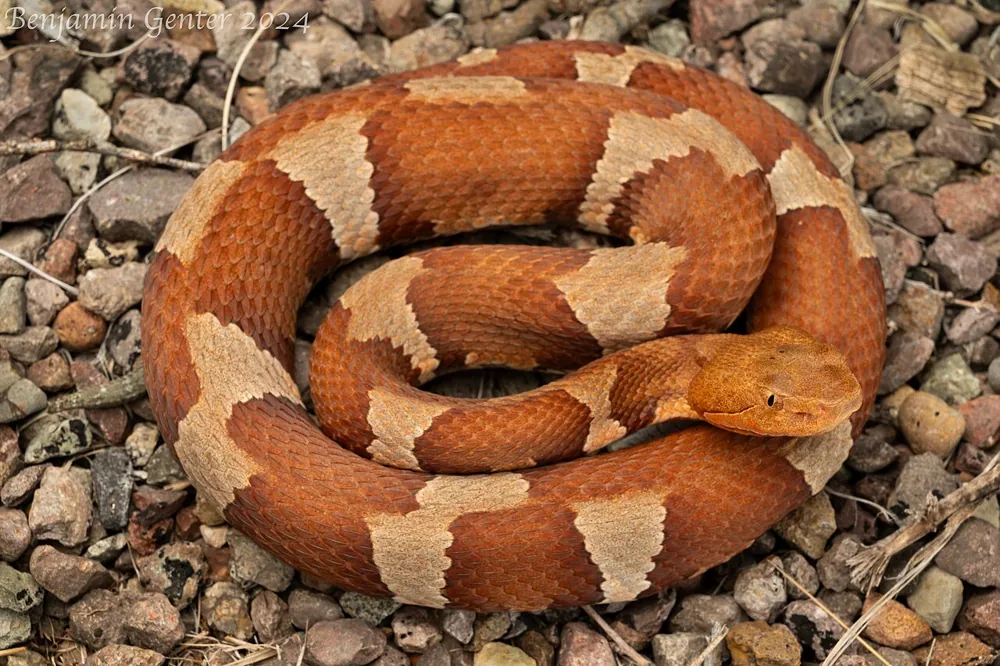
The broad-banded copperhead is a venomous pit viper, a type of snake that uses heat-sensing pits between its eyes and nostrils to find prey. It lives in the central United States, mainly Oklahoma and central Texas, and in parts of northern Mexico. For a long time it was thought to be a form of the eastern copperhead, but it is now treated as its own species.1
 How to recognise it
- Typically light tan with wide, darker brown crossbands, which give it its common name.1
- Colour varies by location, from red-brown to grey-brown.1
- The bands stay even in width. The eastern copperhead's bands narrow at the spine to form hourglass shapes.1
- Young snakes have a bright green-yellow tail tip that fades to grey or brown at about one year old.1
Often confused with: The eastern copperhead overlaps with this species in the south of its range, and the two can be hard to tell apart there. Look at the bands: the broad-banded copperhead has even bands, while the eastern copperhead's bands narrow at the spine.1
Venom power
Venom comes out through its fangs or teeth when it bites.
What does its venom do?
Its venom is hemotoxic, meaning it mainly damages blood and tissue. It is injected through hinged, hollow fangs in a single quick strike. The bite can cause localised swelling, necrosis (death of tissue at the bite site) and severe pain.1
How dangerous is it to people?
Danger to people: SeriousA bite needs a doctor. Deaths are very rare.Copperhead venom is not considered life-threatening to an otherwise healthy adult. Any bite from a venomous snake should still be treated as serious.1
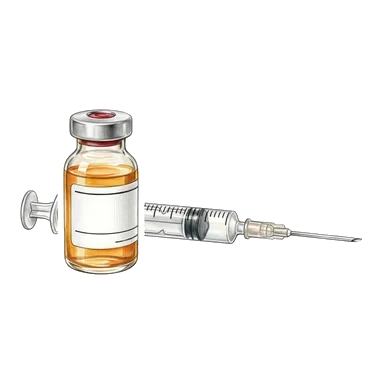 Good news: doctors have a medicine (antivenom) or a treatment for this.1
 If it bites
Always call your emergency number first (for example 112 in Europe, 911 in North America, 000 in Australia).
- Call the emergency number and get to a hospital quickly. Keep the person calm and still, with the bitten limb at heart level or lower. Take off rings and tight clothing near the bite. Do not cut, suck, use a tourniquet or put ice on it. Doctors may give CroFab or Anavip antivenom in severe cases.1
- Keep the person still and calm, keep the bitten limb at heart level, remove rings and tight things, and get to a hospital fast.
This is general first aid guidance, not medical advice. Based on the first aid guidelines of the World Health Organization and the Australian Resuscitation Council. Facts come from public sources and may contain mistakes. When in doubt, always get medical help. First aid basics
 Stay safe
- Never touch, catch or tease a wild animal, even a small one, and even if it looks asleep or dead.
- Give it space. If you meet one, stay calm, step back slowly and let it go its own way.
- If one bites you: stay calm, keep still, call your emergency number (for example 112 in Europe, 911 in North America, 000 in Australia) or get to a hospital fast. Remember what it looked like, a photo helps.
It is not out to get you. It uses its venom to catch food or to protect itself, and it would much rather hide. More about staying safe
Where in the world?
How big is it?
How long is it?
 as long as 4 bananas end to end
 could cover 100 metres in 110 seconds (the fastest human needs 9.6)
How big is Broad-banded copperhead compared to you?
Just maths in your browser. Nothing is saved or sent anywhere.
How fast is it?


Facts
It can swim across large bodies of water and has been found swimming more than a quarter of a mile from shore in Lake Texoma, Texas.1
In one radio tracking study, a tagged Texas horned lizard was found inside a snake. The snake later passed the lizard's tracking device without harm.1
Although it is not tree-dwelling, it can climb and has been seen coiled and resting in trees about 2 metres above the ground.1
Some copperheads in Kansas are hybrids of the eastern and broad-banded copperheads. Genetic studies in that state found no genetically pure broad-banded copperheads.1
It is known by colourful local names, including thunder snake, rattlesnake pilot and red eye.1
Myth buster
Myth: Copperhead bites are harmless.
Truth: A bite is not life-threatening to a healthy adult, but it can cause swelling, tissue death and severe pain. Any bite should be treated seriously and medical care sought.1
For venom experts
- Scientific name
- Agkistrodon laticinctus
- Group
- Pit vipers
- Also called
- Texas copperhead, dry-land moccasin, highland moccasin1
- Family
- Viperidae2
- Order
- Squamata
- Continents
- North America
- Babies
- It gives birth to live young rather than laying eggs, with a litter of up to eight young in early fall.1
- Lifespan
- about 21 years1
- Danger to people
- 3 / 5: Serious3
Where the facts come from
- Agkistrodon laticinctus (Wikipedia (CC BY-SA 4.0))
- Agkistrodon laticinctus (iNaturalist): names and classification.
- Venom Wiki: the danger level, the typical size and the speed guess are our own. See how we work them out: How we rate danger.
Every fact on this page has a number that points to its source. If we got something wrong, sorry, we are animal fans, not a science journal. Tell us at [email protected] and we will fix it.
Get the Venom Wiki app
Every creature, every picture and the games in your pocket, even without internet.


 Support Venom Wiki Venom Wiki is a one-man project: free, with no ads and no cookies. A small tip helps keep it online.Feed the scorpion
 Terciopelo
 Cottonmouth
 Eastern copperhead
 Cantil
 Central American bushmaster
 Martinique lancehead
 Eastern coral snake
 Eastern diamondback rattlesnake
 Timber rattlesnake
 Western diamondback rattlesnake
 Arizona bark scorpion
 Brown recluse
