
 Bitten or stung?
 All animals
 Pick a continent
 Africa
 Asia
 Europe
 South America
 Australia & Oceania
 Antarctica
 Pacific Ocean
 Atlantic Ocean
 Indian Ocean
 Arctic Ocean
 Mediterranean Sea
 Red Sea
 Caribbean Sea
 Coral Sea
 South China Sea
 Philippine Sea
 Andaman Sea
 North Sea
 Timor & Arafura Sea
 Bay of Bengal
 Gulf of California
 Games
 Venom battle
 Animal race
 Field notebook
 Venom TOP lists
 Stay safe
 Surprise me

Eastern copperhead
 Bites
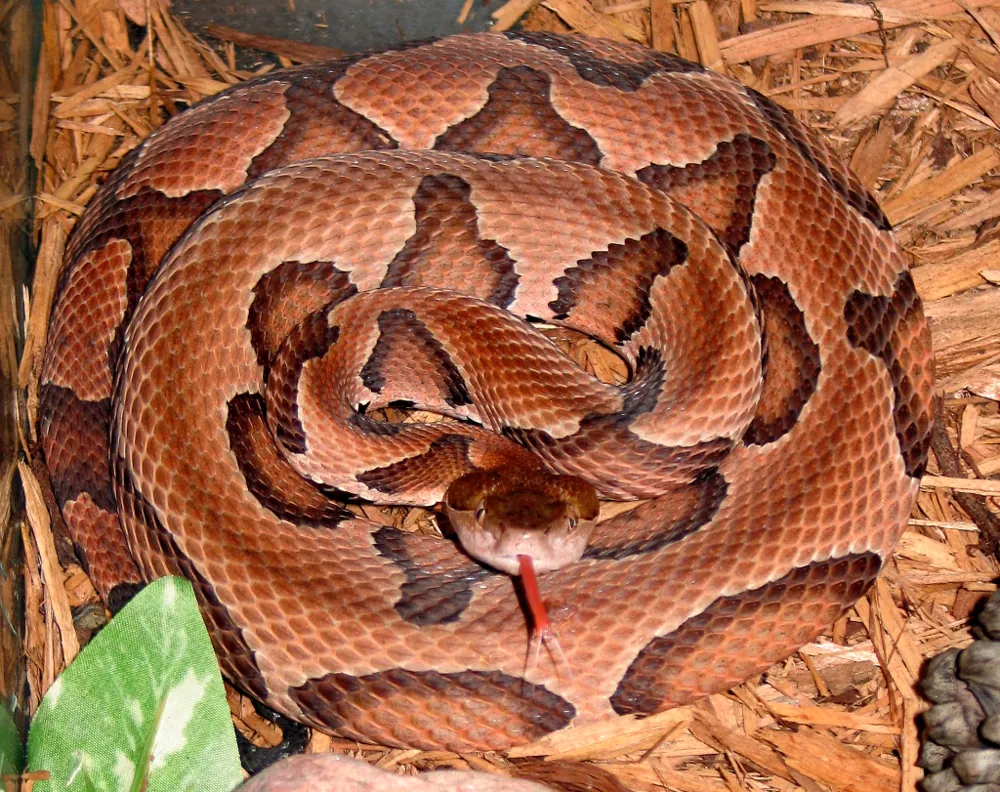
The eastern copperhead is a venomous pit viper that lives across much of the eastern United States. It has hourglass-shaped bands on a tan or reddish-brown body, which help it hide in leaves and clay. It is common, so people sometimes meet it without realising, and it makes up half of the treated snake bites in the United States.1
 How to recognise it
- Dark brown, hourglass-shaped crossbands on a light reddish-brown or brown background1
- A heavy, stout body rather than a slender one1
- A broad head that is distinct from the neck1
- Young have green or yellow tail tips, which darken to brown or black within a year1
- Adults are typically 50 to 95 cm long, including the tail1
Often confused with: It can be confused with the cottonmouth. The copperhead's snout slopes down and back, so it looks less blunt than a cottonmouth's, and the head reaches further forward than the mouth.1
Venom power
Venom comes out through its fangs or teeth when it bites.
How dangerous is it to people?
Danger to people: SeriousA bite needs a doctor. Deaths are very rare.Copperhead bites account for half of the treated snake bites in the United States. Bites usually happen when people unknowingly step on or near the snake. It is generally nonaggressive and will strike only if threatened as a last resort.1
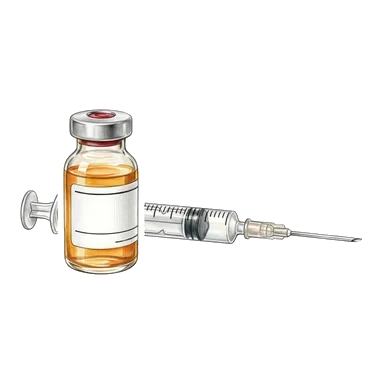 Good news: doctors have a medicine (antivenom) or a treatment for this.1
What does it do when it is scared?
It often freezes instead of fleeing, relying on its camouflage, and may vibrate its tail when closely approached.1
 If it bites
Always call your emergency number first (for example 112 in Europe, 911 in North America, 000 in Australia).
- Call 911 (or your local emergency number) and get to hospital fast, as antivenom may be needed. Keep the person calm and still, remove rings and tight items, and keep the bitten limb at rest. Do not use a tourniquet, cut, suck or put ice on the bite.1
- Keep the person still and calm, keep the bitten limb at heart level, remove rings and tight things, and get to a hospital fast.
This is general first aid guidance, not medical advice. Based on the first aid guidelines of the World Health Organization and the Australian Resuscitation Council. Facts come from public sources and may contain mistakes. When in doubt, always get medical help. First aid basics
 Stay safe
- Never touch, catch or tease a wild animal, even a small one, and even if it looks asleep or dead.
- Give it space. If you meet one, stay calm, step back slowly and let it go its own way.
- If one bites you: stay calm, keep still, call your emergency number (for example 112 in Europe, 911 in North America, 000 in Australia) or get to a hospital fast. Remember what it looked like, a photo helps.
It is not out to get you. It uses its venom to catch food or to protect itself, and it would much rather hide. More about staying safe
Where in the world?
How big is it?
How long is it?
How heavy is it?
 as long as 2 house cats nose to tail
 as long as 5 bananas end to end
 could cover 100 metres in 100 seconds (the fastest human needs 9.6)
How big is Eastern copperhead compared to you?
Just maths in your browser. Nothing is saved or sent anywhere.
How fast is it?


Facts
Its tail can vibrate more than 40 times per second, faster than almost any non-rattlesnake snake.1
Juveniles wave a brightly coloured tail to attract frogs and perhaps lizards, a behaviour called caudal luring.1
Its camouflage is so good that it can be almost impossible to see on dead leaves or red clay.1
In Texas, copperheads have been found in bushes, vines and trees up to 12 metres above the ground, seeking newly emerged cicadas.1
Its venom has potential medicinal value to humans.1
Historically, kingsnakes were major predators of copperheads, and recent copperhead numbers have risen where kingsnake populations have declined.1
Myth buster
Myth: Copperheads are aggressive snakes that chase people and go looking for trouble.
Truth: They are generally nonaggressive. They usually freeze or flee, and they strike only if threatened as a last resort. Most bites happen when people step on or near them without noticing.1
For venom experts
- Scientific name
- Agkistrodon contortrix
- Group
- Pit vipers
- Also called
- Copperhead, Southern Copperhead, Northern Copperhead1
- Family
- Viperidae2
- Order
- Squamata
- Continents
- North America
- Babies
- Newborn copperheads are born with green or yellow tail tips, which darken to brown or black within one year.1
- How it is doing in the wild
- Least Concern (IUCN Red List, v3.1, 2001); population trend stable when assessed in 20071
- Danger to people
- 3 / 5: Serious3
Where the facts come from
- Eastern copperhead (Wikipedia (CC BY-SA 4.0))
- Agkistrodon contortrix (iNaturalist): names and classification.
- Venom Wiki: the danger level, the typical size and the speed guess are our own. See how we work them out: How we rate danger.
Every fact on this page has a number that points to its source. If we got something wrong, sorry, we are animal fans, not a science journal. Tell us at [email protected] and we will fix it.
Get the Venom Wiki app
Every creature, every picture and the games in your pocket, even without internet.


 Support Venom Wiki Venom Wiki is a one-man project: free, with no ads and no cookies. A small tip helps keep it online.Feed the scorpion
 Terciopelo
 Cottonmouth
 Cantil
 Central American bushmaster
 Martinique lancehead
 Broad-banded copperhead
 Eastern coral snake
 Eastern diamondback rattlesnake
 Timber rattlesnake
 Western diamondback rattlesnake
 Arizona bark scorpion
 Brown recluse
