
 Bitten or stung?
 All animals
 Pick a continent
 Africa
 Asia
 Europe
 South America
 Australia & Oceania
 Antarctica
 Pacific Ocean
 Atlantic Ocean
 Indian Ocean
 Arctic Ocean
 Mediterranean Sea
 Red Sea
 Caribbean Sea
 Coral Sea
 South China Sea
 Philippine Sea
 Andaman Sea
 North Sea
 Timor & Arafura Sea
 Bay of Bengal
 Gulf of California
 Games
 Venom battle
 Animal race
 Field notebook
 Venom TOP lists
 Stay safe
 Surprise me

Eastern hognose snake
 Bites
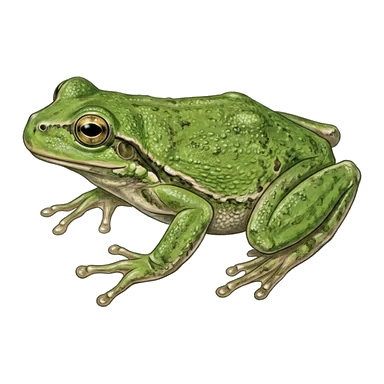
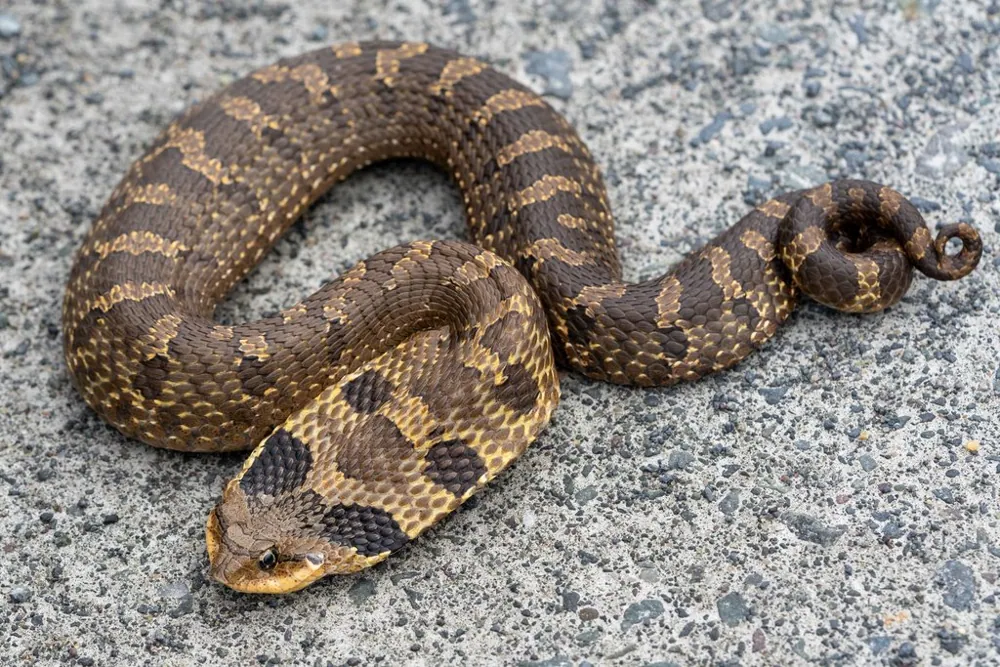
The eastern hognose snake is a stout, rear-fanged snake that lives across eastern and central North America. It has an upturned snout, which it uses for digging in sandy soil. It is mildly venomous, but its venom is aimed at toads and frogs and is not deadly to people.1
 How to recognise it
- Stout body with an upturned snout1
- Colour varies widely by area, from red, green or orange to brown, grey or black, sometimes blotched, checkered or plain1
- Belly is usually a solid grey, yellow or cream colour1
- The underside of the tail is lighter than the belly1
- Adults average 71 cm in total length, and females are larger than males1
Venom power
Venom comes out through its fangs or teeth when it bites.
What does its venom do?
Its venom is mild and is adapted to amphibian prey. It is delivered through enlarged rear teeth from the Duvernoy's gland. In people who are allergic to the snake's saliva, a bite can cause local swelling, burning, discolouration and bleeding from the wound.1
How dangerous is it to people?
Danger to people: MildLike a bee sting or less. Basically harmless to people, unless the person is allergic.The venom is harmless to most people, and no human deaths have been documented. People who are allergic to its saliva may have local symptoms such as swelling and bleeding.1
What does it do when it is scared?
It flattens its neck, raises its head like a cobra, hisses and strikes with a closed mouth to bluff. If that fails, it rolls onto its back, plays dead, releases a foul musk and lets its tongue hang out.1
 If it bites
Call your emergency number at once if the person has trouble breathing, swelling of the face or throat, or feels faint.
- Wash the bite, keep the person calm and get medical help. Some species (like the boomslang) can be deadly hours later.
This is general first aid guidance, not medical advice. Based on the first aid guidelines of the World Health Organization and the Australian Resuscitation Council. Facts come from public sources and may contain mistakes. When in doubt, always get medical help. First aid basics
 Stay safe
- Never touch, catch or tease a wild animal, even a small one, and even if it looks asleep or dead.
- Give it space. If you meet one, stay calm, step back slowly and let it go its own way.
- If it hurts you: wash the spot, stay calm and get medical help if the pain is strong or spreads, or the person feels unwell.
It is not out to get you. It uses its venom to catch food or to protect itself, and it would much rather hide. More about staying safe
Where in the world?
How big is it?
How long is it?
 as long as 2.5 house cats nose to tail
 as long as 6 bananas end to end
 could cover 100 metres in 73 seconds (the fastest human needs 9.6)
How big is Eastern hognose snake compared to you?
Just maths in your browser. Nothing is saved or sent anywhere.
How fast is it?


Facts
One individual was seen playing dead for 45 minutes before moving away.1
It is resistant to the skin poisons of toads, probably because of its enlarged adrenal glands, which release large amounts of hormones to counter the toxins.1
When threatened, it often bluffs by striking with its mouth closed, and it does not try to bite.1
It is a rear-fanged snake, and its enlarged teeth are at the back of the upper jaw.1
Females can store sperm until spring, so they can be fertilised later.1
Myth buster
Myth: The eastern hognose snake is a dangerous, deadly snake.
Truth: It is only mildly venomous, and its venom is aimed at amphibians. No human deaths have been documented, although some people who are allergic to its saliva may have local symptoms.1
For venom experts
- Scientific name
- Heterodon platirhinos
- Group
- Rear-fanged snakes
- Also called
- Eastern hog-nosed snake1
- Family
- Colubridae2
- Order
- Squamata
- Continents
- North America
- Babies
- Females lay up to 40 eggs, with an average of about 25, usually in June or early July. The hatchlings are about 16.5 to 21 cm long.1
- How it is doing in the wild
- Least concern (IUCN Red List, assessed 2007). It is a species of increasing conservation concern in the northeastern part of its range.1
- Danger to people
- 1 / 5: Mild3
Where the facts come from
- Eastern hognose snake (Wikipedia (CC BY-SA 4.0))
- Heterodon platirhinos (iNaturalist): names and classification.
- Venom Wiki: the danger level, the typical size and the speed guess are our own. See how we work them out: How we rate danger.
Every fact on this page has a number that points to its source. If we got something wrong, sorry, we are animal fans, not a science journal. Tell us at [email protected] and we will fix it.
Get the Venom Wiki app
Every creature, every picture and the games in your pocket, even without internet.


 Support Venom Wiki Venom Wiki is a one-man project: free, with no ads and no cookies. A small tip helps keep it online.Feed the scorpion
 Western hognose snake
 Brown vine snake
 Green vine snake
 Desert night snake
 Night snake
 Sonoran lyre snake
 Terciopelo
 Eastern coral snake
 Eastern diamondback rattlesnake
 Timber rattlesnake
 Western diamondback rattlesnake
 Arizona bark scorpion