
 Bitten or stung?
 All animals
 Pick a continent
 Africa
 Asia
 Europe
 South America
 Australia & Oceania
 Antarctica
 Pacific Ocean
 Atlantic Ocean
 Indian Ocean
 Arctic Ocean
 Mediterranean Sea
 Red Sea
 Caribbean Sea
 Coral Sea
 South China Sea
 Philippine Sea
 Andaman Sea
 North Sea
 Timor & Arafura Sea
 Bay of Bengal
 Gulf of California
 Games
 Venom battle
 Animal race
 Field notebook
 Venom TOP lists
 Stay safe
 Surprise me

Green vine snake
 Bites
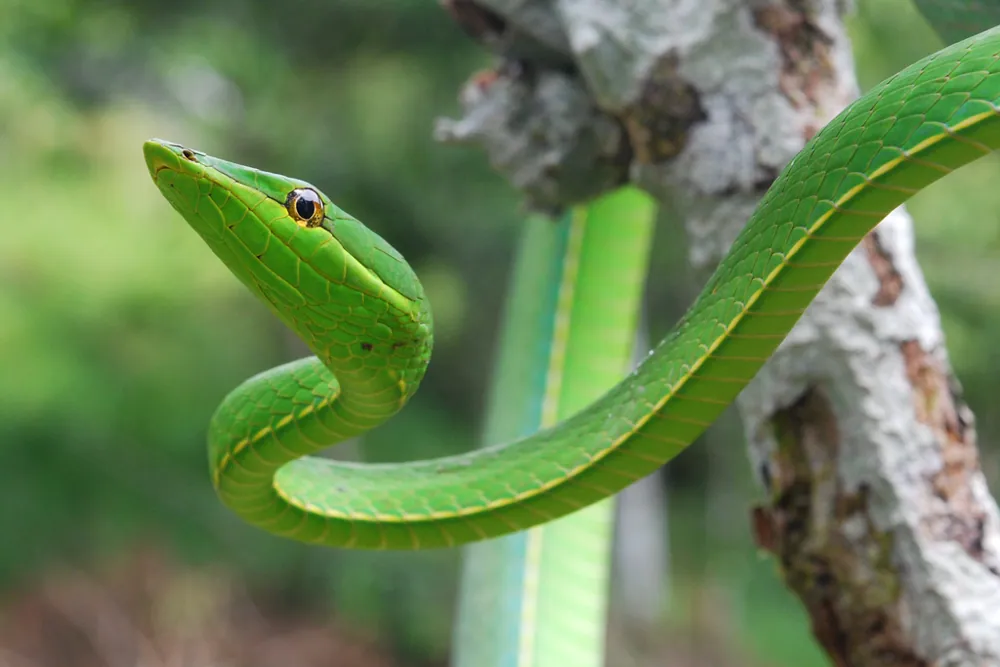
The green vine snake is a slender, bright green snake that lives high in the trees of Central and northern South America. It hunts small animals from the branches, and it is rear-fanged, which means its venom is delivered from the back of the mouth.1
 How to recognise it
- Bright green on its back, with yellowish green underneath and on the upper lip1
- A narrow yellowish-white stripe runs along each side of the belly and tail1
- Very slender body with a long, pointed head and a very large mouth that reaches almost the whole length of the head1
- Long green tongue, kept outside the mouth and moved up and down1
- Long, delicate tail, used to hold on while reaching for prey1
Venom power
Venom comes out through its fangs or teeth when it bites.
What does its venom do?
Its saliva is toxic, and it works quickly on small animals, so they are stopped from fighting back. It has little to no effect on humans. In the rare reported bites, slight tingling or temporary numbness at the bite site has been reported.1
How dangerous is it to people?
Danger to people: MildLike a bee sting or less. Basically harmless to people, unless the person is allergic.Bites to people are rare, because the snake has to grab hold and chew its saliva into the skin, which most people will not allow. Serious allergic reactions are possible, as with any venomous animal, and most allergies are not known before a bite.1
 If it bites
Call your emergency number at once if the person has trouble breathing, swelling of the face or throat, or feels faint.
- Wash the bite, keep the person calm and get medical help. Some species (like the boomslang) can be deadly hours later.
This is general first aid guidance, not medical advice. Based on the first aid guidelines of the World Health Organization and the Australian Resuscitation Council. Facts come from public sources and may contain mistakes. When in doubt, always get medical help. First aid basics
 Stay safe
- Never touch, catch or tease a wild animal, even a small one, and even if it looks asleep or dead.
- Give it space. If you meet one, stay calm, step back slowly and let it go its own way.
- If it hurts you: wash the spot, stay calm and get medical help if the pain is strong or spreads, or the person feels unwell.
It is not out to get you. It uses its venom to catch food or to protect itself, and it would much rather hide. More about staying safe
Where in the world?
How big is it?
How long is it?
 as long as 4 house cats nose to tail
 as long as 11 bananas end to end
 could cover 100 metres in 57 seconds (the fastest human needs 9.6)
How big is Green vine snake compared to you?
Just maths in your browser. Nothing is saved or sent anywhere.
How fast is it?


Facts
Its tongue is thought to work like a cat's whiskers, helping it sense its way through branches and brush as it moves quickly.1
After biting, it coils around its prey. It does not squeeze the prey the way a constrictor does, but the coil helps to hold it.1
It is rear-fanged, with two larger but blunted, peg-like teeth at the upper back of the mouth. These teeth have grooves on the sides that deliver its saliva.1
After swallowing a meal, it usually moves to the highest point of a tree to rest.1
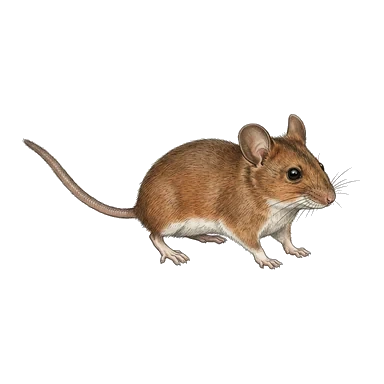
In captivity it readily takes mice, and some are large enough to eat rats, which makes it a prized choice among reptile collectors.1
Myth buster
Myth: That the bite of this snake is dangerous to people.
Truth: Its venom has little to no effect on humans. It is fast-acting on small animals, but bites to people are rare and usually cause only slight tingling or temporary numbness.1
Where the facts come from
- Oxybelis fulgidus (Wikipedia (CC BY-SA 4.0))
- Oxybelis fulgidus (iNaturalist): names and classification.
- Venom Wiki: the danger level, the typical size and the speed guess are our own. See how we work them out: How we rate danger.
Every fact on this page has a number that points to its source. If we got something wrong, sorry, we are animal fans, not a science journal. Tell us at [email protected] and we will fix it.
Get the Venom Wiki app
Every creature, every picture and the games in your pocket, even without internet.


 Support Venom Wiki Venom Wiki is a one-man project: free, with no ads and no cookies. A small tip helps keep it online.Feed the scorpion
 Western hognose snake
 Baron's green racer
 False water cobra
 Brown vine snake
 Eastern hognose snake
 Lichtenstein's green racer
 Terciopelo
 Eastern coral snake
 Eastern diamondback rattlesnake
 Timber rattlesnake
 Western diamondback rattlesnake
 Arizona bark scorpion