
 Bitten or stung?
 All animals
 Pick a continent
 Africa
 Asia
 Europe
 South America
 Australia & Oceania
 Antarctica
 Pacific Ocean
 Atlantic Ocean
 Indian Ocean
 Arctic Ocean
 Mediterranean Sea
 Red Sea
 Caribbean Sea
 Coral Sea
 South China Sea
 Philippine Sea
 Andaman Sea
 North Sea
 Timor & Arafura Sea
 Bay of Bengal
 Gulf of California
 Games
 Venom battle
 Animal race
 Field notebook
 Venom TOP lists
 Stay safe
 Surprise me
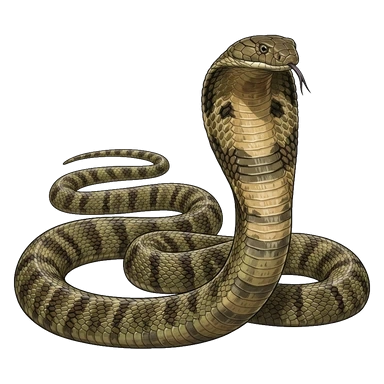
King cobra
 If it bites
 BitesEats: MeatTOP 50 · No. 23: Most dangerousTOP 50 · No. 3: LongestTOP 50 · No. 22: HeaviestTOP 50 · No. 9: Fastest
The king cobra is a large venomous snake of tropical Asia. It is the world's longest venomous snake, and it mostly eats other snakes. It is widely spread across its range, but people do not often see it. In 2024 scientists split the king cobra into four species. This page covers the king cobra in the older, broad sense.1
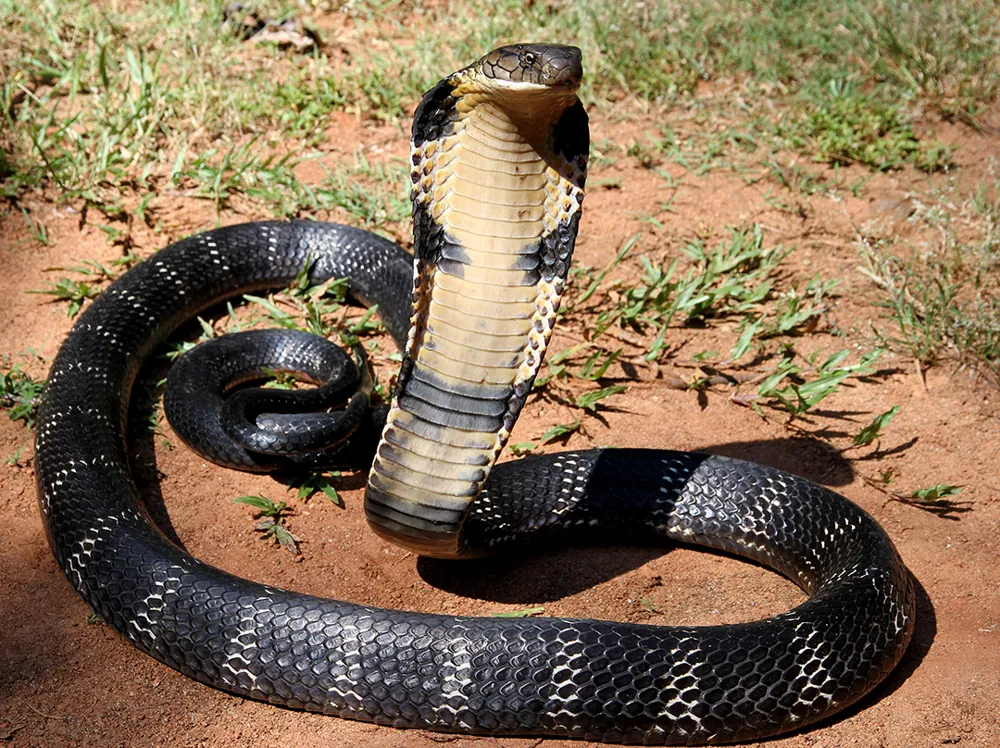
 How to recognise it
- Adults are olive green with black and white bands across the trunk that run towards the head.1
- The head has 15 drab-coloured shields that are edged in black.1
- The hood is oval, with two black spots between the two lowest scales.1
- Juveniles are black with chevron-shaped white, yellow or buff bars that point towards the head.1
- The tail is yellowish green and marked with black.1
Often confused with: Despite its common name and some resemblance, it is not a true cobra: it belongs to its own genus.1
Venom power
Venom comes out through its fangs or teeth when it bites.
What does its venom do?
The venom is neurotoxic, which means it attacks the nerves, and cytotoxic, which means it damages cells. Symptoms can start rapidly after a bite. The cobra can strike at a considerable range and height, and it has an immense venom yield.1
How dangerous is it to people?
Danger to people: DeadlyOne of the most dangerous animals in the world.The king cobra is not considered aggressive and usually avoids humans. Most bites happen when a snake is cornered or when people come close to it by chance.1
 Good news: doctors have a medicine (antivenom) or a treatment for this.1
What does it do when it is scared?
When threatened, it spreads its neck flap, raises its head, hisses or growls loudly, and sometimes charges.1
If it bites
Always call your emergency number first (for example 112 in Europe, 911 in North America, 000 in Australia).
- Call the emergency number and get to a hospital with antivenom as fast as possible. Keep the person still and calm, take off rings and tight clothing, and keep the bitten limb still. Be ready to help with breathing. Do not cut, suck or use a tourniquet.1
- Keep the person still and calm, remove rings and tight things, and get to a hospital fast: antivenom is the treatment. Be ready to give rescue breaths or CPR if breathing gets weak or stops.
This is general first aid guidance, not medical advice. Based on the first aid guidelines of the World Health Organization and the Australian Resuscitation Council. Facts come from public sources and may contain mistakes. When in doubt, always get medical help. First aid basics
 Stay safe
- Never touch, catch or tease a wild animal, even a small one, and even if it looks asleep or dead.
- Give it space. If you meet one, stay calm, step back slowly and let it go its own way.
- If one bites you: stay calm, keep still, call your emergency number (for example 112 in Europe, 911 in North America, 000 in Australia) or get to a hospital fast. Remember what it looked like, a photo helps.
It is not out to get you. It uses its venom to catch food or to protect itself, and it would much rather hide. More about staying safe
Where in the world?
How big is it?
How long is it?
How heavy is it?

 as long as 6 dogs nose to tail
 as long as 32 bananas end to end
 could cover 100 metres in 36 seconds (the fastest human needs 9.6)
How big is King cobra compared to you?
Just maths in your browser. Nothing is saved or sent anywhere.
How fast is it?


Facts
Its growl is much lower than most snakes' hisses, with a dominant frequency near 600 Hz, which is closer to a human voice.1
It is dominant over all other snakes except large pythons.1
It can swallow prey much larger than its head because of its flexible jaws.1
It can go many months without another meal after a large meal because its metabolism is slow.1
It is considered the national reptile of India and has an important place in the mythology and folk traditions of India, Bangladesh, Sri Lanka and Myanmar.1
Its common name 'hamadryad' is still used in older books.1
Myth buster
Myth: King cobras are aggressive and attack people on sight.
Truth: The king cobra is not considered aggressive and usually avoids humans. It defends its eggs fiercely and may strike if it is cornered or accidentally exposed.1
For venom experts
- Scientific name
- Ophiophagus hannah
- Group
- Cobras, mambas & kraits
- Also called
- Northern King Cobra, Hamadryad1
- Family
- Elapidae2
- Order
- Squamata
- Continents
- Asia
- Babies
- It lays eggs. The female builds a nest of dry leaf litter and guards the eggs through the incubation period.1
- How it is doing in the wild
- Vulnerable (IUCN Red List, since 2010)1
- Danger to people
- 5 / 5: Deadly3
Where the facts come from
- King cobra (Wikipedia (CC BY-SA 4.0))
- Ophiophagus hannah (iNaturalist): names and classification.
- Venom Wiki: the danger level, the typical size and the speed guess are our own. See how we work them out: How we rate danger.
Every fact on this page has a number that points to its source. If we got something wrong, sorry, we are animal fans, not a science journal. Tell us at [email protected] and we will fix it.
Get the Venom Wiki app
Every creature, every picture and the games in your pocket, even without internet.


 Support Venom Wiki Venom Wiki is a one-man project: free, with no ads and no cookies. A small tip helps keep it online.Feed the scorpion
 Indian cobra
 Caspian cobra
 Common krait
 Malayan krait
 Many-banded krait
 Monocled cobra
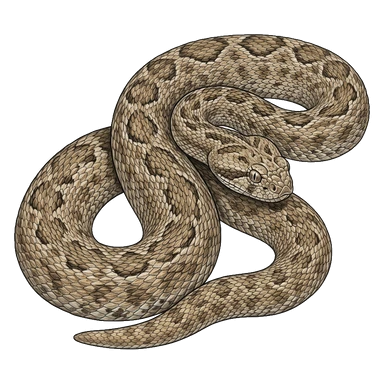 Indian saw-scaled viper
 Puff adder
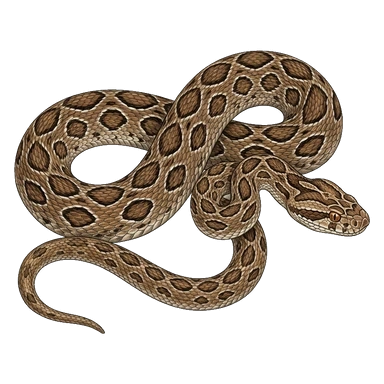 Russell's viper
 Asian giant hornet
 Komodo dragon
 Common European adder
