
 Bitten or stung?
 All animals
 Pick a continent
 Africa
 Asia
 Europe
 South America
 Australia & Oceania
 Antarctica
 Pacific Ocean
 Atlantic Ocean
 Indian Ocean
 Arctic Ocean
 Mediterranean Sea
 Red Sea
 Caribbean Sea
 Coral Sea
 South China Sea
 Philippine Sea
 Andaman Sea
 North Sea
 Timor & Arafura Sea
 Bay of Bengal
 Gulf of California
 Games
 Venom battle
 Animal race
 Field notebook
 Venom TOP lists
 Stay safe
 Surprise me
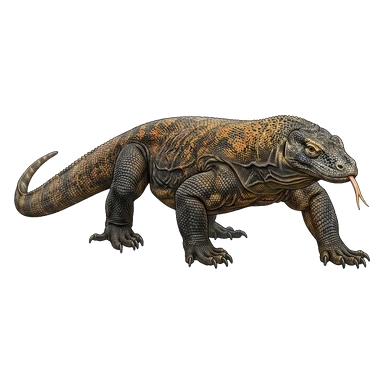
Komodo dragon
 If it bites
 BitesEats: MeatTOP 50 · No. 14: LongestTOP 50 · No. 7: HeaviestTOP 50 · No. 1: FastestTOP 50 · No. 4: Longest living
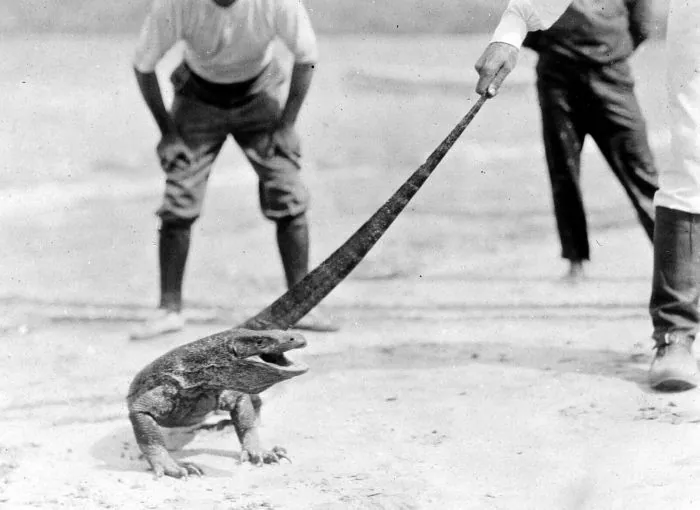
The Komodo dragon is a very large lizard, and it is the biggest lizard alive today. It lives on a few small islands in Eastern Indonesia, where it hunts deer and pigs and sits at the top of its food chain. Adults occasionally attack people, so it is a dangerous animal to keep your distance from.1
 How to recognise it
- A very large, heavy-bodied lizard. Males can reach 3 m in length.1
- A tail about as long as its body.1
- Armoured, bony scales that give the skin a rugged, chain-mail look.1
- Serrated, saw-like teeth, and saliva that is often tinged with blood.1
- A long, yellow, deeply forked tongue that it flicks like a snake.1
Venom power
Venom comes out through its fangs or teeth when it bites.
How dangerous is it to people?
Danger to people: Very dangerousIt can kill a person who gets no treatment.Adult Komodo dragons occasionally attack humans, so they should be treated as dangerous. Their size and strength make any attack serious.1
If it bites
Always call your emergency number first (for example 112 in Europe, 911 in North America, 000 in Australia).
- Call the emergency number. Press firmly on the wound to slow bleeding, rinse it with clean water and get to hospital fast. Bites cause deep wounds that bleed a lot and easily become infected.1
- Wash the wound, keep the person calm and get medical help.
This is general first aid guidance, not medical advice. Based on the first aid guidelines of the World Health Organization and the Australian Resuscitation Council. Facts come from public sources and may contain mistakes. When in doubt, always get medical help. First aid basics
 Stay safe
- Never touch, catch or tease a wild animal, even a small one, and even if it looks asleep or dead.
- Give it space. If you meet one, stay calm, step back slowly and let it go its own way.
- If one bites you: stay calm, keep still, call your emergency number (for example 112 in Europe, 911 in North America, 000 in Australia) or get to a hospital fast. Remember what it looked like, a photo helps.
It is not out to get you. It uses its venom to catch food or to protect itself, and it would much rather hide. More about staying safe
Where in the world?
How big is it?
How long is it?
How heavy is it?
 as long as 3 dogs nose to tail
 as long as 17 bananas end to end
 could cover 100 metres in 18 seconds (the fastest human needs 9.6)
How big is Komodo dragon compared to you?
Just maths in your browser. Nothing is saved or sent anywhere.
How fast is it?

Facts
The Komodo dragon is the largest living lizard, and its size is unusual among reptiles.1
Its teeth are replaced about every 40 days, and it has up to five replacement teeth for each tooth position at any time.1
Fossils show that Komodo dragons once lived in Australia, where they existed alongside megalania, the largest land lizard ever.1
The 1926 expedition by W. Douglas Burden inspired the 1933 film King Kong.1
Myth buster
Myth: Komodo dragons are deaf.
Truth: They were once thought to be deaf, but a London Zoo keeper trained one to come to her voice even when she was out of sight. They hear low-pitched sounds, roughly between 400 and 2,000 hertz.1
For venom experts
- Scientific name
- Varanus komodoensis
- Group
- Venomous lizards
- Also called
- Komodo monitor, Komodo Island monitor, ora1
- Family
- Varanidae2
- Order
- Squamata
- Continents
- Asia
- Babies
- Mating happens between May and August, and females lay up to 20 eggs in September, in an abandoned megapode nest or a hole they dig themselves. The eggs take seven to eight months to hatch, usually in April. Young Komodo dragons take 8 to 11 years to mature.1
- Lifespan
- about 30 years1
- How it is doing in the wild
- Endangered1
- Danger to people
- 4 / 5: Very dangerous3
Where the facts come from
- Komodo dragon (Wikipedia (CC BY-SA 4.0))
- Varanus komodoensis (iNaturalist): names and classification.
- Venom Wiki: the danger level, the typical size and the speed guess are our own. See how we work them out: How we rate danger.
Every fact on this page has a number that points to its source. If we got something wrong, sorry, we are animal fans, not a science journal. Tell us at [email protected] and we will fix it.
Get the Venom Wiki app
Every creature, every picture and the games in your pocket, even without internet.


 Support Venom Wiki Venom Wiki is a one-man project: free, with no ads and no cookies. A small tip helps keep it online.Feed the scorpion
 Desert monitor
 Gila monster
 Mexican beaded lizard
 Lace monitor
 Perentie
 Spiny-tailed monitor
 Indian cobra
 Indian saw-scaled viper
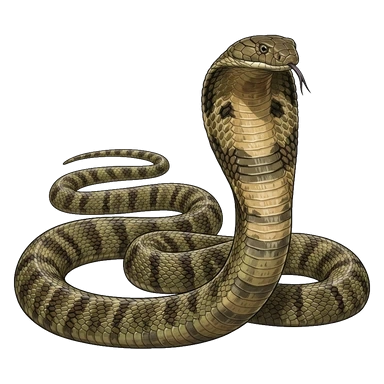 King cobra
 Puff adder
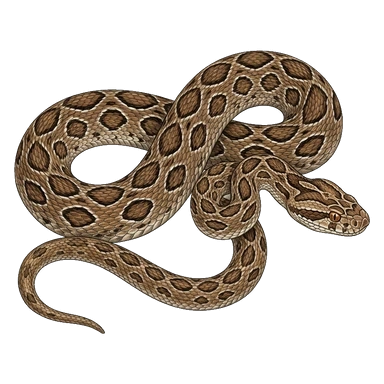 Russell's viper
 Asian giant hornet