
 Bitten or stung?
 All animals
 Pick a continent
 Africa
 Asia
 Europe
 South America
 Australia & Oceania
 Antarctica
 Pacific Ocean
 Atlantic Ocean
 Indian Ocean
 Arctic Ocean
 Mediterranean Sea
 Red Sea
 Caribbean Sea
 Coral Sea
 South China Sea
 Philippine Sea
 Andaman Sea
 North Sea
 Timor & Arafura Sea
 Bay of Bengal
 Gulf of California
 Games
 Venom battle
 Animal race
 Field notebook
 Venom TOP lists
 Stay safe
 Surprise me

Puff adder
 If it bitesDanger to people: DeadlyOne of the most dangerous animals in the world.
 Bites
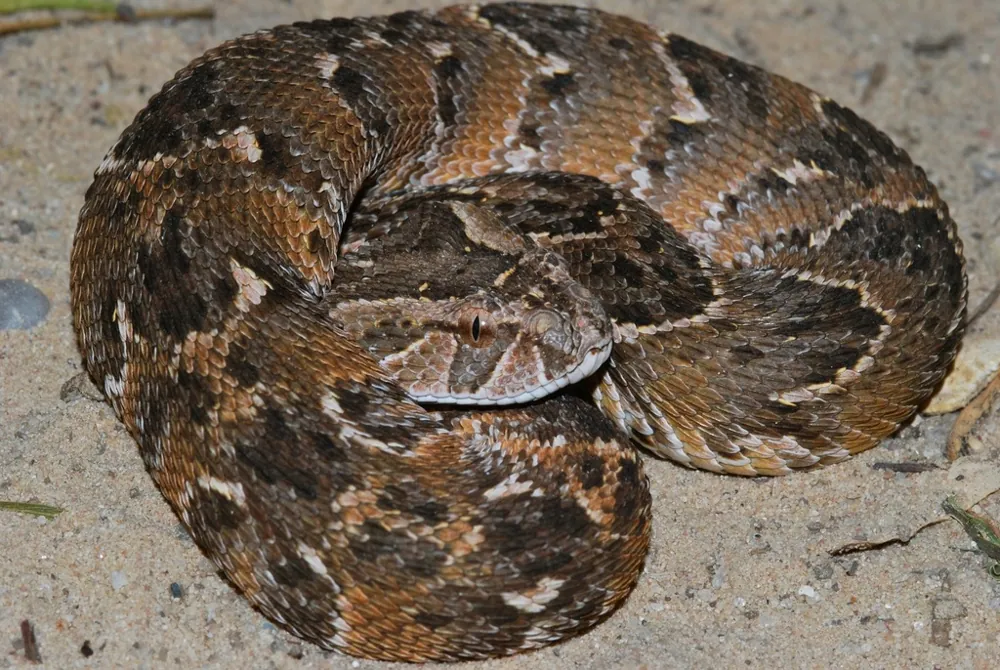
The puff adder is a large, stout viper that lives across most of Africa and parts of the Arabian Peninsula. It is one of the most dangerous snakes in Africa because it lives in places where many people live and work, and it has very potent venom. Its camouflage hides it well, so it is easy to step near without seeing it.1
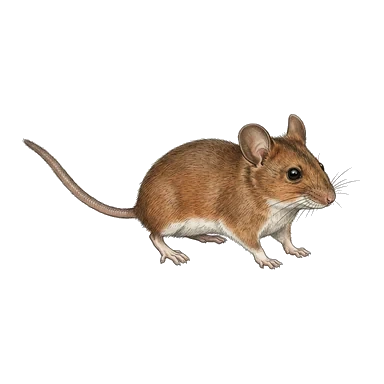
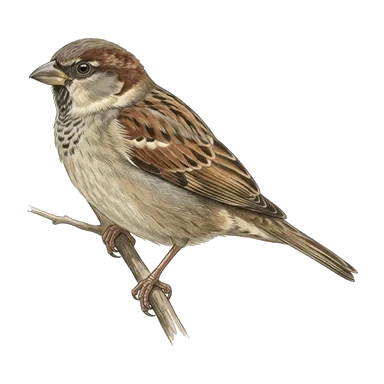
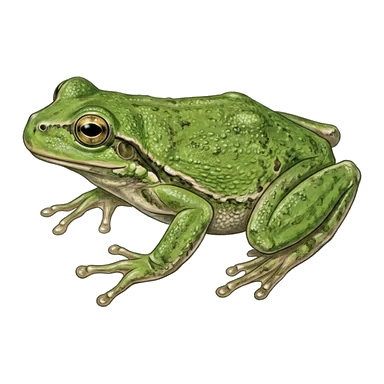
 How to recognise it
- Stout, heavy body. Usually about 1.0 m long including the tail.1
- Two dark bands across the top of the head, and two dark bars running from each eye down the sides of the head.1
- Back is straw yellow, light brown, orange or reddish brown, with 18 to 22 dark brown to black chevron-shaped bands running down the back and tail.1
- In some populations, the body is heavily flecked with brown and black, giving a dusty-brown or blackish look.1
- Males from highland East Africa and the Western Cape of South Africa often have a striking yellow-and-black pattern.1
Venom power
Venom comes out through its fangs or teeth when it bites.
What does its venom do?
Its venom is cytotoxic, which means it destroys body tissue. Bites cause severe pain, swelling, bleeding under the skin and, in serious cases, tissue death that can spread and lead to gangrene. Other symptoms include shock, nausea, vomiting, dizziness and periods of semi-consciousness. Death can occur in about 25 hours from a dose of around 100 mg, and deaths usually come 2 to 4 days after a bite from complications.1
How dangerous is it to people?
Danger to people: DeadlyOne of the most dangerous animals in the world.It is responsible for more snakebite deaths in Africa than any other African snake. This is due to its wide range, common presence near people, large size, potent venom and aggressive temperament. Deaths are uncommon in untreated cases, but severe bites can be fatal, with one report giving a 52% mortality rate. Most deaths are linked to poor medical care.1
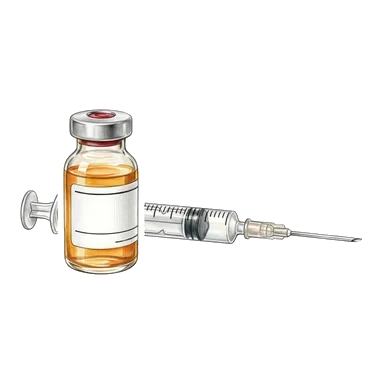 Good news: doctors have a medicine (antivenom) or a treatment for this.1
What does it do when it is scared?
When disturbed, it hisses loudly and continuously, coils tightly with the front of its body in a taut S shape, and may back away towards cover before striking suddenly and fast.1
If it bites
Always call your emergency number first (for example 112 in Europe, 911 in North America, 000 in Australia).
- Call the emergency number and get to a hospital with antivenom as fast as possible. Keep the person still and calm, take off rings and tight items, and keep the bitten limb still. Do not cut, suck, use a tourniquet or a tight bandage, and do not put ice on it.1
- Keep the person still and calm, keep the bitten limb at heart level, remove rings and tight things, and get to a hospital fast.
This is general first aid guidance, not medical advice. Based on the first aid guidelines of the World Health Organization and the Australian Resuscitation Council. Facts come from public sources and may contain mistakes. When in doubt, always get medical help. First aid basics
 Stay safe
- Never touch, catch or tease a wild animal, even a small one, and even if it looks asleep or dead.
- Give it space. If you meet one, stay calm, step back slowly and let it go its own way.
- If one bites you: stay calm, keep still, call your emergency number (for example 112 in Europe, 911 in North America, 000 in Australia) or get to a hospital fast. Remember what it looked like, a photo helps.
It is not out to get you. It uses its venom to catch food or to protect itself, and it would much rather hide. More about staying safe
Where in the world?
How big is it?
How long is it?
How heavy is it?
 as long as 4 house cats nose to tail
 as long as 11 bananas end to endabout as heavy as a house cat
 could cover 100 metres in 97 seconds (the fastest human needs 9.6)
How big is Puff adder compared to you?
Just maths in your browser. Nothing is saved or sent anywhere.
How fast is it?


Facts
A female in a Czech zoo gave birth to 156 young, the largest litter recorded for any snake species.1
Its fangs are long and can penetrate deeply, and the force of its strike can kill prey by physical trauma alone.1
A large adult can produce between 150 and 350 mg of venom at a time, with a maximum of 750 mg.1
Dogs and meerkats, which hunt by scent, find it hard to detect because of a form of olfactory crypsis, meaning it hides its scent.1
It is one of the most toxic vipers based on LD50 (the dose that kills half of test animals in a study).1
It is a good swimmer and climber, and one specimen was found 4.6 m above the ground in a dense tree.1
Myth buster
Myth: Puff adders are fast, aggressive snakes that chase people.
Truth: They are normally sluggish and rely on camouflage for protection. They strike when disturbed, but they do not usually pursue people.1
For venom experts
- Scientific name
- Bitis arietans
- Group
- Vipers & adders
- Also called
- African puff adder, common puff adder, Puffadder1
- Family
- Viperidae2
- Order
- Squamata
- Continents
- Africa, Asia
- Babies
- It gives birth to live young in large numbers, usually 50 to 60, with litters of over 80 reported. Newborns are 12.5 to 17.5 cm long.1
- Danger to people
- 5 / 5: Deadly3
Where the facts come from
- Puff adder (Wikipedia (CC BY-SA 4.0))
- Bitis arietans (iNaturalist): names and classification.
- Venom Wiki: the danger level, the typical size and the speed guess are our own. See how we work them out: How we rate danger.
Every fact on this page has a number that points to its source. If we got something wrong, sorry, we are animal fans, not a science journal. Tell us at [email protected] and we will fix it.
Get the Venom Wiki app
Every creature, every picture and the games in your pocket, even without internet.


 Support Venom Wiki Venom Wiki is a one-man project: free, with no ads and no cookies. A small tip helps keep it online.Feed the scorpion
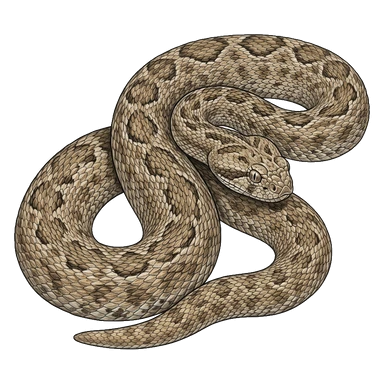 Indian saw-scaled viper
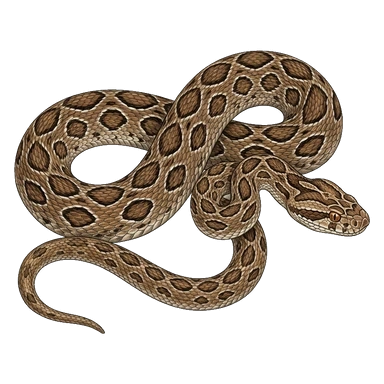 Russell's viper
 Gaboon viper
 Common European adder
 Eastern Russell's viper
 Northeast African carpet viper
 Black mamba
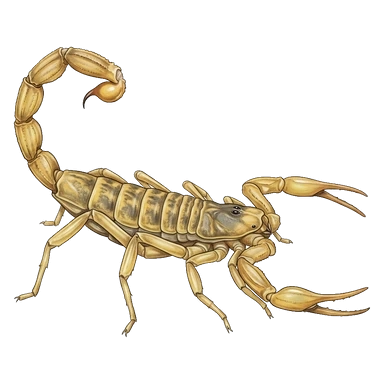 Deathstalker
 Egyptian cobra
 Boomslang
 Fat-tailed scorpion
 Western honey bee