
 Bitten or stung?
 All animals
 Pick a continent
 Africa
 Asia
 Europe
 South America
 Australia & Oceania
 Antarctica
 Pacific Ocean
 Atlantic Ocean
 Indian Ocean
 Arctic Ocean
 Mediterranean Sea
 Red Sea
 Caribbean Sea
 Coral Sea
 South China Sea
 Philippine Sea
 Andaman Sea
 North Sea
 Timor & Arafura Sea
 Bay of Bengal
 Gulf of California
 Games
 Venom battle
 Animal race
 Field notebook
 Venom TOP lists
 Stay safe
 Surprise me

Malayan pit viper
 If it bitesDanger to people: Very dangerousIt can kill a person who gets no treatment.
 Bites
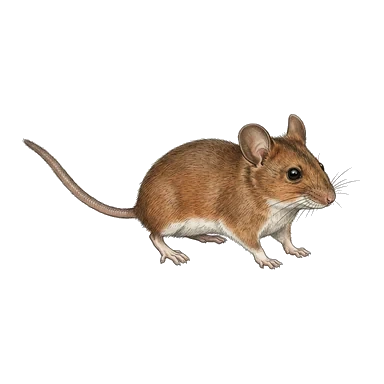
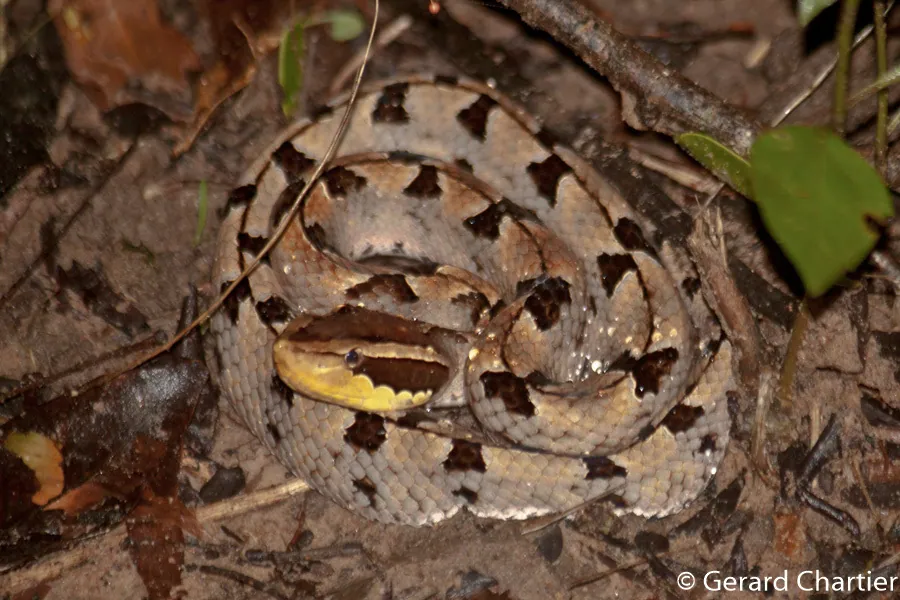
The Malayan pit viper is a venomous snake of Southeast Asia. It lives in forests, farmland and plantations, where it hunts rats and mice. Its bite causes severe pain and swelling, so it is an important snake to recognise.1
 How to recognise it
- Reddish, grey or pale brown in colour on its back.1
- Two rows of large, dark brown triangular blotches with black edges run down the back.1
- A broad dark brown stripe runs from the eye to the corner of the mouth.1
- Smooth scales and a pointed, upturned snout.1
- Adults average about 76 cm long and can reach about 91 cm.1
Venom power
Venom comes out through its fangs or teeth when it bites.
What does its venom do?
Its venom causes severe pain and swelling around the bite, and sometimes tissue damage (necrosis), where body tissue dies. The venom uses up the blood's clotting factors and affects platelets, so the blood stops clotting and the person can bleed. Symptoms develop over hours after a bite.1
How dangerous is it to people?
Danger to people: Very dangerousIt can kill a person who gets no treatment.In northern Malaysia it is responsible for about 700 snakebite incidents a year, with a mortality rate of about 2 percent. In a 2005 study of 145 patients in Thailand, 18.6 percent were left with permanently swollen limbs, and two patients died from brain bleeding. Many victims lose limb use or have limbs amputated when there is no antivenom or early treatment.1
 Good news: doctors have a medicine (antivenom) or a treatment for this.1
What does it do when it is scared?
It has a reputation for being bad-tempered and quick to strike when disturbed.1
If it bites
Always call your emergency number first (for example 112 in Europe, 911 in North America, 000 in Australia).
- Call the emergency number and get to hospital as early as possible, as delays are linked to lasting limb damage. Keep the person calm and still and remove rings or tight items. Do not use a tourniquet, cut, suck or go to traditional healers. Antivenom works well against the clotting problems.1
- Keep the person still and calm, keep the bitten limb at heart level, remove rings and tight things, and get to a hospital fast.
This is general first aid guidance, not medical advice. Based on the first aid guidelines of the World Health Organization and the Australian Resuscitation Council. Facts come from public sources and may contain mistakes. When in doubt, always get medical help. First aid basics
 Stay safe
- Never touch, catch or tease a wild animal, even a small one, and even if it looks asleep or dead.
- Give it space. If you meet one, stay calm, step back slowly and let it go its own way.
- If one bites you: stay calm, keep still, call your emergency number (for example 112 in Europe, 911 in North America, 000 in Australia) or get to a hospital fast. Remember what it looked like, a photo helps.
It is not out to get you. It uses its venom to catch food or to protect itself, and it would much rather hide. More about staying safe
Where in the world?
How big is it?
How long is it?
 as long as 2 house cats nose to tail
 as long as 5 bananas end to end
 could cover 100 metres in 100 seconds (the fastest human needs 9.6)
How big is Malayan pit viper compared to you?
Just maths in your browser. Nothing is saved or sent anywhere.
How fast is it?


Facts
The venom of this snake is used to isolate an enzyme called ancrod, which has been tested as a medicine to stop blood clots forming, for example in stroke.1
It is very sedentary, and has often been found in the same spot several hours after a bite involving a person.1
Bites happen throughout the year but mostly early in the monsoon season, in May and June.1
It is the only Asian pit viper with large crown scales and smooth back scales.1
For venom experts
Where the facts come from
- Calloselasma (Wikipedia (CC BY-SA 4.0))
- Calloselasma rhodostoma (iNaturalist): names and classification.
- Venom Wiki: the danger level, the typical size and the speed guess are our own. See how we work them out: How we rate danger.
Every fact on this page has a number that points to its source. If we got something wrong, sorry, we are animal fans, not a science journal. Tell us at [email protected] and we will fix it.
Get the Venom Wiki app
Every creature, every picture and the games in your pocket, even without internet.


 Support Venom Wiki Venom Wiki is a one-man project: free, with no ads and no cookies. A small tip helps keep it online.Feed the scorpion
 Brown spotted pit viper
 Habu
 Hump-nosed viper
 Hundred-pace viper
 Mamushi
 Mangshan pit viper
 Indian cobra
 Indian saw-scaled viper
 King cobra
 Puff adder
 Russell's viper
 Asian giant hornet