
 Bitten or stung?
 All animals
 Pick a continent
 Africa
 Asia
 Europe
 South America
 Australia & Oceania
 Antarctica
 Pacific Ocean
 Atlantic Ocean
 Indian Ocean
 Arctic Ocean
 Mediterranean Sea
 Red Sea
 Caribbean Sea
 Coral Sea
 South China Sea
 Philippine Sea
 Andaman Sea
 North Sea
 Timor & Arafura Sea
 Bay of Bengal
 Gulf of California
 Games
 Venom battle
 Animal race
 Field notebook
 Venom TOP lists
 Stay safe
 Surprise me
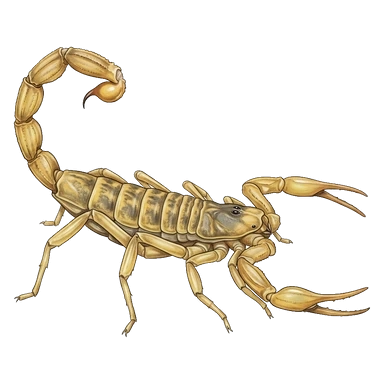
Deathstalker
 If it stingsDanger to people: DeadlyOne of the most dangerous animals in the world.
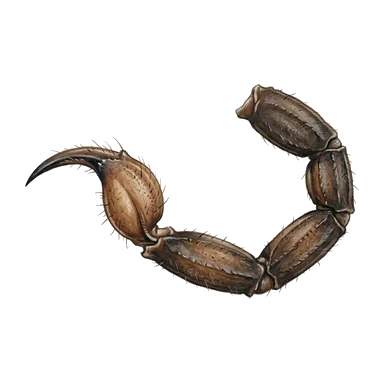 Stings
The deathstalker is a yellow scorpion of the deserts and dry scrub of Egypt and Sudan. Close relatives with the same name live across North Africa and the Middle East. It is one of the most dangerous scorpions in the world, and its venom is being studied as a possible way to help treat brain tumours.1
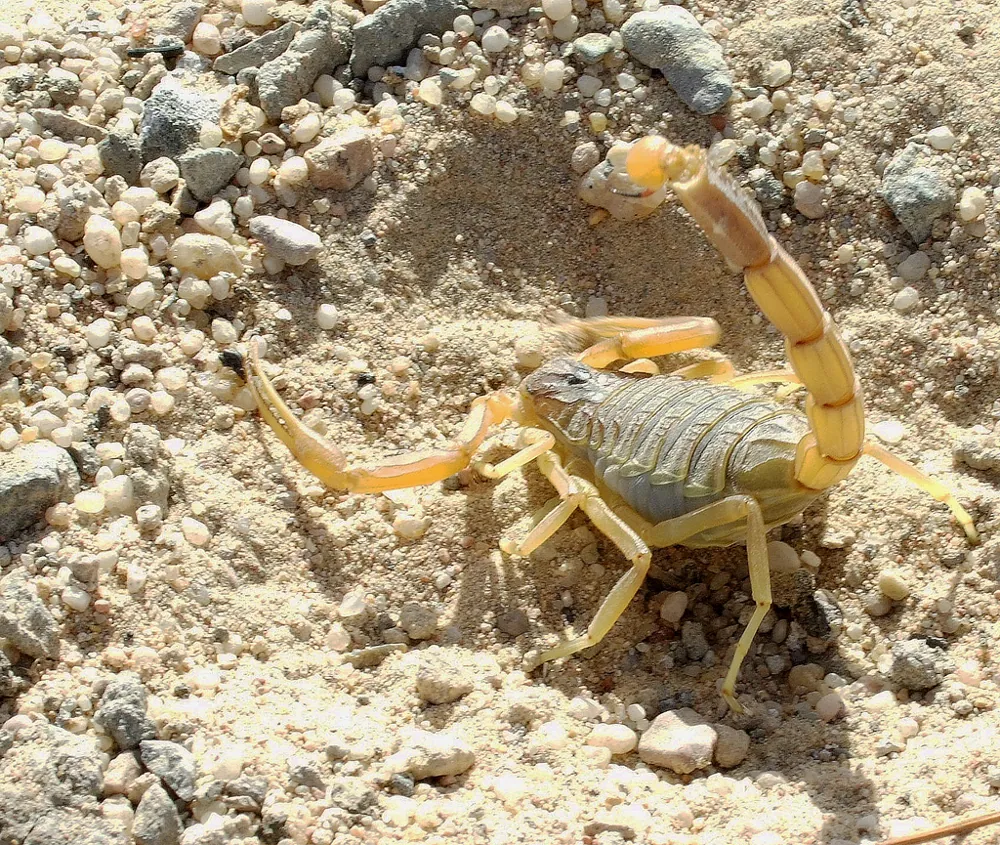
 How to recognise it
Venom power
Venom comes out through a stinger.
What does its venom do?
The venom is a powerful mixture of neurotoxins, which attack the nerves. Its named components include chlorotoxin, charybdotoxin, scyllatoxin and agitoxins. A sting is extraordinarily painful. There is also a high rate of pancreatitis (inflammation of the pancreas) after envenomation, and any sting carries a risk of anaphylaxis, a severe allergic reaction.1
How dangerous is it to people?
Danger to people: DeadlyOne of the most dangerous animals in the world.The deathstalker is one of the most dangerous scorpion species. Its venom has a low lethal dose, but a sting normally would not kill a healthy adult. Young children, elderly people and those who are infirm, such as people with heart conditions or allergies, are at much greater risk. If a sting proves deadly, the usual cause of death is pulmonary edema, which is fluid build-up in the lungs.1
 Good news: doctors have a medicine (antivenom) or a treatment for this.1
If it stings
Always call your emergency number first (for example 112 in Europe, 911 in North America, 000 in Australia).
- Call the emergency number and get to a hospital at once, especially for a child, an older person or someone with a heart problem. Keep the person calm and still and wash the sting with soap and water. Do not cut or suck the sting. Antivenom exists, but large doses are often needed.1
- Cool the sting with an ice pack and keep the person still. Get medical help fast, especially for children: some scorpions are deadly to kids.
This is general first aid guidance, not medical advice. Based on the first aid guidelines of the World Health Organization and the Australian Resuscitation Council. Facts come from public sources and may contain mistakes. When in doubt, always get medical help. First aid basics
 Stay safe
- Never touch, catch or tease a wild animal, even a small one, and even if it looks asleep or dead.
- Give it space. If you meet one, stay calm, step back slowly and let it go its own way.
- If one stings you: stay calm, keep still, call your emergency number (for example 112 in Europe, 911 in North America, 000 in Australia) or get to a hospital fast. Remember what it looked like, a photo helps.
It is not out to get you. It uses its venom to catch food or to protect itself, and it would much rather hide. More about staying safe
Where in the world?
How big is it?
How long is it?
 about as long as a bank card
 could cover 100 metres in 260 seconds (the fastest human needs 9.6)
How big is Deathstalker compared to you?
Just maths in your browser. Nothing is saved or sent anywhere.
How fast is it?


Facts
Its venom contains chlorotoxin, a peptide that has shown potential for treating human brain tumours.1
In animal trials, this tumour 'paint' could highlight clusters of as few as 200 cancer cells, while standard MRI needs more than 500,000.1
In 2015, clinical trials began on chlorotoxin with a fluorescent molecule attached, used as a brain tumour "paint" to mark cancer cells during surgery.1
There is some evidence that other venom components may help regulate insulin and could be used to treat diabetes.1
Myth buster
Myth: A deathstalker sting always kills.
Truth: A sting normally would not kill a healthy adult, but young children, the elderly and people with certain health conditions are at much greater risk.1
Where the facts come from
- Deathstalker (Wikipedia (CC BY-SA 4.0))
- Leiurus quinquestriatus (iNaturalist): names and classification.
- Venom Wiki: the danger level, the typical size and the speed guess are our own. See how we work them out: How we rate danger.
Every fact on this page has a number that points to its source. If we got something wrong, sorry, we are animal fans, not a science journal. Tell us at [email protected] and we will fix it.
Get the Venom Wiki app
Every creature, every picture and the games in your pocket, even without internet.


 Support Venom Wiki Venom Wiki is a one-man project: free, with no ads and no cookies. A small tip helps keep it online.Feed the scorpion
 Fat-tailed scorpion
 Emperor scorpion
 Arabian fat-tailed scorpion
 Transvaal thick-tailed scorpion
 European yellow-tailed scorpion
 Flat rock scorpion
 Black mamba
 Egyptian cobra
 Puff adder
 Boomslang
 Gaboon viper
 Western honey bee