
 Bitten or stung?
 All animals
 Pick a continent
 Africa
 Asia
 Europe
 South America
 Australia & Oceania
 Antarctica
 Pacific Ocean
 Atlantic Ocean
 Indian Ocean
 Arctic Ocean
 Mediterranean Sea
 Red Sea
 Caribbean Sea
 Coral Sea
 South China Sea
 Philippine Sea
 Andaman Sea
 North Sea
 Timor & Arafura Sea
 Bay of Bengal
 Gulf of California
 Games
 Venom battle
 Animal race
 Field notebook
 Venom TOP lists
 Stay safe
 Surprise me

Sydney funnel-web spider
 If it bites
 BitesEats: MeatTOP 50 · No. 26: Most dangerousTOP 50 · No. 7: Small but deadly
The Sydney funnel-web spider is a venomous spider from eastern Australia. It is found mostly within about 100 km of Sydney. Its bite can cause serious illness or death if it is not treated, so it is one of the most important spiders to know about in the region.1
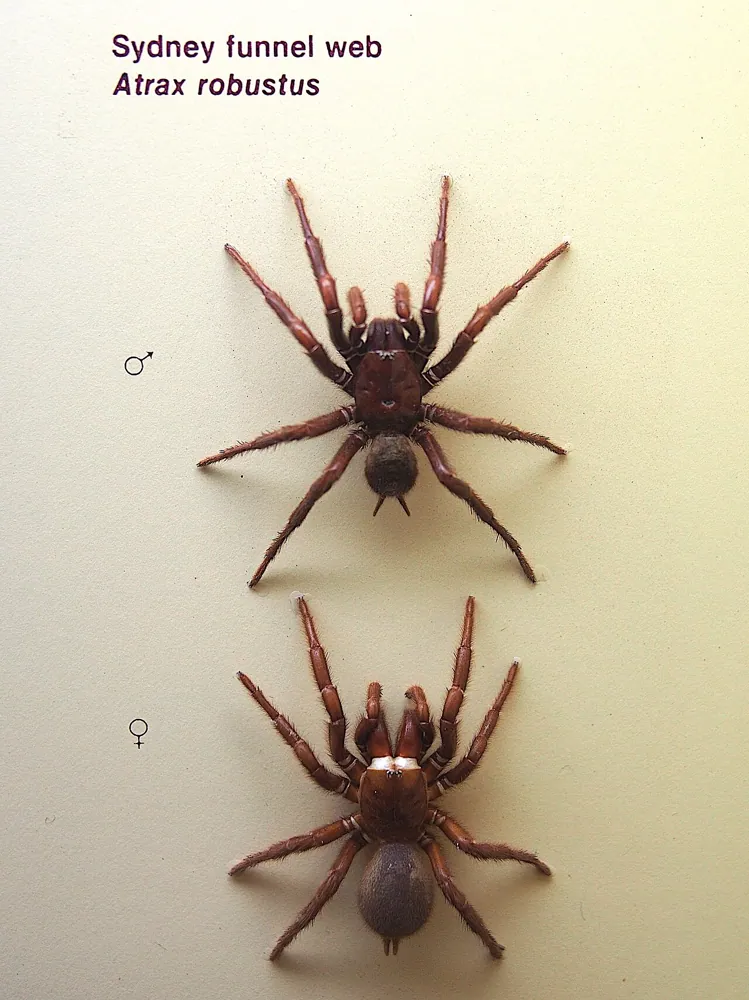
 How to recognise it
Venom power
Venom comes out through its fangs or teeth when it bites.
What does its venom do?
The venom contains delta-atracotoxin, which affects the ion channels of nerves and makes it highly toxic to humans and other primates. Symptoms can include intense nausea, vomiting, excessive saliva, muscle twitching, breathing difficulty, confusion and unconsciousness. In severe cases, symptoms begin in under one hour, with a median time of 28 minutes in one study.1
How dangerous is it to people?
Danger to people: DeadlyOne of the most dangerous animals in the world.A bite can cause serious illness or death if untreated. Children are at particular risk: in one study, 42% of severe cases were children. There is at least one recorded case of a small child dying within 15 minutes of a bite. Only the Sydney funnel-web and the northern tree-dwelling funnel-web have been known to cause fatal bites in humans. There have been no recorded deaths since antivenom became available in 1981.1
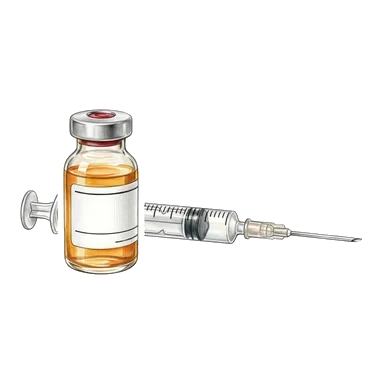 Good news: doctors have a medicine (antivenom) or a treatment for this.1
What does it do when it is scared?
When threatened or provoked, it rears up on its hind legs, shows its fangs and may bite repeatedly while holding on tightly.1
If it bites
Always call your emergency number first (for example 112 in Europe, 911 in North America, 000 in Australia).
- In Australia, treat any big black spider bite as a funnel-web bite: Pressure immobilisation: wrap a firm elastic bandage over the bite and then up the whole limb, splint it, and keep the person completely still until help arrives.
- Be ready to give rescue breaths or CPR if breathing gets weak or stops.
- Call the emergency number (000 in Australia) at once. Keep the person still and calm, put a firm pressure bandage over the bite and then up the whole limb, and splint it. Do not wash the bite or use a tourniquet. Funnel-web antivenom works very well and is available in hospitals.1
This is general first aid guidance, not medical advice. Based on the first aid guidelines of the World Health Organization and the Australian Resuscitation Council. Facts come from public sources and may contain mistakes. When in doubt, always get medical help. First aid basics
 Stay safe
- Never touch, catch or tease a wild animal, even a small one, and even if it looks asleep or dead.
- Give it space. If you meet one, stay calm, step back slowly and let it go its own way.
- If one bites you: stay calm, keep still, call your emergency number (for example 112 in Europe, 911 in North America, 000 in Australia) or get to a hospital fast. Remember what it looked like, a photo helps.
It is not out to get you. It uses its venom to catch food or to protect itself, and it would much rather hide. More about staying safe
Where in the world?
How big is it?
How long is it?
 shorter than your little finger
 could cover 100 metres in 260 seconds (the fastest human needs 9.6)
How big is Sydney funnel-web spider compared to you?
Just maths in your browser. Nothing is saved or sent anywhere.
How fast is it?


Facts
Males can survive submersion in water for up to twenty-four hours by trapping air bubbles on the hairs of their abdomen.1
One dose of antivenom needs around 70 milkings from a Sydney funnel-web spider.1
The most antivenom vials used to treat one bite is twelve, for a 10-year-old boy bitten in February 2017 by a male hiding in a shoe.1
Female spiders are long-lived and spend most of their time in their burrows. No severe envenoming by a female has been reported.1
Activity increases after heavy rain, because burrows can become flooded.1
Myth buster
Myth: The male and female funnel-web spiders were thought to be different species.
Truth: In 1927, Anthony Musgrave showed from anatomical similarities that the male Euctimena tibialis was the male of Atrax robustus, the same species as the female.1
Where the facts come from
- Sydney funnel-web spider (Wikipedia (CC BY-SA 4.0))
- Atrax robustus (iNaturalist): names and classification.
- Venom Wiki: the danger level, the typical size and the speed guess are our own. See how we work them out: How we rate danger.
Every fact on this page has a number that points to its source. If we got something wrong, sorry, we are animal fans, not a science journal. Tell us at [email protected] and we will fix it.
Get the Venom Wiki app
Every creature, every picture and the games in your pocket, even without internet.


 Support Venom Wiki Venom Wiki is a one-man project: free, with no ads and no cookies. A small tip helps keep it online.Feed the scorpion
More from the same group: Tarantulas & funnel-webs
 Northern tree-dwelling funnel-web spiderTarantulas & funnel-websDeadly
 Red-headed mouse spiderTarantulas & funnel-websNeeds a doctor
 Queensland whistling tarantulaTarantulas & funnel-websPainful
 Blue Mountains funnel-web spiderTarantulas & funnel-websCan kill
 Darling Downs funnel-web spiderTarantulas & funnel-websCan kill
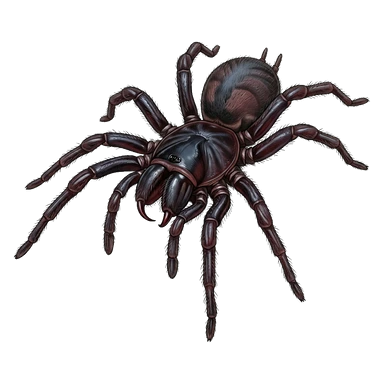 Illawarra funnel-web spiderTarantulas & funnel-websCan kill
 Coastal taipan
 Common death adder
 Eastern brown snake
 Inland taipan
 Tiger snake
 Cane toad
