
 Bitten or stung?
 All animals
 Pick a continent
 Africa
 Asia
 Europe
 South America
 Australia & Oceania
 Antarctica
 Pacific Ocean
 Atlantic Ocean
 Indian Ocean
 Arctic Ocean
 Mediterranean Sea
 Red Sea
 Caribbean Sea
 Coral Sea
 South China Sea
 Philippine Sea
 Andaman Sea
 North Sea
 Timor & Arafura Sea
 Bay of Bengal
 Gulf of California
 Games
 Venom battle
 Animal race
 Field notebook
 Venom TOP lists
 Stay safe
 Surprise me

Coastal taipan
 If it bites
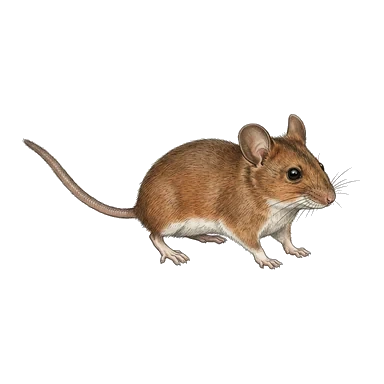
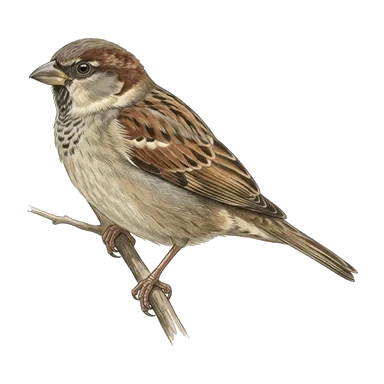
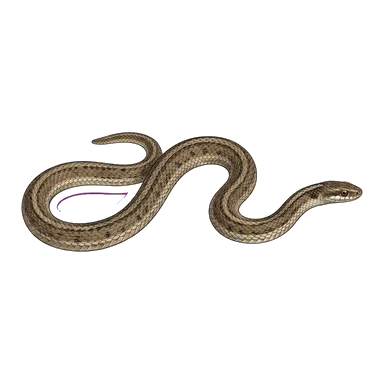
 BitesEats: MeatTOP 50 · No. 13: Most dangerousTOP 50 · No. 21: LongestTOP 50 · No. 29: HeaviestTOP 50 · No. 11: Fastest
The coastal taipan is one of the most feared snakes in Australia. It is a large, fast snake with a powerful venom, and it lives along the coasts of northern and eastern Australia and on the island of New Guinea. It is one of the reasons snake bite safety matters so much in these areas.1
 How to recognise it
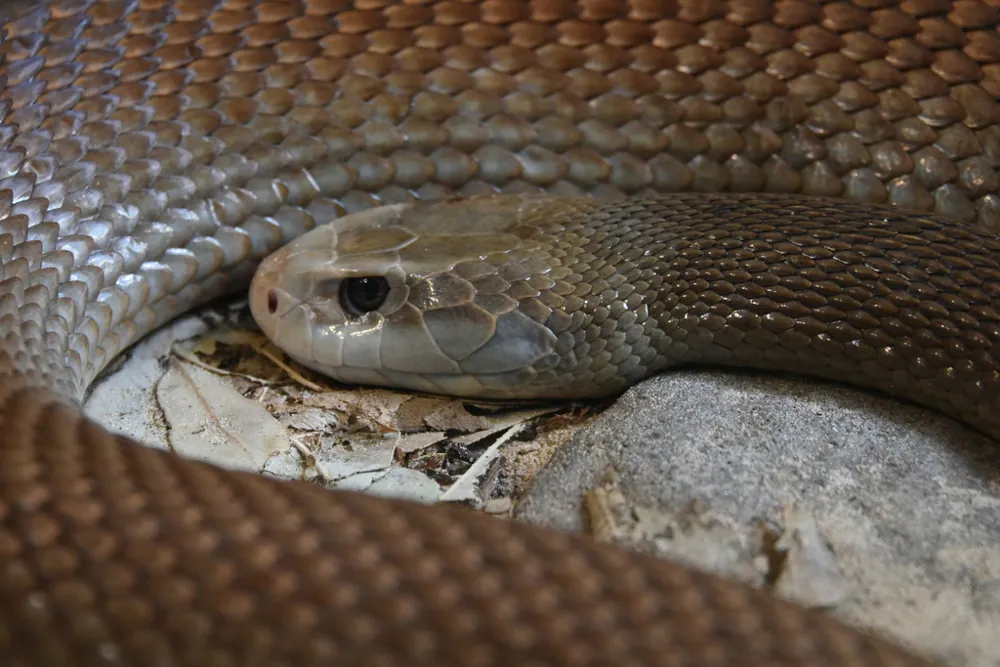
- Light olive or reddish-brown upperparts, sometimes dark grey to black1
- Paler sides and a creamy-white to pale yellow belly, often marked with orange or pink flecks1
- Long, narrow head with an angular brow and a lighter-coloured face1
- Large, round, light brown or hazel eyes with large pupils1
- Typically about 2.0 m long as an adult, with a slender body1
Often confused with: It is often confused with the eastern brown snake, northern brown snake and king brown snake. The coastal taipan has a larger head and a narrow neck, and a lighter face and snout. In the other species, the head and neck are the same width.1
Venom power
Venom comes out through its fangs or teeth when it bites.
What does its venom do?
Its venom is mainly neurotoxic, which means it attacks the nerves, and it is also coagulopathic, which means it disturbs blood clotting. In a recorded bite case, the victim became unwell within 15 to 30 minutes, with drooping eyelids, nausea and difficulty breathing. Some victims have also lost their sense of smell for a time.1
How dangerous is it to people?
Danger to people: DeadlyOne of the most dangerous animals in the world.It is considered one of the most dangerous snakes in the region and is classified by the World Health Organization as a snake of medical importance. Several deaths were recorded from its bites in the 1930s and 1940s, and more were added later as historical cases.1
 Good news: doctors have a medicine (antivenom) or a treatment for this.1
What does it do when it is scared?
It tends to avoid confrontation but becomes highly defensive if provoked.1
If it bites
Always call your emergency number first (for example 112 in Europe, 911 in North America, 000 in Australia).
- Pressure immobilisation: wrap a firm elastic bandage over the bite and then up the whole limb, splint it, and keep the person completely still until help arrives.
- Do not wash the bite: hospitals can test the venom left on the skin to choose the right antivenom.
- Be ready to give rescue breaths or CPR if breathing gets weak or stops.
- Call the emergency number (000 in Australia) at once. Keep the person still and calm, put a firm pressure bandage over the bite and then up the whole limb, and splint it. Do not wash the bite, cut it or use a tourniquet. Hospitals treat bites with taipan antivenom.1
This is general first aid guidance, not medical advice. Based on the first aid guidelines of the World Health Organization and the Australian Resuscitation Council. Facts come from public sources and may contain mistakes. When in doubt, always get medical help. First aid basics
 Stay safe
- Never touch, catch or tease a wild animal, even a small one, and even if it looks asleep or dead.
- Give it space. If you meet one, stay calm, step back slowly and let it go its own way.
- If one bites you: stay calm, keep still, call your emergency number (for example 112 in Europe, 911 in North America, 000 in Australia) or get to a hospital fast. Remember what it looked like, a photo helps.
It is not out to get you. It uses its venom to catch food or to protect itself, and it would much rather hide. More about staying safe
Where in the world?
How big is it?
How long is it?
How heavy is it?
 as long as 3 dogs nose to tail
 as long as 16 bananas end to end
 about as heavy as a house cat
 could cover 100 metres in 41 seconds (the fastest human needs 9.6)
How big is Coastal taipan compared to you?
Just maths in your browser. Nothing is saved or sent anywhere.
How fast is it?


Facts
The longest recorded coastal taipan was 2.9 m long and weighed 6.5 kg, and larger specimens of up to 3.3 m are widely believed to exist.1
Its hunting method, freezing, striking and releasing prey, is similar to that of the African black mamba.1
It is the second-longest venomous snake in Australia, after the king brown snake.1
Newly hatched young grow quickly, reaching about 1.0 m in their first year.1
It may have become more common since cane toads were introduced to Australia in 1935.1
Myth buster
Myth: The snake hides in trees and drops onto people, and it chases people for hours.
Truth: Stories of it hiding in trees and dropping on victims were spread in newspapers and books, but snake handlers say it is shy and avoids confrontation. It only becomes highly defensive when provoked.1
For venom experts
- Scientific name
- Oxyuranus scutellatus
- Group
- Australian snakes
- Also called
- common taipan, taipan, giant brown snake1
- Family
- Elapidae2
- Order
- Squamata
- Continents
- Australia & Oceania
- Babies
- It lays a clutch of 7 to 20 eggs. The eggs take 60 to 80 days to hatch, and the young are 30 to 34 cm long.1
- How it is doing in the wild
- Least Concern (IUCN)1
- Danger to people
- 5 / 5: Deadly3
Where the facts come from
- Coastal taipan (Wikipedia (CC BY-SA 4.0))
- Oxyuranus scutellatus (iNaturalist): names and classification.
- Venom Wiki: the danger level, the typical size and the speed guess are our own. See how we work them out: How we rate danger.
Every fact on this page has a number that points to its source. If we got something wrong, sorry, we are animal fans, not a science journal. Tell us at [email protected] and we will fix it.
Get the Venom Wiki app
Every creature, every picture and the games in your pocket, even without internet.


 Support Venom Wiki Venom Wiki is a one-man project: free, with no ads and no cookies. A small tip helps keep it online.Feed the scorpion
 Common death adder
 Eastern brown snake
 Inland taipan
 Tiger snake
 Collett's snake
 Desert death adder
 Sydney funnel-web spider
 Cane toad
 Redback spider
 Brown tree snake
 Common wasp
 Hooded pitohui