
 Afrika
 Asien
Asien Europa
 Südamerika
 Australien & Ozeanien
 Antarktis
 Pazifischer Ozean
 Atlantischer Ozean
 Indischer Ozean
 Nordpolarmeer
 Mittelmeer
 Rotes Meer
 Karibisches Meer
 Korallenmeer
 Südchinesisches Meer
 Philippinensee
 Andamanensee
 Nordsee
 Timorsee & Arafurasee
 Golf von Bengalen
 Golf von Kalifornien
Mexican west coast rattlesnake
 Bisse
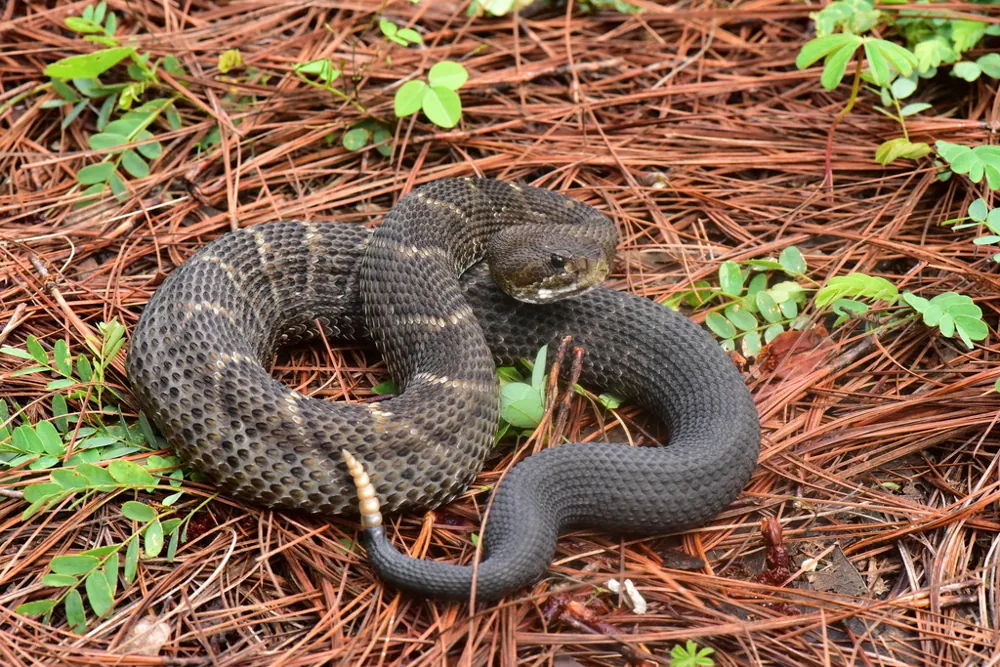
BisseThe Mexican west coast rattlesnake is a large venomous pit viper. It lives on the coastal plain of western Mexico. It is one of the largest rattlesnakes in the world, so its size and its strong venom make it one to respect.1

 So erkennst du es
- Brown or grey body with 26 to 41 dark, diamond-shaped blotches that have light edges.1
- Within its range, it is the only rattlesnake with diamond-shaped markings on its back.1
- Head is a uniform greyish-brown, with lighter lip scales and a dark bar behind each eye.1
- Young snakes are mostly red, and adults become olive green.1
- Body is moderately stout and rather rectangular in cross section.1
Oft verwechselt mit: It often lives in the same areas as C. molossus, and the two hybridise freely. The two species are easy to tell apart, but hybrid snakes are hard to identify.1
Giftkraft
Das Gift kommt beim Beißen durch die Giftzähne oder Zähne heraus.
Was macht sein Gift, wenn es beißt oder sticht?
Its venom is highly toxic and is produced in large amounts. The venom contains proteases, which are enzymes that break down proteins. In some populations, it may also contain a component related to Mojave toxin.1
Wie gefährlich ist es für Menschen?
Gefahr für Menschen: Sehr gefährlichEs kann einen Menschen töten, der keine Behandlung bekommt.Large specimens should be regarded as very dangerous. An average venom yield of 297 mg of dried venom has been recorded.1
 Gute Nachricht: Ärzte haben dafür ein Medikament (Gegengift) oder eine Behandlung.1
 Wenn es beißt
- Halte die Person still und ruhig, halte den gebissenen Arm oder das Bein auf Herzhöhe, nimm Ringe und alles Enge ab und bring sie schnell in ein Krankenhaus.
Ruf immer zuerst deine Notrufnummer an (112, 000, 911). Das sind allgemeine Erste-Hilfe-Hinweise, keine ärztliche Beratung. Erste-Hilfe-Grundlagen
 Bleib sicher
- Fass ein wildes Tier niemals an, fang es nicht und ärgere es nicht, auch kein kleines, und auch nicht, wenn es schlafend aussieht oder tot.
- Halte Abstand. Wenn du einem begegnest, bleib ruhig, geh langsam zurück und lass es seiner Wege gehen.
- Wenn dich eines beißt: Bleib ruhig, halt still, ruf deine Notrufnummer an (112, 000, 911) oder fahr schnell in ein Krankenhaus. Merk dir, wie es aussah, ein Foto hilft.
Es hat es nicht auf dich abgesehen. Es benutzt sein Gift, um Futter zu fangen oder sich zu schützen, und versteckt sich viel lieber. Mehr über Sicherheit
Wo auf der Welt?
Wie groß ist es?
Wie lang ist es?
Wie schwer ist es?
 so lang wie 4 Hauskatzen von Nase bis Schwanz
 so lang wie 11 Bananen hintereinander
 könnte 100 Meter in 86 Sekunden schaffen (der schnellste Mensch braucht 9,6)
Wie groß ist Mexican west coast rattlesnake im Vergleich zu DIR?
Nur Rechnen in deinem Browser. Nichts wird gespeichert oder irgendwohin geschickt.
Wie schnell ist es?


Fakten
It is one of the largest rattlesnake species, and specimens over 150 cm are not uncommon.1
Young snakes are red, and they turn olive green as they grow into adults.1
Its scientific name comes from the Greek word for king, a nod to its size and strong venom.1
It hybridises freely with C. molossus where their ranges overlap.1
Woher die Fakten kommen
- Crotalus basiliscus (Wikipedia (CC BY-SA 4.0))
- Crotalus basiliscus (iNaturalist): Namen und Klassifikation.
- Venom Wiki: die Gefahrenstufe, die typische Größe und die geschätzte Geschwindigkeit sind von uns. So berechnen wir sie: So bewerten wir die Gefahr.
Jeder Fakt auf dieser Seite hat eine Nummer, die auf seine Quelle zeigt. Wenn wir etwas falsch haben: Entschuldigung, wir sind Tierfans, keine Fachzeitschrift. Schreib uns an [email protected] und wir korrigieren es.
 Der Skorpion hat Hunger! Venom Wiki ist ein Ein-Mann-Projekt: kostenlos, ohne Werbung und ohne Tracker. Ein kleines Trinkgeld hilft, es online zu halten.Füttere den Skorpion
 Eastern diamondback rattlesnake
 Timber rattlesnake
 Western diamondback rattlesnake
 Sidewinder
 Mojave rattlesnake
 Aruba rattlesnake
 Terciopelo-Lanzenotter
 Eastern coral snake
 Eyelash viper
 Arizona bark scorpion
 Brown recluse
 Cane toad