
 África
 Asia
Asia Europa
 Sudamérica
 Australia y Oceanía
 Antártida
 Océano Pacífico
 Océano Atlántico
 Océano Índico
 Océano Ártico
 Mar Mediterráneo
 Mar Rojo
 Mar Caribe
 Mar del Coral
 Mar de China Meridional
 Mar de Filipinas
 Mar de Andamán
 Mar del Norte
 Mar de Timor y de Arafura
 Golfo de Bengala
 Golfo de California
Colorado River toad
 Veneno en la piel
The Colorado River toad is a large toad of the deserts of the southwestern United States and northwestern Mexico. It is famous for the toxic, mind-altering secretions it releases from glands in its skin when threatened. These secretions can be deadly if swallowed, so it should be left alone.1


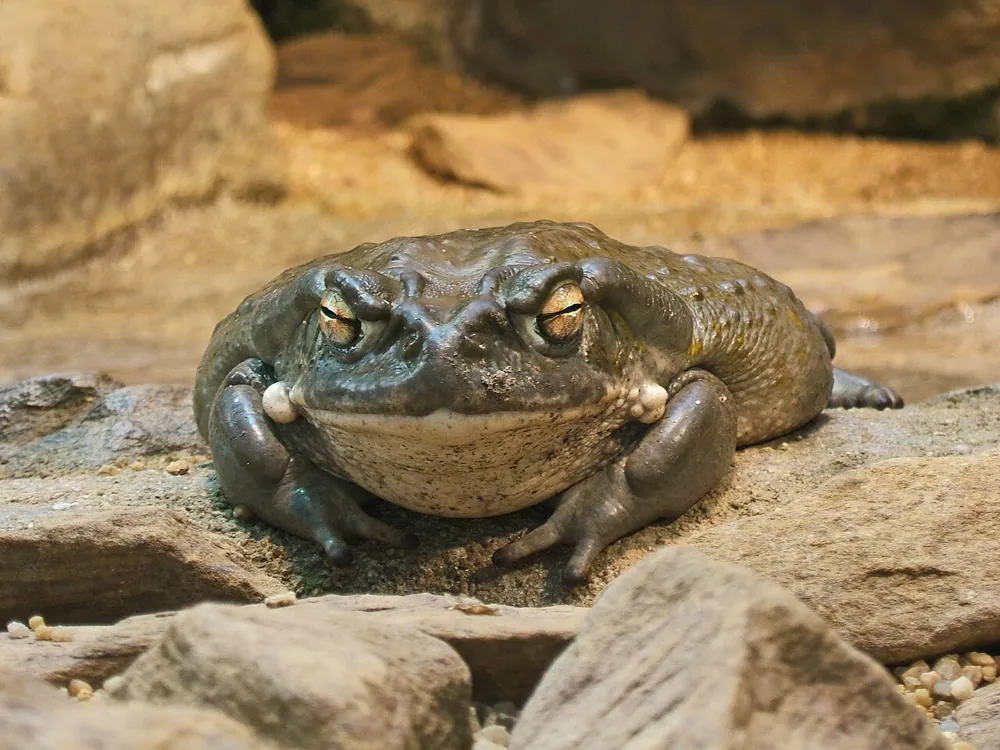
 Cómo reconocerlo
Poder tóxico
Su piel es venenosa. Es peligroso tocarlo, lamerlo o comerlo.
¿Qué hace su toxina?
The toad releases poison from glands in its skin, including the large parotoid glands behind the eyes. The poison contains psychoactive compounds, including 5-MeO-DMT and bufotenin, which affect the brain. It also contains digoxin-like cardiac glycosides, which act on the heart, and ingesting the poison can be fatal. In one reported case, a young woman who drank a tea made from toad preparation began vomiting and had difficulty breathing soon after, and died about two and a half hours later.1
¿Qué peligro tiene para las personas?
Peligro para las personas: GraveSi alguien lo toca o se lo come, hay que ir al médico. Las muertes son muy raras.The poison is potent enough to kill a grown dog, and dogs that attack toads have been paralysed or killed. Several cases of human poisoning from swallowing toad secretions or eggs have been reported, and at least one death from the ch'an su preparation has been recorded. The toad has also been linked to poisoning and at least one death from the use of related toad preparations as street drugs.1
¿Qué hace cuando se asusta?
When threatened, it releases toxins from glands in its skin.1
 Si alguien lo tocó o se lo comió
- Si alguien tocó uno: lávale bien las manos y que no se toque los ojos ni la boca. Si un niño o una mascota lo lamió o se lo comió: llama al centro de toxicología o a emergencias.
Llama siempre primero a tu número de emergencias (112, 000, 911). Esto son pautas generales de primeros auxilios, no consejo médico. Primeros auxilios básicos
 Mantente a salvo
- Nunca toques, atrapes ni molestes a un animal salvaje, aunque sea pequeño y aunque parezca dormido o muerto.
- Déjale espacio. Si te encuentras uno, mantén la calma, retrocede despacio y deja que siga su camino.
- Si lo tocaste o te lo comiste: no te frotes los ojos ni la boca, lávate las manos y busca ayuda médica.
No va a por ti. Su veneno solo está ahí para que nadie se lo coma. Más sobre cómo protegerte
¿En qué parte del mundo?
¿Qué tamaño tiene?
¿Cuánto mide?
 mide como 6 piezas de construcción de juguete en fila
 podría recorrer 100 metros en 180 segundos (el humano más rápido necesita 9,6)
¿Qué tamaño tiene Colorado River toad comparado contigo?
Solo cálculos en tu navegador. No se guarda ni se envía nada a ningún sitio.
¿Qué velocidad alcanza?


Datos
It is the only toad species in which bufotenin is present in large enough amounts to have a psychoactive effect.1
Raccoons have learned to pull a toad away from water by its back leg, turn it over and feed on its belly, which keeps them away from the poison glands.1
Unlike most vertebrates, it gets most of its water by absorbing it across its belly through a special area of skin called the seat patch.1
A female can lay up to 8,000 eggs.1
It is the largest toad in the United States, apart from the non-native cane toad.1
Cazamitos
Mito: Licking or smoking the toad's secretions is a safe way to get high or to treat illness.
Verdad: Swallowing the secretions has caused poisonings and deaths. Claims about its therapeutic use are unverified, and the US National Park Service has warned people not to handle or lick the toad.1
Para expertos en veneno
- Nombre científico
- Incilius alvarius
- Grupo
- Ranas venenosas, sapos y tritones
- Familia
- Bufonidae2
- Orden
- Anura
- Continentes
- Norteamérica
- Crías
- Females lay eggs in ponds, slow-moving streams, temporary pools or man-made structures that hold water, and can lay up to 8,000 eggs in a long tube of jelly.1
- Cómo le va en la naturaleza
- Listed as threatened in New Mexico and California. A June 2025 study found that persistent trapping in Mexico has decimated several populations and put the species at risk of extinction.1
- Peligro para las personas
- 3 / 5: Grave3
De dónde salen los datos
- Colorado River toad (Wikipedia (CC BY-SA 4.0))
- Incilius alvarius (iNaturalist): nombres y clasificación.
- Venom Wiki: el nivel de peligro, el tamaño típico y la velocidad estimada son nuestros. Mira cómo los calculamos: Cómo valoramos el peligro.
Cada dato de esta página tiene un número que lleva a su fuente. Si nos hemos equivocado en algo, perdón, somos fans de los animales, no una revista científica. Escríbenos a [email protected] y lo arreglamos.
 ¡El escorpión tiene hambre! Venom Wiki es un proyecto de una sola persona: gratis, sin anuncios y sin rastreadores. Una pequeña propina ayuda a mantenerlo en línea.Alimenta al escorpión
Más del mismo grupo: Ranas venenosas, sapos y tritones
 Cane toadRanas venenosas, sapos y tritonesNecesita médicoNo tocar
 Strawberry poison-dart frogRanas venenosas, sapos y tritonesSolo dueleNo tocar
 California newtRanas venenosas, sapos y tritonesPuede matarNo tocar
 Rough-skinned newtRanas venenosas, sapos y tritonesPuede matarNo tocar
 Panamanian golden frogRanas venenosas, sapos y tritonesNecesita médicoNo tocar
 Eastern newtRanas venenosas, sapos y tritonesSolo dueleNo tocar
 Terciopelo
 Eastern coral snake
 Eastern diamondback rattlesnake
 Eyelash viper
 Timber rattlesnake
 Western diamondback rattlesnake