
 África
 Asia
Asia Europa
 Sudamérica
 Australia y Oceanía
 Antártida
 Océano Pacífico
 Océano Atlántico
 Océano Índico
 Océano Ártico
 Mar Mediterráneo
 Mar Rojo
 Mar Caribe
 Mar del Coral
 Mar de China Meridional
 Mar de Filipinas
 Mar de Andamán
 Mar del Norte
 Mar de Timor y de Arafura
 Golfo de Bengala
 Golfo de California
Moses sole
 Veneno en la piel
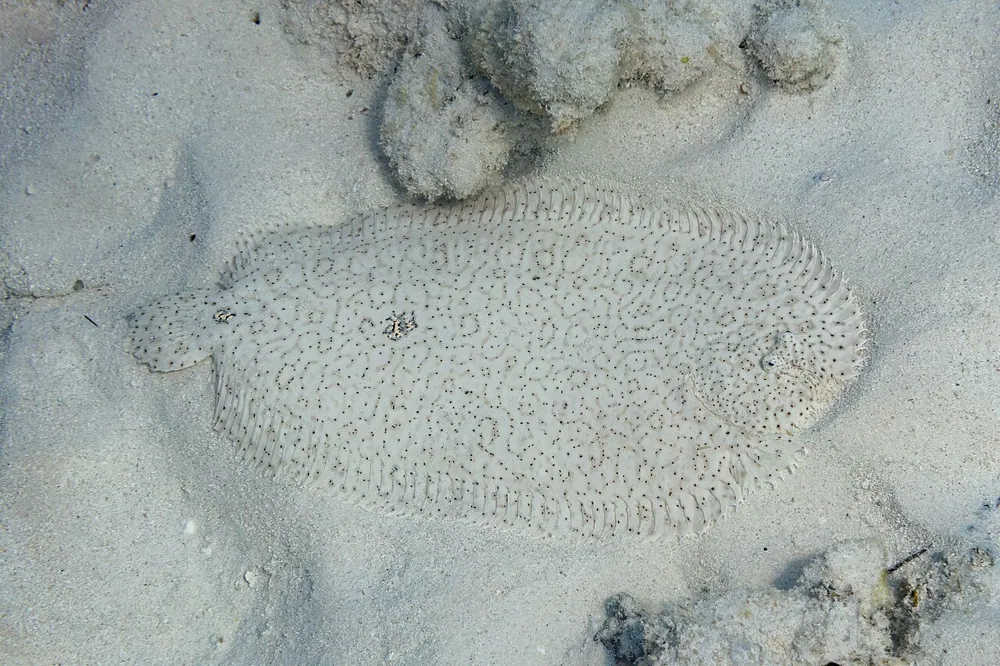
The Moses sole is a flatfish that lives in shallow coastal waters of the western Indian Ocean, from the Red Sea to Sri Lanka and along the east coast of Africa. It hides on the seabed and gives off a milky toxin from its fins to deter predators, including sharks.1
 Cómo reconocerlo
- Colour is variable, often whitish, pale brown or pale grey, with irregular dark brown ring-shaped markings1
- Many dark brown spots cover the head, body and fins1
- Normally two brown dots containing yellow flecks sit along the lateral line1
- Adults have a highly compressed, flat-sided body, with both eyes on the right side of the head1
- The rounded tail fin is not joined to the dorsal or cloacal fin1
Se confunde a menudo con: Mimic octopuses copy the finless sole by adapting their shape, colour and texture. They can also mimic venomous sea snakes and fish.1
Poder tóxico
Su piel es venenosa. Es peligroso tocarlo, lamerlo o comerlo.
¿Qué hace su toxina?
The finless sole releases a milky toxin called an ichthyotoxin from the base of its dorsal and cloacal fins. The main toxin, pardaxin, damages cell membranes so that cells leak their contents. It irritates the sensitive gills of predator fish.1
¿Qué peligro tiene para las personas?
Peligro para las personas: LeveComo una picadura de abeja o menos. Prácticamente inofensivo para las personas.It is caught for food and sold fresh, even though its skin secretion is poisonous.1
¿Qué hace cuando se asusta?
When threatened, it releases its toxic milky secretion from its fins, and its colour helps it blend in with sandy or pebbled seabeds.1
 Si alguien lo tocó o se lo comió
- Si alguien se lo comió o tiene síntomas después de comerlo: llama enseguida a tu número de emergencias o al centro de toxicología.
Llama siempre primero a tu número de emergencias (112, 000, 911). Esto son pautas generales de primeros auxilios, no consejo médico. Primeros auxilios básicos
 Mantente a salvo
- Nunca toques, atrapes ni molestes a un animal salvaje, aunque sea pequeño y aunque parezca dormido o muerto.
- Déjale espacio. Si te encuentras uno, mantén la calma, retrocede despacio y deja que siga su camino.
- Si lo tocaste o te lo comiste: no te frotes los ojos ni la boca, lávate las manos y busca ayuda médica.
No va a por ti. Su veneno solo está ahí para que nadie se lo coma. Más sobre cómo protegerte
¿En qué parte del mundo?
¿Qué tamaño tiene?
¿Cuánto mide?
 mide como 6 piezas de construcción de juguete en fila
¿Qué tamaño tiene Moses sole comparado contigo?
Solo cálculos en tu navegador. No se guarda ni se envía nada a ningún sitio.
¿Qué velocidad alcanza?


,_Zanz%C3%ADbar,_Tanzania,_2024-05-31,_DD_32.jpg)
Datos
One of its toxins, pardaxin-1, is 5 to 10 times more toxic than pardaxin-2 and has unusual shark-repelling properties.1
Its toxin, pardaxin, is used by the fish as a defence against sharks.1
Mimic octopuses copy its shape, colour and texture, and can also copy venomous sea snakes and fish.1
Juveniles have one eye on each side of the head, but as they mature the left eye moves to the right side.1
Eugenie Clark carried out much of the early research on this species.1
De dónde salen los datos
- Pardachirus marmoratus (Wikipedia (CC BY-SA 4.0))
- Pardachirus marmoratus (iNaturalist): nombres y clasificación.
- Venom Wiki: el nivel de peligro, el tamaño típico y la velocidad estimada son nuestros. Mira cómo los calculamos: Cómo valoramos el peligro.
Cada dato de esta página tiene un número que lleva a su fuente. Si nos hemos equivocado en algo, perdón, somos fans de los animales, no una revista científica. Escríbenos a [email protected] y lo arreglamos.
 ¡El escorpión tiene hambre! Venom Wiki es un proyecto de una sola persona: gratis, sin anuncios y sin rastreadores. Una pequeña propina ayuda a mantenerlo en línea.Alimenta al escorpión
Más del mismo grupo: Otros animales tóxicos
 Japanese pufferfishOtros animales tóxicosMortal
 Hawksbill sea turtleOtros animales tóxicosPuede matar
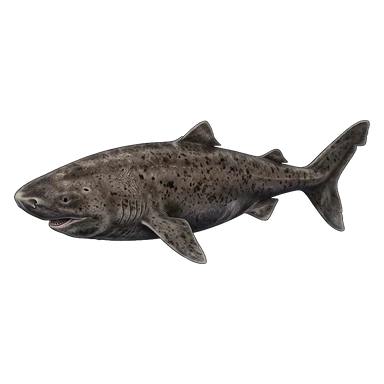 Greenland sharkOtros animales tóxicosSolo duele
 Silver-cheeked toadfishOtros animales tóxicosMortal
 Blackspotted pufferOtros animales tóxicosPuede matar
 White-spotted pufferOtros animales tóxicosPuede matar
También vive en: Océano Pacífico
 Australian box jellyfishMedusas y picadores marinosMortalNo tocar
 Geography coneCaracoles cono y pulposMortal
 Greater blue-ringed octopusCaracoles cono y pulposMortal
 Southern blue-ringed octopusCaracoles cono y pulposMortal
 Irukandji jellyfishMedusas y picadores marinosPuede matarNo tocar
 Reef stonefishPeces venenososPuede matarNo tocar