
 Afrika
 Asia
Asia Europa
 Hego Amerika
 Australia eta Ozeania
 Antartika
 Ozeano Barea
 Ozeano Atlantikoa
 Ozeano Indikoa
 Ozeano Artikoa
 Mediterraneo itsasoa
 Itsaso Gorria
 Karibe itsasoa
 Koralen itsasoa
 Hego Txinako itsasoa
 Filipinetako itsasoa
 Andaman itsasoa
 Ipar itsasoa
 Timor eta Arafura itsasoak
 Bengalako golkoa
 Kaliforniako golkoa
Chinese red-headed centipede
 Koska
KoskaThe Chinese red-headed centipede is one of the largest centipedes in the world. It lives across much of southeastern Asia and on many islands and continents, often through human introduction. It is an active hunter with a venomous bite, so it is best seen from a safe distance.1



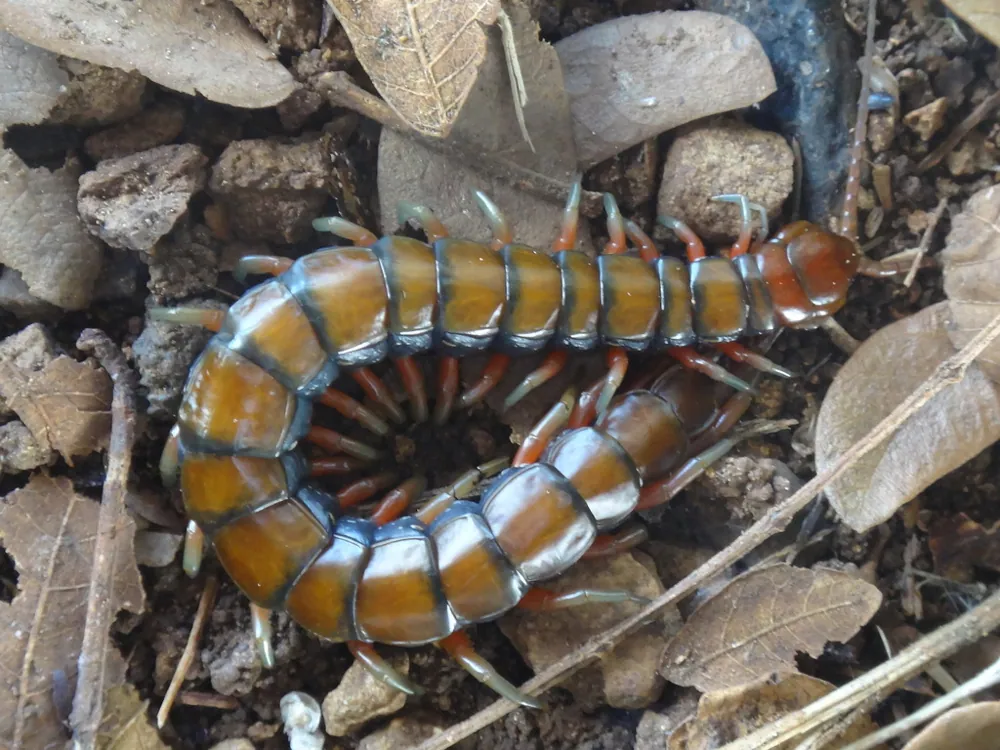
 Nola ezagutu
Pozoi-ahalmena
Pozoia letaginetatik edo hortzetatik ateratzen da kosk egiten duenean.
Zer egiten du bere pozoiak?
Its venom normally causes extreme pain, among other symptoms. A fatal case was reported in the Philippines, where a 7-year-old girl was bitten on the head and died 29 hours later.1
Zein arriskutsua da pertsonentzat?
Arriskua pertsonentzat: LarriaKoska batek medikua behar du. Heriotzak oso arraroak dira.Its bite causes extreme pain, and a child has died after being bitten in the Philippines. Bites per year and other risk details are not recorded.1
Zer egiten du beldurtzen denean?
It is aggressive and nervous, ready to strike if disturbed, and when defending itself it coils its whole body around the attacker while using its toxicognaths.1
 Kosk egiten badu
- Garbitu koska, hoztu edo sartu ur epelean minerako, eta lortu mediku-laguntza okerrera egiten badu.
Deitu beti lehenik zure larrialdi-zenbakira (112, 000, 911). Lehen sorospenei buruzko orientabide orokorra da hau, ez mediku-aholkua. Lehen sorospenen oinarriak
 Egon seguru
- Ez ukitu, ez harrapatu eta ez zirikatu inoiz animalia basati bat, txikia izan arren, eta lo edo hilda dagoela badirudi ere.
- Utzi tartea. Bat aurkitzen baduzu, egon lasai, egin atzera poliki eta utzi bere bidetik joaten.
- Batek kosk egiten badizu: egon lasai, egon geldi, deitu zure larrialdi-zenbakira (112, 000, 911) edo joan ospitalera azkar. Gogoratu nolakoa zen, argazki batek laguntzen du.
Ez dabil zure atzetik. Pozoia janaria harrapatzeko edo bere burua babesteko erabiltzen du, eta askoz nahiago du ezkutatu. Seguru egoteari buruz gehiago
Munduko zein tokitan?
Zein handia da?
Zein luzea da?
 6 eraikuntza-bloke ilaran jarrita bezain luzea
 100 metro 190 segundotan egin litzake (gizakirik azkarrenak 9,6 behar ditu)
Zein handia da Chinese red-headed centipede ZUREKIN alderatuta?
Matematika hutsa zure nabigatzailean. Ez da ezer gordetzen, ezta inora bidaltzen ere.
Zein azkarra da?


Datuak
It is among the largest centipedes in the world, with a normal maximum length of 20 cm.1
The centipede was a traditional food source for Aboriginal Australians.1
Adults molt once every year and may live for 10 years or more.1
It is a popular pet among arthropod hobbyists.1
Young centipedes molt once a year and take 3 to 4 years to reach full adult size.1
Pozoi-adituentzat
- Izen zientifikoa
- Scolopendra subspinipes
- Taldea
- Ehunzangoak
- Familia
- Scolopendridae2
- Ordena
- Scolopendromorpha
- Kontinenteak
- Asia
- Kumeak
- The female lays 50 to 80 eggs in a dark, protected place, guards them until they hatch, and wraps around her young if danger is detected.1
- Bizi-iraupena
- 10 urte inguru1
- Arriskua pertsonentzat
- 3 / 5: Larria3
Datuak nondik datozen
- Scolopendra subspinipes (Wikipedia (CC BY-SA 4.0))
- Scolopendra subspinipes (iNaturalist): izenak eta sailkapena.
- Venom Wiki: arrisku-maila, ohiko tamaina eta abiadura-kalkulua geureak dira. Ikusi nola kalkulatzen ditugun: Nola baloratzen dugun arriskua.
Orrialde honetako datu bakoitzak zenbaki bat du, bere iturrira eramaten zaituena. Zerbait gaizki badugu, barkatu, animalien zaleak gara, ez zientzia-aldizkari bat. Esaiguzu [email protected] helbidean eta konponduko dugu.
 Eskorpioia gose da! Venom Wiki pertsona bakar baten proiektua da: doakoa, iragarkirik eta jarraitzailerik gabe. Eskupeko txiki batek sarean mantentzen laguntzen du.Elikatu eskorpioia
Talde bereko gehiago: Ehunzangoak
 Giant Australian centipedeEhunzangoakMin ematen du, besterik ez
 Mediterranean banded centipedeEhunzangoakMin ematen du, besterik ez
 House centipedeEhunzangoakKaltegabea
 Vietnamese giant centipedeEhunzangoakMedikua behar du
 Indian tiger centipedeEhunzangoakMin ematen du, besterik ez
 Japanese giant centipedeEhunzangoakMin ematen du, besterik ez
 Deathstalker
 Indian cobra
 Indian saw-scaled viper
 King cobra
 Puff adder
 Russell's viper