
 Afrika
 Asia
Asia Europa
 Hego Amerika
 Australia eta Ozeania
 Antartika
 Ozeano Barea
 Ozeano Atlantikoa
 Ozeano Indikoa
 Ozeano Artikoa
 Mediterraneo itsasoa
 Itsaso Gorria
 Karibe itsasoa
 Koralen itsasoa
 Hego Txinako itsasoa
 Filipinetako itsasoa
 Andaman itsasoa
 Ipar itsasoa
 Timor eta Arafura itsasoak
 Bengalako golkoa
 Kaliforniako golkoa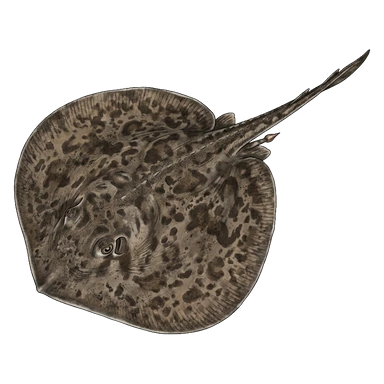
Giant freshwater stingray
 Ziztadak
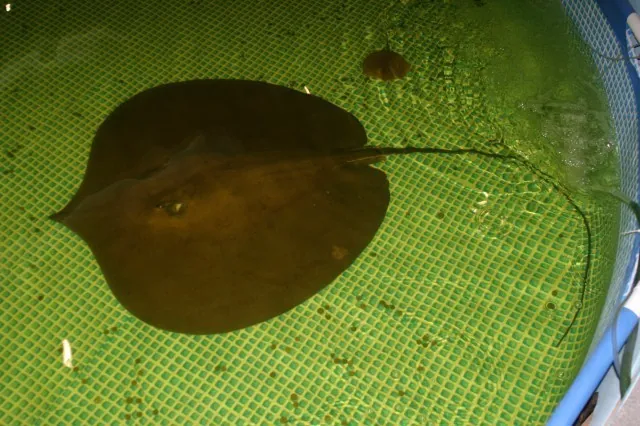
The giant freshwater stingray is a large ray that lives in big rivers and estuaries in Southeast Asia and Borneo. It is the widest freshwater fish in the world, and it is now endangered because of fishing and habitat loss. It has a long, whip-like tail with a sharp spine near the base.1



 Nola ezagutu
- Plain grayish brown on top, often with a yellowish or pinkish tint towards the fin edges1
- White underside with broad dark bands on the rear edges of the pectoral and pelvic fins1
- Thin, whip-like tail that is black behind the spine and has no fin folds1
- Sharply pointed snout that projects beyond the disc1
- A single serrated stinging spine on the upper tail near its base, up to 38 cm long1
Askotan honekin nahasten da: Similar freshwater stingrays in South Asia, Southeast Asia and Australasia were once tentatively grouped with this species. Some of them, such as the Australian Urogymnus dalyensis, are now described as separate species.1
Pozoi-ahalmena
Pozoia ezten batetik ateratzen da.
Zer egiten du bere pozoiak?
Its sting is sheathed in toxic mucus. The sting is capable of piercing bone.1
Zein arriskutsua da pertsonentzat?
Arriskua pertsonentzat: LarriaZiztada batek medikua behar du. Heriotzak oso arraroak dira.The giant freshwater stingray is not aggressive. Its sting is strong enough to pierce bone and is coated in toxic mucus, so it should be treated with care.1
 Ziztatzen badu
- Sartu zauria ur beroan, pertsonak erre gabe jasan dezakeen bezain beroan (probatu zure eskuarekin), 30 eta 90 minutu artean. Lortu mediku-laguntza, batez ere harri-arrain eta bastangen kasuan.
Deitu beti lehenik zure larrialdi-zenbakira (112, 000, 911). Lehen sorospenei buruzko orientabide orokorra da hau, ez mediku-aholkua. Lehen sorospenen oinarriak
 Egon seguru
- Ez ukitu, ez harrapatu eta ez zirikatu inoiz animalia basati bat, txikia izan arren, eta lo edo hilda dagoela badirudi ere.
- Utzi tartea. Bat aurkitzen baduzu, egon lasai, egin atzera poliki eta utzi bere bidetik joaten.
- Batek ziztatzen bazaitu: egon lasai, egon geldi, deitu zure larrialdi-zenbakira (112, 000, 911) edo joan ospitalera azkar. Gogoratu nolakoa zen, argazki batek laguntzen du.
Ez dabil zure atzetik. Pozoia janaria harrapatzeko edo bere burua babesteko erabiltzen du, eta askoz nahiago du ezkutatu. Seguru egoteari buruz gehiago
Munduko zein tokitan?
Zein handia da?
Zein luzea da?
Zein astuna da?
 5 txakur muturretik buztanera jarrita bezain luzea
 28 banana bata bestearen atzetik jarrita bezain luzea
 igerileku handi baten luzera (50 m) igerian egin lezake 6 segundotan
Zein handia da Giant freshwater stingray ZUREKIN alderatuta?
Matematika hutsa zure nabigatzailean. Ez da ezer gordetzen, ezta inora bidaltzen ere.
Zein azkarra da?

Datuak
In June 2022, a specimen caught in the Mekong River was reported as the largest strict freshwater fish ever documented, at about 300 kg.1
It is the widest freshwater fish in the world, growing up to 2.2 m across.1
Its tail spine is up to 38 cm long, the largest of any stingray species.1
Pups are nourished in the womb by a milk-like substance called histotroph, or 'uterine milk', made by the mother.1
In Cambodia, the average weight of a landed ray fell from 23.2 kg in 1980 to 6.9 kg in 2006.1
Pozoi-adituentzat
- Izen zientifikoa
- Urogymnus polylepis
- Taldea
- Arrain pozoitsuak
- Familia
- Dasyatidae2
- Ordena
- Myliobatiformes
- Kontinenteak
- Asia
- Kumeak
- It gives birth to live young. Females have litters of one to four pups, each about 30 cm across at birth.1
- Nola dagoen naturan
- Endangered (IUCN overall); Critically Endangered in Thailand1
- Arriskua pertsonentzat
- 3 / 5: Larria3
Datuak nondik datozen
- Giant freshwater stingray (Wikipedia (CC BY-SA 4.0))
- Urogymnus polylepis (iNaturalist): izenak eta sailkapena.
- Venom Wiki: arrisku-maila, ohiko tamaina eta abiadura-kalkulua geureak dira. Ikusi nola kalkulatzen ditugun: Nola baloratzen dugun arriskua.
Orrialde honetako datu bakoitzak zenbaki bat du, bere iturrira eramaten zaituena. Zerbait gaizki badugu, barkatu, animalien zaleak gara, ez zientzia-aldizkari bat. Esaiguzu [email protected] helbidean eta konponduko dugu.
 Eskorpioia gose da! Venom Wiki pertsona bakar baten proiektua da: doakoa, iragarkirik eta jarraitzailerik gabe. Eskupeko txiki batek sarean mantentzen laguntzen du.Elikatu eskorpioia
Talde bereko gehiago: Arrain pozoitsuak
 Walking catfishArrain pozoitsuakMin ematen du, besterik ezEz ukitu
 Asian stinging catfishArrain pozoitsuakMedikua behar duEz ukitu
 Reef stonefishArrain pozoitsuakHil dezakeEz ukitu
 Red lionfishArrain pozoitsuakMedikua behar duEz ukitu
 Estuarine stonefishArrain pozoitsuakHil dezakeEz ukitu
 Short-tail stingrayArrain pozoitsuakHil dezake
 Deathstalker
 Indian cobra
 Indian saw-scaled viper
 King cobra
 Puff adder
 Russell's viper