
 Afrika
 Asia
Asia Europa
 Hego Amerika
 Australia eta Ozeania
 Antartika
 Ozeano Barea
 Ozeano Atlantikoa
 Ozeano Indikoa
 Ozeano Artikoa
 Mediterraneo itsasoa
 Itsaso Gorria
 Karibe itsasoa
 Koralen itsasoa
 Hego Txinako itsasoa
 Filipinetako itsasoa
 Andaman itsasoa
 Ipar itsasoa
 Timor eta Arafura itsasoak
 Bengalako golkoa
 Kaliforniako golkoa
Moroccan flic-flac spider
 Koska
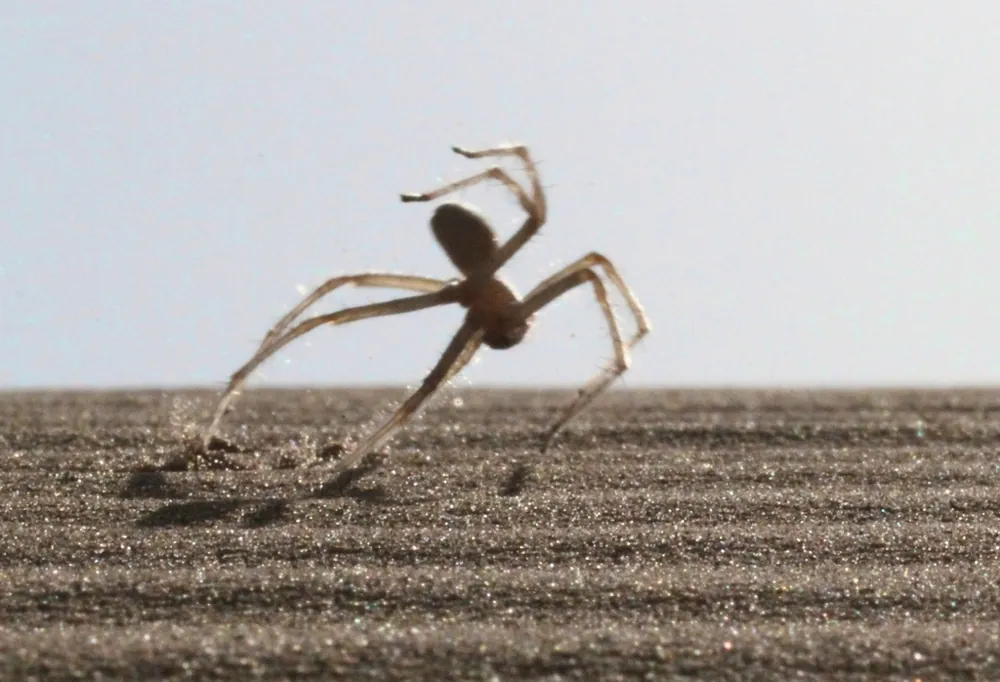
KoskaThe Moroccan flic-flac spider is a medium-sized huntsman spider that lives in the sand dunes of the Erg Chebbi desert in Morocco. When threatened, it escapes by doing forward or backward flips, like a gymnast's cartwheel. It is the only spider known to move this way.1

 Nola ezagutu
- Medium-sized huntsman spider, with males 13.8 to 19.0 mm long and females 19 to 19.5 mm long1
- White body with black scopulae (hair pads) on the underside of its legs1
- Yellow colouring on the upper part of the abdomen and on the femora (the thigh segments of the legs)1
- Active at night, and escapes by flipping forward or backward1
Askotan honekin nahasten da: It was first confused with the Tunisian spider Cebrennus villosus. Scientists later found small differences in the genitalia of the two species, and the flic-flac movement is distinctive to the Moroccan spider.1
Pozoi-ahalmena
Pozoia letaginetatik edo hortzetatik ateratzen da kosk egiten duenean.
Zein arriskutsua da pertsonentzat?
Arriskua pertsonentzat: ArinaErle-ziztada bat bezala edo gutxiago. Ia kaltegabea pertsonentzat.Zer egiten du beldurtzen denean?
When provoked or threatened, it flips forward or backward and can double its normal walking speed to escape.1
 Kosk egiten badu
- Garbitu koska eta jarri izotz-poltsa bat gainean minerako. Lortu mediku-laguntza mina handia bada, zabaltzen bada edo pertsona gaizki sentitzen bada.
Deitu beti lehenik zure larrialdi-zenbakira (112, 000, 911). Lehen sorospenei buruzko orientabide orokorra da hau, ez mediku-aholkua. Lehen sorospenen oinarriak
 Egon seguru
- Ez ukitu, ez harrapatu eta ez zirikatu inoiz animalia basati bat, txikia izan arren, eta lo edo hilda dagoela badirudi ere.
- Utzi tartea. Bat aurkitzen baduzu, egon lasai, egin atzera poliki eta utzi bere bidetik joaten.
- Batek kosk egiten badizu: egon lasai, egon geldi, deitu zure larrialdi-zenbakira (112, 000, 911) edo joan ospitalera azkar. Gogoratu nolakoa zen, argazki batek laguntzen du.
Ez dabil zure atzetik. Pozoia janaria harrapatzeko edo bere burua babesteko erabiltzen du, eta askoz nahiago du ezkutatu. Seguru egoteari buruz gehiago
Munduko zein tokitan?
Zein handia da?
Zein luzea da?
 zure hatz txikia baino laburragoa
 100 metro 50 segundotan egin litzake (gizakirik azkarrenak 9,6 behar ditu)
Zein handia da Moroccan flic-flac spider ZUREKIN alderatuta?
Matematika hutsa zure nabigatzailean. Ez da ezer gordetzen, ezta inora bidaltzen ere.
Zein azkarra da?


Datuak
It is the only spider known to use this unusual rolling, flic-flac style of movement.1
It actively flips itself off the ground, so it can move both uphill and downhill, even on a 40 percent incline. Another huntsman spider from the Namib Desert moves by passive cartwheeling instead.1
Its movement inspired a biomimetic robot called Tabbot, about 25 cm long. The name comes from the Berber word 'tabacha', meaning spider.1
It builds long vertical tubes of sand and silk, using its feelers (pedipalps) and bristles.1
Datuak nondik datozen
- Cebrennus rechenbergi (Wikipedia (CC BY-SA 4.0))
- Cebrennus rechenbergi (iNaturalist): izenak eta sailkapena.
- Venom Wiki: arrisku-maila, ohiko tamaina eta abiadura-kalkulua geureak dira. Ikusi nola kalkulatzen ditugun: Nola baloratzen dugun arriskua.
Orrialde honetako datu bakoitzak zenbaki bat du, bere iturrira eramaten zaituena. Zerbait gaizki badugu, barkatu, animalien zaleak gara, ez zientzia-aldizkari bat. Esaiguzu [email protected] helbidean eta konponduko dugu.
 Eskorpioia gose da! Venom Wiki pertsona bakar baten proiektua da: doakoa, iragarkirik eta jarraitzailerik gabe. Eskupeko txiki batek sarean mantentzen laguntzen du.Elikatu eskorpioia
 Mediterranean black widow
 Six-eyed sand spider
 Brown widow
 Noble false widow
 Darwin's bark spider
 Wasp spider
 Black mamba
 Deathstalker
 Egyptian cobra
 Puff adder
 Boomslang
 Fat-tailed scorpion