
 Afrika
 Asia
Asia Europa
 Hego Amerika
 Australia eta Ozeania
 Antartika
 Ozeano Barea
 Ozeano Atlantikoa
 Ozeano Indikoa
 Ozeano Artikoa
 Mediterraneo itsasoa
 Itsaso Gorria
 Karibe itsasoa
 Koralen itsasoa
 Hego Txinako itsasoa
 Filipinetako itsasoa
 Andaman itsasoa
 Ipar itsasoa
 Timor eta Arafura itsasoak
 Bengalako golkoa
 Kaliforniako golkoa
Phinda button spider
 Koska
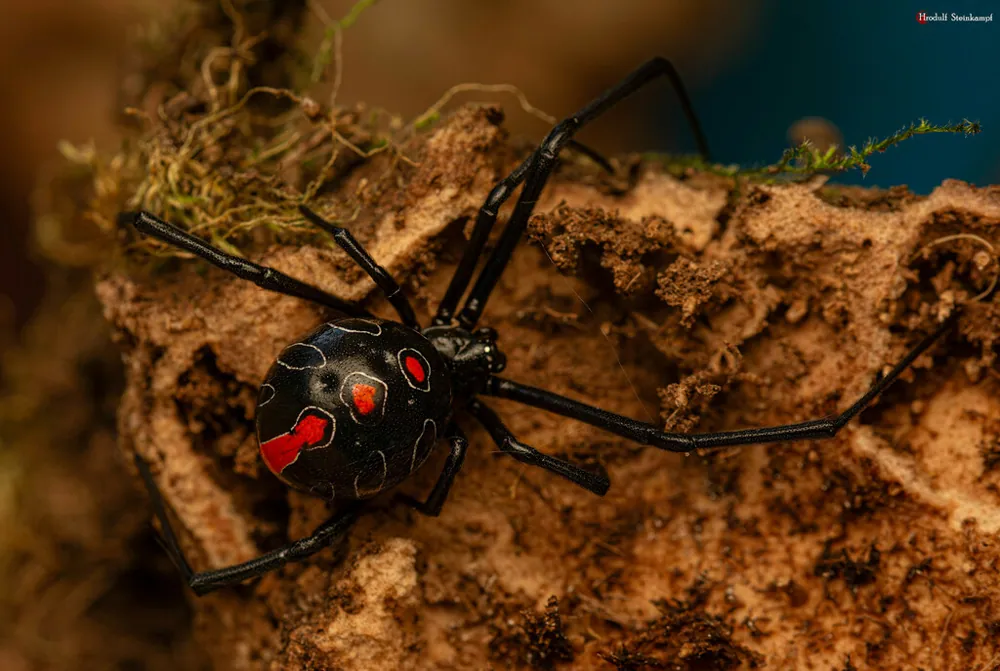
KoskaThe Phinda button spider is a type of button, or widow, spider. It was formally described as a new species in 2019. It lives only in sand forests in northern Zululand, in South Africa's KwaZulu-Natal province, and is believed to be the largest member of its genus.1
 Nola ezagutu
- Females have red markings on both the top and underside of the abdomen, which no other African Latrodectus species has.1
- Males have white markings on the underside of the abdomen, which darken with age.1
- Egg sacs are large and smooth, bright purple when freshly laid, fading to shiny grey as they dry.1
- Webs are not usually found outside the tree hollow. When present, they are typical hackle webs spreading out from the hollow.1
Askotan honekin nahasten da: Other African button spiders do not have the red markings on both the top and underside of the female abdomen, which is the main feature that sets this species apart.1
Pozoi-ahalmena
Pozoia letaginetatik edo hortzetatik ateratzen da kosk egiten duenean.
Zein arriskutsua da pertsonentzat?
Arriskua pertsonentzat: MingarriaBenetan min handia eman dezake, baina ia inoiz ez da larria. Kosk egiten badu
- Garbitu koska eta jarri izotz-poltsa bat gainean minerako. Lortu mediku-laguntza mina handia bada, zabaltzen bada edo pertsona gaizki sentitzen bada.
Deitu beti lehenik zure larrialdi-zenbakira (112, 000, 911). Lehen sorospenei buruzko orientabide orokorra da hau, ez mediku-aholkua. Lehen sorospenen oinarriak
 Egon seguru
- Ez ukitu, ez harrapatu eta ez zirikatu inoiz animalia basati bat, txikia izan arren, eta lo edo hilda dagoela badirudi ere.
- Utzi tartea. Bat aurkitzen baduzu, egon lasai, egin atzera poliki eta utzi bere bidetik joaten.
- Batek kosk egiten badizu: egon lasai, egon geldi, deitu zure larrialdi-zenbakira (112, 000, 911) edo joan ospitalera azkar. Gogoratu nolakoa zen, argazki batek laguntzen du.
Ez dabil zure atzetik. Pozoia janaria harrapatzeko edo bere burua babesteko erabiltzen du, eta askoz nahiago du ezkutatu. Seguru egoteari buruz gehiago
Munduko zein tokitan?
Zein handia da?
Zein luzea da?
 klip bat bezain luzea, gutxi gorabehera
Zein handia da Phinda button spider ZUREKIN alderatuta?
Matematika hutsa zure nabigatzailean. Ez da ezer gordetzen, ezta inora bidaltzen ere.
Zein azkarra da?


Datuak
It is believed to be the largest member of the button spider genus, Latrodectus.1
Its discovery was the first new addition to the genus in 28 years. Before this, 31 button or widow spiders were known, eight of them from Africa.1
Females nest in tree hollows and stumps higher above the ground than most other members of the genus.1
It was first found in 2014 in Tembe Elephant Park, but was only confirmed as a new species in 2019, after live specimens were collected from Phinda reserve.1
One female kept in a laboratory lived for two years until her natural death, and her offspring were also studied.1
Datuak nondik datozen
- Latrodectus umbukwane (Wikipedia (CC BY-SA 4.0))
- Latrodectus umbukwane (iNaturalist): izenak eta sailkapena.
- Venom Wiki: arrisku-maila, ohiko tamaina eta abiadura-kalkulua geureak dira. Ikusi nola kalkulatzen ditugun: Nola baloratzen dugun arriskua.
Orrialde honetako datu bakoitzak zenbaki bat du, bere iturrira eramaten zaituena. Zerbait gaizki badugu, barkatu, animalien zaleak gara, ez zientzia-aldizkari bat. Esaiguzu [email protected] helbidean eta konponduko dugu.
 Eskorpioia gose da! Venom Wiki pertsona bakar baten proiektua da: doakoa, iragarkirik eta jarraitzailerik gabe. Eskupeko txiki batek sarean mantentzen laguntzen du.Elikatu eskorpioia
 Mediterranean black widow
 Six-eyed sand spider
 Brown widow
 Noble false widow
 Darwin's bark spider
 Wasp spider
 Black mamba
 Deathstalker
 Egyptian cobra
 Puff adder
 Boomslang
 Fat-tailed scorpion