
 Afirik
 Aazi
Aazi Orop
Orop Amerik Sud
 Ostarali e Oseyani
 Antarktik
 Geeci Pasifik
 Geeci Atlantik
 Geeci Enndo
 Geeci Arktik
 Geeci Mediteraane
 Geeci Boɗeewi
 Geeci Karayib
 Geeci Korayl
 Geeci Siin Sud
 Geeci Filipiin
 Geeci Andaman
 Geeci Nord
 Geeci Timor e Arafura
 Gulf Bengal
 Gulf Kaliforni
Brazilian salmon pink birdeater
 Ŋatgol
The Brazilian salmon pink bird-eating tarantula is a large spider from north-eastern Brazil. It is one of the biggest tarantulas in the world, and it is a popular pet among tarantula keepers because it is calm and breeds easily.1



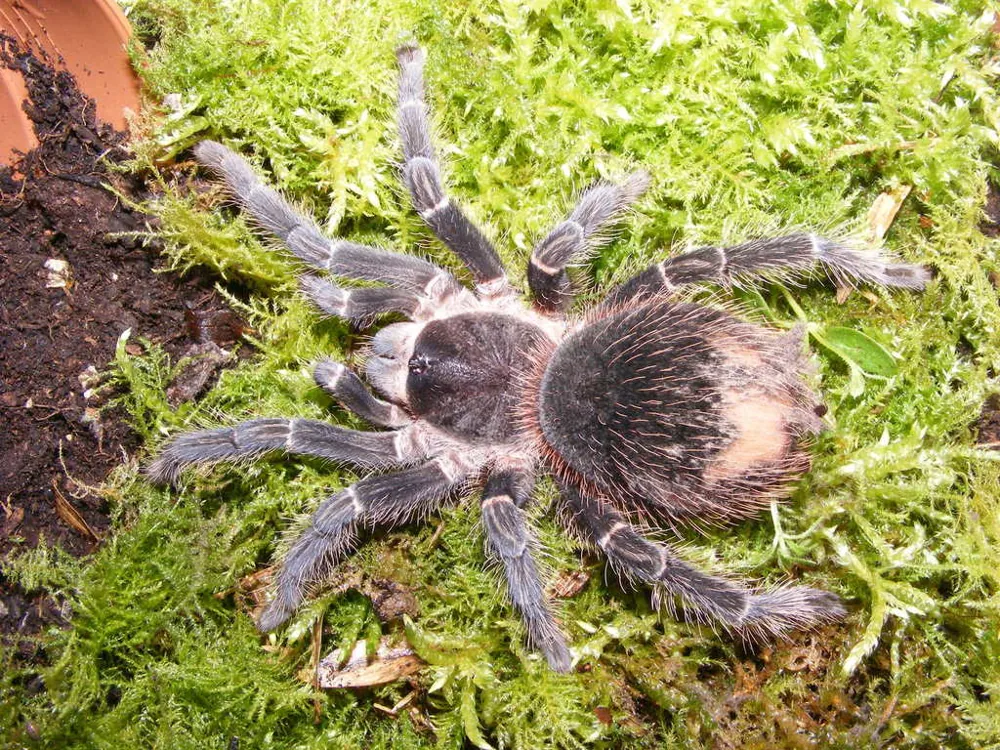
 Hono anndirtee ngal
Doole tooke ŋatgol
Tooke no yaltira ñiiƴe mum tuma ngal ŋatata.
Ko honɗun tooke mum waɗata (ŋatgol walla jukkugol)?
The venom is weak to humans. The bite is painful, and the fangs, which can be up to 2.5 cm long, can penetrate human skin. Some sites claim the bite is similar to a cat bite, but this is not confirmed.1
Hono musiiba mum heewiri e yimɓe?
Musiiba e yimɓe: SeeɗaNo jukkugol ñaaki walla ko ɓuri famɗugol. Ko ɓadii alaa musiiba e yimɓe.A bite is mechanically dangerous because of the fangs, but it is not medically significant. The tarantula bites only when provoked, and only as a last resort. Its urticating hairs can cause mild to severe skin irritation. Handling can also seriously injure or kill the tarantula, because a fall of more than a few inches can rupture its abdomen.1
Ko honɗun ngal waɗata si ngal hulii?
When threatened, it raises its legs and the front of its body to deter predators, flicks irritating urticating hairs from its abdomen, and only bites if the attack continues.1
 Si no ŋata
- Loot nokku ŋataaɗo on, ɓuuɓnu. Heɓu ballal doktoro si muusu ngu no tiiɗi walla neɗɗo on no yi'a o selliraali.
Adii fow noddu nimero ballal (112, 000, 911). Ɗum ko anndinal ballal adiingal, wanaa saaraangal doktoro. Ko adii nder ballal adiingal
 Reen hoore maa
- Wota a meem, wota a nanngu, wota a jalnu kullal ladde haa abada, hay si ko tokooso, hay si no yi'ee no ɗaanii walla maayii.
- Accu ngal nokku. Si a fotti e ngal, deeƴu, ruttu ɓaawo seeɗa seeɗa, accu ngal yaha laawol mum.
- Si gooto e majji ŋatii ma: deeƴu, wota a dillu, noddu nimero ballal (112, 000, 911) walla yahu lopitaan law. Jogo e hakkille no ngal nanndi, natal no walla.
Ngal faalaaka gaañugol ma. Ngal no huutora tooke mum ngam nanngugol ñaamdu walla reenugol hoore mum, ngal ɓuri yiɗugol suuɗaade. Ko ɓeydi fii reenugol hoore maa
Hoto nder aduna?
Hono mawniri?
Hono juutiri?
Hono teddiri?

 juuti no kaaɗe mahirɗe 9 e diisa gooto
 no waawi taccugol meeteruuji 100 nder segonde 160 (neɗɗo ɓurɗo yaawugol sokli 9,6)
Hono Brazilian salmon pink birdeater mawniri, si fooɗondiraama e AN?
Ko limoore tun nder navigateur maa. Alaa ko danndetee walla ko neldetee ka nokku woo.
Hono yaawiri?


Humpito
Males must hook back the female's fangs during mating, and slow males risk being eaten by the female.1
It is considered the fourth largest tarantula in the world, behind the three species in the genus Theraphosa.1
Before moulting, it lies on its back and forces itself out of its old skin, and it stops eating a few days beforehand.1
Males deposit sperm onto a webbed mat, called a sperm web, before finding a female.1
Bonnoowo fenaandeeji
Fenaande: Brazilian salmon pink tarantulas are bird-eaters.
Goonga: There is very little evidence that they catch and eat birds. In the wild they mainly eat large insects and sometimes amphibians and small reptiles.1
Ɗo humpitooji ɗin iwri
- Lasiodora parahybana (Wikipedia (CC BY-SA 4.0))
- Lasiodora parahybana (iNaturalist): inɗe e ŋoordingol (classification).
- Venom Wiki: tolno musiiba, mawnugol aadaajo e miijo yaawugol ko amen. Ndaar no min ƴeewtirta ɗum: Hono min tolnirta musiiba.
Kala humpito nder ngoo hello no jogii limoore hollirnde iwdi mum. Si min juumii, yaafo, min ko yiɗɓe kulle, wanaa jaaynde ganndal. Haalan min e [email protected], min feewnitan.
 Yaare nden no weelaa! Venom Wiki ko golle neɗɗo gooto: ko yoɓetaake, alaa piiblisite, alaa reweteeɓe. Kopporde tokooso no walla heddingol ɗum e enternet.Ñaamnu yaare nden
Ko ɓeydi e fedde wootere: Taranteeli e funnel-web
 Goliath birdeaterTaranteeli e funnel-webNo muusi tun
 Chilean rose tarantulaTaranteeli e funnel-webAlaa musiiba
 Greenbottle blue tarantulaTaranteeli e funnel-webAlaa musiiba
 Pinktoe tarantulaTaranteeli e funnel-webAlaa musiiba
 Brazilian funnel-web spiderTaranteeli e funnel-webNo sokli doktoro
 Burgundy goliath birdeaterTaranteeli e funnel-webNo muusi tun
 Faaɓru tooke kaŋŋe
 Terciopelo
 Brazilian wandering spider
 Eyelash viper
 Golden lancehead
 South American bushmaster