
 Afirik
 Aazi
Aazi Orop
Orop Amerik Sud
 Ostarali e Oseyani
 Antarktik
 Geeci Pasifik
 Geeci Atlantik
 Geeci Enndo
 Geeci Arktik
 Geeci Mediteraane
 Geeci Boɗeewi
 Geeci Karayib
 Geeci Korayl
 Geeci Siin Sud
 Geeci Filipiin
 Geeci Andaman
 Geeci Nord
 Geeci Timor e Arafura
 Gulf Bengal
 Gulf Kaliforni
Goliath birdeater
 Ŋatgol
The Goliath birdeater is a huge tarantula and the largest spider in the world by mass and body length. It lives in the rainforests of northern South America, including the Amazon. Although it can look frightening, its venom is mild and it rarely bites people.1



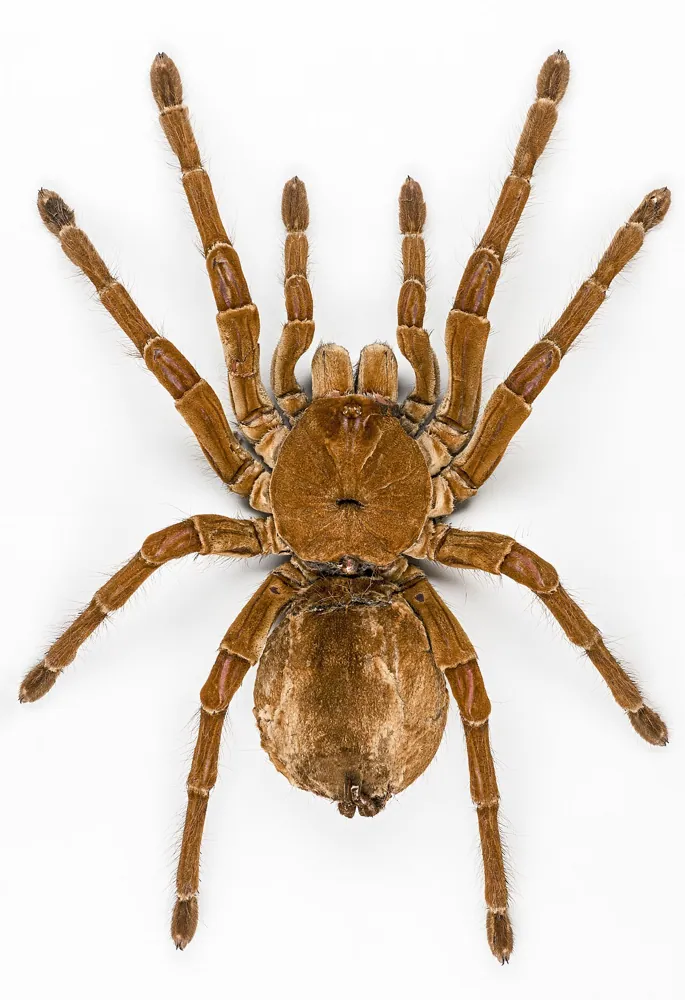
 Hono anndirtee ngal
Doole tooke ŋatgol
Tooke no yaltira ñiiƴe mum tuma ngal ŋatata.
Ko honɗun tooke mum waɗata (ŋatgol walla jukkugol)?
Like all tarantulas, it has fangs and venom, but its venom is relatively harmless. Its effects are comparable to those of a wasp sting. Some bites are 'dry bites', meaning no venom is injected.1
Hono musiiba mum heewiri e yimɓe?
Musiiba e yimɓe: MuusɗoNo waawi muusugol sanne, kono ko ɓadii kala tuma ɗum wonataa musiiba mawɗo.Tarantulas generally bite people only in self-defence. Its venom is comparable to a wasp sting. Its urticating hairs, which it releases when threatened, are a severe irritant to skin and mucous membranes.1
Ko honɗun ngal waɗata si ngal hulii?
When threatened, it rubs its setae together to make a hissing sound, and rubs its abdomen with its hind legs to release irritating hairs.1
 Si no ŋata
- Loot nokku ŋataaɗo on, ɓuuɓnu. Heɓu ballal doktoro si muusu ngu no tiiɗi walla neɗɗo on no yi'a o selliraali.
Adii fow noddu nimero ballal (112, 000, 911). Ɗum ko anndinal ballal adiingal, wanaa saaraangal doktoro. Ko adii nder ballal adiingal
 Reen hoore maa
- Wota a meem, wota a nanngu, wota a jalnu kullal ladde haa abada, hay si ko tokooso, hay si no yi'ee no ɗaanii walla maayii.
- Accu ngal nokku. Si a fotti e ngal, deeƴu, ruttu ɓaawo seeɗa seeɗa, accu ngal yaha laawol mum.
- Si gooto e majji ŋatii ma: deeƴu, wota a dillu, noddu nimero ballal (112, 000, 911) walla yahu lopitaan law. Jogo e hakkille no ngal nanndi, natal no walla.
Ngal faalaaka gaañugol ma. Ngal no huutora tooke mum ngam nanngugol ñaamdu walla reenugol hoore mum, ngal ɓuri yiɗugol suuɗaade. Ko ɓeydi fii reenugol hoore maa
Hoto nder aduna?
Hono mawniri?
Hono juutiri?
Hono teddiri?

 juuti no kaaɗe mahirɗe 4 e diisa gooto
 no waawi taccugol meeteruuji 100 nder segonde 150 (neɗɗo ɓurɗo yaawugol sokli 9,6)
Hono Goliath birdeater mawniri, si fooɗondiraama e AN?
Ko limoore tun nder navigateur maa. Alaa ko danndetee walla ko neldetee ka nokku woo.
Hono yaawiri?


Humpito
It is the largest spider in the world by mass and body length, and is second only to the giant huntsman spider by leg span.1
Its fangs measure 2 to 4 cm, large enough to break human skin.1
It is an edible spider. In northeastern South America, the hairs are singed off, and the spider is roasted in banana leaves.1
Its flavour has been described as 'shrimp-like'.1
Its body length is far greater than that of Mongolarachne, the largest known prehistoric spider, which measured 2.46 cm.1
Females rarely eat males during mating, unlike some other spider species.1
Bonnoowo fenaandeeji
Fenaande: The Goliath birdeater eats lots of birds.
Goonga: Despite its name, it rarely preys on birds. Its diet is mostly other large arthropods, worms and amphibians.1
Ɗo humpitooji ɗin iwri
- Goliath birdeater (Wikipedia (CC BY-SA 4.0))
- Theraphosa blondi (iNaturalist): inɗe e ŋoordingol (classification).
- Venom Wiki: tolno musiiba, mawnugol aadaajo e miijo yaawugol ko amen. Ndaar no min ƴeewtirta ɗum: Hono min tolnirta musiiba.
Kala humpito nder ngoo hello no jogii limoore hollirnde iwdi mum. Si min juumii, yaafo, min ko yiɗɓe kulle, wanaa jaaynde ganndal. Haalan min e [email protected], min feewnitan.
 Yaare nden no weelaa! Venom Wiki ko golle neɗɗo gooto: ko yoɓetaake, alaa piiblisite, alaa reweteeɓe. Kopporde tokooso no walla heddingol ɗum e enternet.Ñaamnu yaare nden
Ko ɓeydi e fedde wootere: Taranteeli e funnel-web
 Brazilian salmon pink birdeaterTaranteeli e funnel-webAlaa musiiba
 Chilean rose tarantulaTaranteeli e funnel-webAlaa musiiba
 Greenbottle blue tarantulaTaranteeli e funnel-webAlaa musiiba
 Pinktoe tarantulaTaranteeli e funnel-webAlaa musiiba
 Brazilian funnel-web spiderTaranteeli e funnel-webNo sokli doktoro
 Burgundy goliath birdeaterTaranteeli e funnel-webNo muusi tun
 Faaɓru tooke kaŋŋe
 Terciopelo
 Brazilian wandering spider
 Eyelash viper
 Golden lancehead
 South American bushmaster