
 Afirik
 Aazi
Aazi Orop
Orop Amerik Sud
 Ostarali e Oseyani
 Antarktik
 Geeci Pasifik
 Geeci Atlantik
 Geeci Enndo
 Geeci Arktik
 Geeci Mediteraane
 Geeci Boɗeewi
 Geeci Karayib
 Geeci Korayl
 Geeci Siin Sud
 Geeci Filipiin
 Geeci Andaman
 Geeci Nord
 Geeci Timor e Arafura
 Gulf Bengal
 Gulf Kaliforni
Discus ray
 Jukkugol
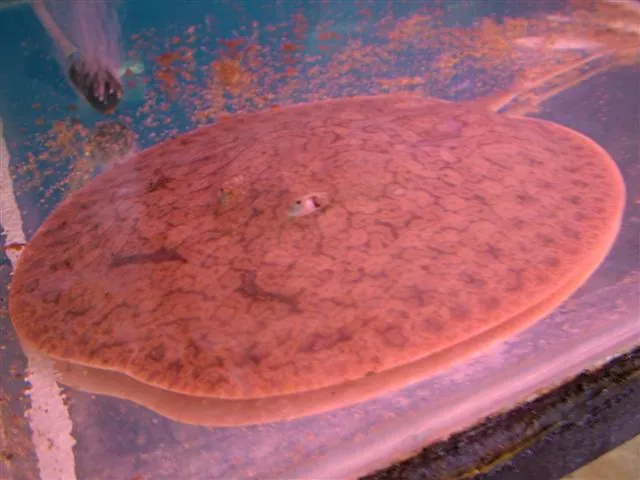
The discus ray is a large freshwater stingray that lives in the Amazon river basin in South America. It has a flat, round body shaped like a lily pad, and it is one of the biggest rays in its family. It is a top predator in its river home.1



 Hono anndirtee ngal
Doole tooke ŋatgol
Tooke no yaltira jukkere.
Hono musiiba mum heewiri e yimɓe?
Musiiba e yimɓe: Musiiba mawɗoJukkugol no haani doktoro. Maayde no famɗi sanne. Si no jukka
- Waɗ gaañande nden nder ndiyam guleeɗam, guleeɗam no neɗɗo on waawi muñugol tawa sumaani (ƴeewto e jungo maa hoore), miniti 30 haa 90. Heɓu ballal doktoro, ɓuri noon fii liƴƴi kaaƴe e raayi.
Adii fow noddu nimero ballal (112, 000, 911). Ɗum ko anndinal ballal adiingal, wanaa saaraangal doktoro. Ko adii nder ballal adiingal
 Reen hoore maa
- Wota a meem, wota a nanngu, wota a jalnu kullal ladde haa abada, hay si ko tokooso, hay si no yi'ee no ɗaanii walla maayii.
- Accu ngal nokku. Si a fotti e ngal, deeƴu, ruttu ɓaawo seeɗa seeɗa, accu ngal yaha laawol mum.
- Si gooto e majji jukkii ma: deeƴu, wota a dillu, noddu nimero ballal (112, 000, 911) walla yahu lopitaan law. Jogo e hakkille no ngal nanndi, natal no walla.
Ngal faalaaka gaañugol ma. Ngal no huutora tooke mum ngam nanngugol ñaamdu walla reenugol hoore mum, ngal ɓuri yiɗugol suuɗaade. Ko ɓeydi fii reenugol hoore maa
Hoto nder aduna?
Hono mawniri?
Hono juutiri?
Hono teddiri?

 juuti no ulluuɗi suudu 3, hinere haa lawol
 juuti no banaanaaji 9 jokkondirɗi
 no waawi yoowugol juutde pisin mawɗo (50 m) nder segonde 7,5
Hono Discus ray mawniri, si fooɗondiraama e AN?
Ko limoore tun nder navigateur maa. Alaa ko danndetee walla ko neldetee ka nokku woo.
Hono yaawiri?

Humpito
It can weigh up to 110 kg.1
It is a top predator in its river habitat.1
The female carries her young for nine months and gives birth to an average of two.1
The discus ray is one of the largest species in its family of stingrays.1
Its disc is shaped roughly like a lily pad, which gives it its name.1
Bonnoowo fenaandeeji
Fenaande: Discus rays grow much larger than 1.6 m across.
Goonga: Reports of much larger individuals are unconfirmed and are considered highly questionable. Most individuals do not grow wider than 1.3 m across the disc.1
Ɗo humpitooji ɗin iwri
- Paratrygon aiereba (Wikipedia (CC BY-SA 4.0))
- Paratrygon aiereba (iNaturalist): inɗe e ŋoordingol (classification).
- Venom Wiki: tolno musiiba, mawnugol aadaajo e miijo yaawugol ko amen. Ndaar no min ƴeewtirta ɗum: Hono min tolnirta musiiba.
Kala humpito nder ngoo hello no jogii limoore hollirnde iwdi mum. Si min juumii, yaafo, min ko yiɗɓe kulle, wanaa jaaynde ganndal. Haalan min e [email protected], min feewnitan.
 Yaare nden no weelaa! Venom Wiki ko golle neɗɗo gooto: ko yoɓetaake, alaa piiblisite, alaa reweteeɓe. Kopporde tokooso no walla heddingol ɗum e enternet.Ñaamnu yaare nden
 Ocellate river stingray
 Xingu River ray
 Largespot river stingray
 Smooth back river stingray
 Amazon toadfish
 Reef stonefish
 Golden poison frog
 Terciopelo
 Brazilian wandering spider
 Eyelash viper
 Golden lancehead
 South American bushmaster