
 Afirik
 Aazi
Aazi Orop
Orop Amerik Sud
 Ostarali e Oseyani
 Antarktik
 Geeci Pasifik
 Geeci Atlantik
 Geeci Enndo
 Geeci Arktik
 Geeci Mediteraane
 Geeci Boɗeewi
 Geeci Karayib
 Geeci Korayl
 Geeci Siin Sud
 Geeci Filipiin
 Geeci Andaman
 Geeci Nord
 Geeci Timor e Arafura
 Gulf Bengal
 Gulf Kaliforni
Greek meadow viper
 Ŋatgol
The Greek meadow viper is a small venomous snake that lives in mountain meadows in Albania and Greece. It was once thought to be a type of meadow viper, but scientists now see it as its own species. Its bite is venomous, so it is important to know what it looks like.1

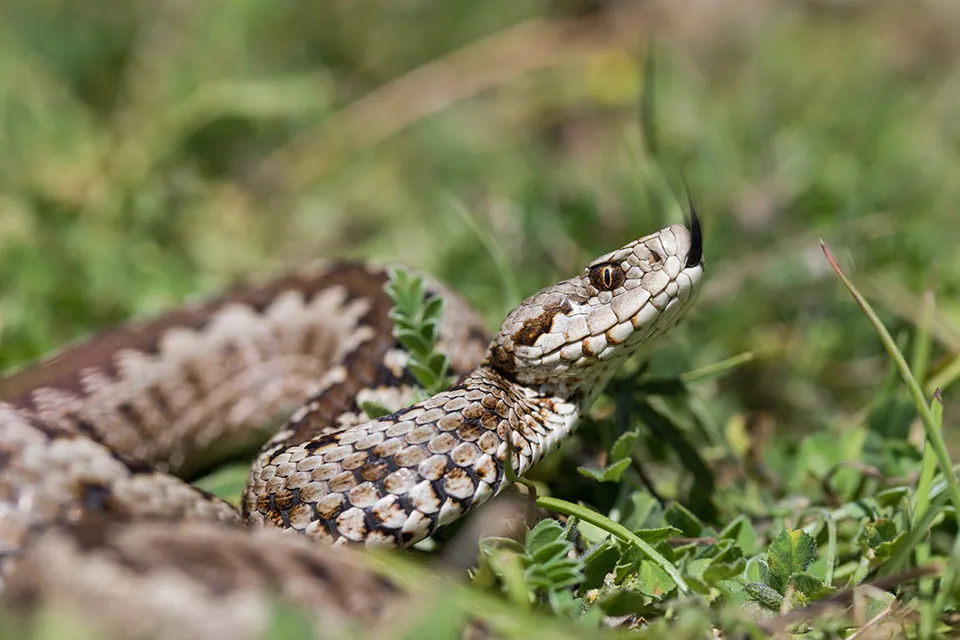
 Hono anndirtee ngal
- Small body, with a maximum snout-vent length of about 40 to 44 cm, depending on sex. Females are larger.1
- Maximum tail length of about 4 to 5 cm. Males have longer tails.1
- Dark spots are absent from the sides and top of the head, except for stripes behind the eyes and at the back of the head.1
- White or brownish-grey underside.1
- A sharp zigzag pattern along the back. Some males and young show a faint similarity to the meadow viper.1
No jiibondiree e: It is often compared with the meadow viper (Vipera ursinii), which it closely resembles. The Greek viper has no dark spots on the head sides or top, apart from the head stripes, and it has different scale counts. Some males and juveniles show faint pattern similarities.1
Doole tooke ŋatgol
Tooke no yaltira ñiiƴe mum tuma ngal ŋatata.
Hono musiiba mum heewiri e yimɓe?
Musiiba e yimɓe: MuusɗoNo waawi muusugol sanne, kono ko ɓadii kala tuma ɗum wonataa musiiba mawɗo. Si no ŋata
- Haɗu neɗɗo on dillagol, deeƴnu mo, jogo koyngal walla jungo ŋataaɗo on e toownde ɓernde, ittu baagiiji e ko tiiɗi fow, yahra mo lopitaan law.
Adii fow noddu nimero ballal (112, 000, 911). Ɗum ko anndinal ballal adiingal, wanaa saaraangal doktoro. Ko adii nder ballal adiingal
 Reen hoore maa
- Wota a meem, wota a nanngu, wota a jalnu kullal ladde haa abada, hay si ko tokooso, hay si no yi'ee no ɗaanii walla maayii.
- Accu ngal nokku. Si a fotti e ngal, deeƴu, ruttu ɓaawo seeɗa seeɗa, accu ngal yaha laawol mum.
- Si gooto e majji ŋatii ma: deeƴu, wota a dillu, noddu nimero ballal (112, 000, 911) walla yahu lopitaan law. Jogo e hakkille no ngal nanndi, natal no walla.
Ngal faalaaka gaañugol ma. Ngal no huutora tooke mum ngam nanngugol ñaamdu walla reenugol hoore mum, ngal ɓuri yiɗugol suuɗaade. Ko ɓeydi fii reenugol hoore maa
Hoto nder aduna?
Hono mawniri?
Hono juutiri?
 juuti no banaanaaji 2,5 jokkondirɗi
 juuti no kaaɗe mahirɗe 14 e diisa gooto
 no waawi taccugol meeteruuji 100 nder segonde 110 (neɗɗo ɓurɗo yaawugol sokli 9,6)
Hono Greek meadow viper mawniri, si fooɗondiraama e AN?
Ko limoore tun nder navigateur maa. Alaa ko danndetee walla ko neldetee ka nokku woo.
Hono yaawiri?


Humpito
The red fox, common kestrel and short-toed snake eagle are the only known predators of this viper.1
It is most common at high elevations, where annual temperatures average about 6 °C and snow lies until summer.1
Scientists were not sure it was a separate species until 2012, when DNA analysis showed it was its own species.1
Ɗo humpitooji ɗin iwri
- Vipera graeca (Wikipedia (CC BY-SA 4.0))
- Vipera graeca (iNaturalist): inɗe e ŋoordingol (classification).
- Venom Wiki: tolno musiiba, mawnugol aadaajo e miijo yaawugol ko amen. Ndaar no min ƴeewtirta ɗum: Hono min tolnirta musiiba.
Kala humpito nder ngoo hello no jogii limoore hollirnde iwdi mum. Si min juumii, yaafo, min ko yiɗɓe kulle, wanaa jaaynde ganndal. Haalan min e [email protected], min feewnitan.
 Yaare nden no weelaa! Venom Wiki ko golle neɗɗo gooto: ko yoɓetaake, alaa piiblisite, alaa reweteeɓe. Kopporde tokooso no walla heddingol ɗum e enternet.Ñaamnu yaare nden
Ko ɓeydi e fedde wootere: Wipeeri e adder
 Common European adder
 Blunt-nosed viper
 Nose-horned viper
 Ottoman viper
 Asp viper
 Lataste's viper
No hoɗi kadi nder: Orop
 Spanish flyKulle goɗɗe tookeeje ɓannduNo sokli doktoroWota a meem
 Common waspÑaaki, ɗuggi e ɗuggi mawɗiNo muusi tun
 European hornetÑaaki, ɗuggi e ɗuggi mawɗiNo muusi tun
 Fire salamanderPaaɓe tooke, krapooji e tritonuujiNo muusi tunWota a meem
 Western honey beeÑaaki, ɗuggi e ɗuggi mawɗiNo muusi tun
 Mediterranean black widowAraañeejiNo sokli doktoro