
 Afirik
 Aazi
Aazi Orop
Orop Amerik Sud
 Ostarali e Oseyani
 Antarktik
 Geeci Pasifik
 Geeci Atlantik
 Geeci Enndo
 Geeci Arktik
 Geeci Mediteraane
 Geeci Boɗeewi
 Geeci Karayib
 Geeci Korayl
 Geeci Siin Sud
 Geeci Filipiin
 Geeci Andaman
 Geeci Nord
 Geeci Timor e Arafura
 Gulf Bengal
 Gulf Kaliforni
Lollyfish
 Tooke nder nguru mumNo ñaama: Seeɗa nder kala huundeTookeejo ɓanndu, wanaa naatnoowo tooke
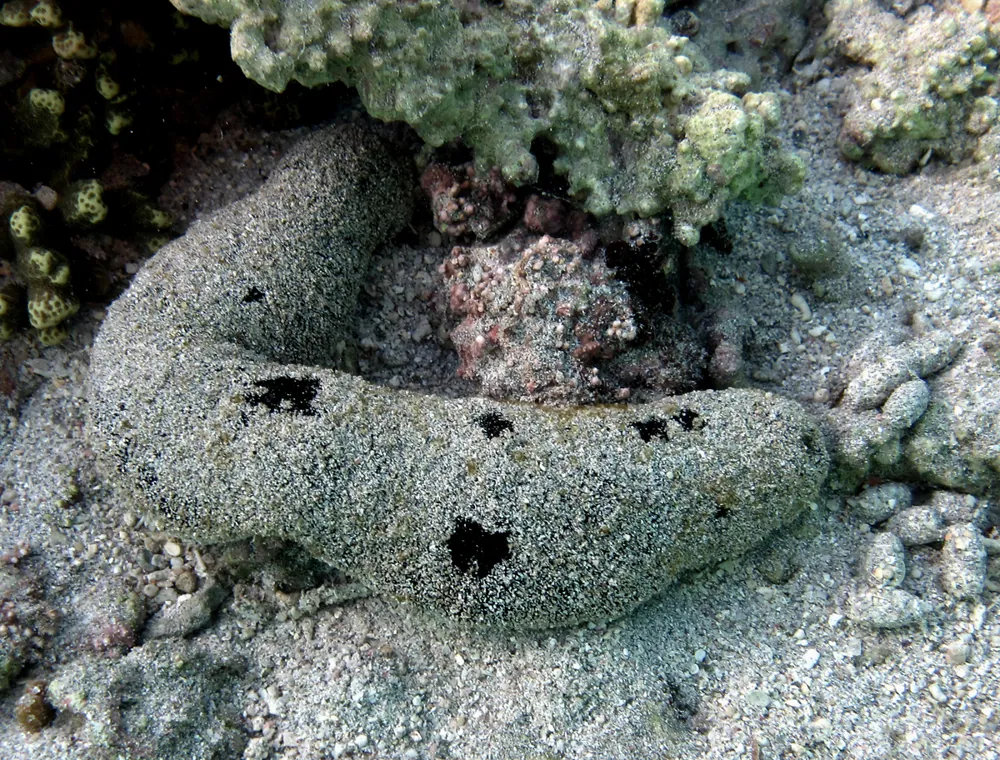
The lollyfish is a black sea cucumber, a soft-bodied animal that lives on the seabed. It is found in shallow tropical waters across the Indo-Pacific, from the Red Sea and East Africa to Australia. It matters to people because its skin releases a toxic red fluid when it is damaged.1
 Hono anndirtee ngal
Doole tooke
Nguru mum ko tooke. No musiiba meemugol ngal, meemugol ngal e ɗemngal walla ñaamugol ngal.
Ko honɗun tooke ɓanndu mum waɗata?
It is not venomous. When its skin is rubbed or damaged, it releases a toxic red fluid.1
Hono musiiba mum heewiri e yimɓe?
Musiiba e yimɓe: SeeɗaNo jukkugol ñaaki walla ko ɓuri famɗugol. Ko ɓadii alaa musiiba e yimɓe.Ko honɗun ngal waɗata si ngal hulii?
When attacked, it pushes its internal organs out through its anus, and it releases a toxic red fluid when its skin is rubbed or damaged.1
 Si neɗɗo meemii walla ñaamii ngal
- Waɗ gaañande nden nder ndiyam guleeɗam, guleeɗam no neɗɗo on waawi muñugol tawa sumaani, heɓu ballal doktoro ngam ittugol gaaɗe ɗen. Wota a asu ɗe e hoore maa.
Adii fow noddu nimero ballal (112, 000, 911). Ɗum ko anndinal ballal adiingal, wanaa saaraangal doktoro. Ko adii nder ballal adiingal
 Reen hoore maa
- Wota a meem, wota a nanngu, wota a jalnu kullal ladde haa abada, hay si ko tokooso, hay si no yi'ee no ɗaanii walla maayii.
- Accu ngal nokku. Si a fotti e ngal, deeƴu, ruttu ɓaawo seeɗa seeɗa, accu ngal yaha laawol mum.
- Si a meemii walla a ñaamii ngal: wota a moomtu gite maa walla hunuko maa, loot juuɗe maa, heɓu ballal doktoro.
Ngal faalaaka gaañugol ma. Tooke mum woodi tun ngam wota huunde ñaam ngal. Ko ɓeydi fii reenugol hoore maa
Hoto nder aduna?
Hono mawniri?
Hono juutiri?
 juuti no banaanaaji 3 jokkondirɗi
 ɓuri kokiyaasi ngesa leelugol
Hono Lollyfish mawniri, si fooɗondiraama e AN?
Ko limoore tun nder navigateur maa. Alaa ko danndetee walla ko neldetee ka nokku woo.
Hono yaawiri?


Humpito
When attacked, it pushes its internal organs out through its anus rather than firing sticky Cuvierian tubules as some sea cucumbers do.1
On Guam, its toxic red fluid is used to drive octopuses out of their hiding holes.1
It can split in two by transverse fission, and a sand coating does not stick to the new surfaces.1
Pools warmed by the sun can reach 39 °C, and individuals there still appeared healthy and fed.1
A thick coating of sand may help keep it cool by shading it from the sun.1
Ngam ganduɓe tooke
- Innde ganndal
- Holothuria atra
- Fedde
- Ursenuuji, koode geeci e ngilɗi
- Ɓesngu
- Holothuriidae2
- Ordre
- Holothuriida
- Leyɗe mawɗe
- Geeci Pasifik, Geeci Enndo, Geeci Boɗeewi, Geeci Korayl, Geeci Filipiin, Geeci Siin Sud, Geeci Timor e Arafura, Gulf Bengal, Oseyanuuji
- Ɓiɓɓe tokosɓe
- It is not possible to tell males from females by looking at them. It spawns mostly in summer and autumn, or all year in equatorial waters. It can also reproduce by splitting in two, which mostly happens to smaller animals.1
- Musiiba e yimɓe
- 1 / 5: Seeɗa3
Ɗo humpitooji ɗin iwri
- Holothuria atra (Wikipedia (CC BY-SA 4.0))
- Holothuria atra (iNaturalist): inɗe e ŋoordingol (classification).
- Venom Wiki: tolno musiiba, mawnugol aadaajo e miijo yaawugol ko amen. Ndaar no min ƴeewtirta ɗum: Hono min tolnirta musiiba.
Kala humpito nder ngoo hello no jogii limoore hollirnde iwdi mum. Si min juumii, yaafo, min ko yiɗɓe kulle, wanaa jaaynde ganndal. Haalan min e [email protected], min feewnitan.
 Yaare nden no weelaa! Venom Wiki ko golle neɗɗo gooto: ko yoɓetaake, alaa piiblisite, alaa reweteeɓe. Kopporde tokooso no walla heddingol ɗum e enternet.Ñaamnu yaare nden
Ko ɓeydi e fedde wootere: Ursenuuji, koode geeci e ngilɗi
 Crown-of-thorns starfishUrsenuuji, koode geeci e ngilɗiNo sokli doktoroWota a meem
 Flower urchinUrsenuuji, koode geeci e ngilɗiNo waawi warugol
 Fire urchinUrsenuuji, koode geeci e ngilɗiNo sokli doktoroWota a meem
 Bearded firewormUrsenuuji, koode geeci e ngilɗiNo muusi tunWota a meem
 Black long-spined urchinUrsenuuji, koode geeci e ngilɗiNo muusi tunWota a meem
 BloodwormUrsenuuji, koode geeci e ngilɗiNo muusi tun
No hoɗi kadi nder: Geeci Pasifik
 Australian box jellyfishMeduusiiji e kulle geeci jukkoojeWaroowoWota a meem
 Geography coneKokiyaasi kone e pulpuujiWaroowo
 Greater blue-ringed octopusKokiyaasi kone e pulpuujiWaroowo
 Japanese pufferfishKulle goɗɗe tookeeje ɓannduWaroowo
 Southern blue-ringed octopusKokiyaasi kone e pulpuujiWaroowo
 Hawksbill sea turtleKulle goɗɗe tookeeje ɓannduNo waawi warugol