
 Afirik
 Aazi
Aazi Orop
Orop Amerik Sud
 Ostarali e Oseyani
 Antarktik
 Geeci Pasifik
 Geeci Atlantik
 Geeci Enndo
 Geeci Arktik
 Geeci Mediteraane
 Geeci Boɗeewi
 Geeci Karayib
 Geeci Korayl
 Geeci Siin Sud
 Geeci Filipiin
 Geeci Andaman
 Geeci Nord
 Geeci Timor e Arafura
 Gulf Bengal
 Gulf Kaliforni
Mangrove snake
 Ŋatgol
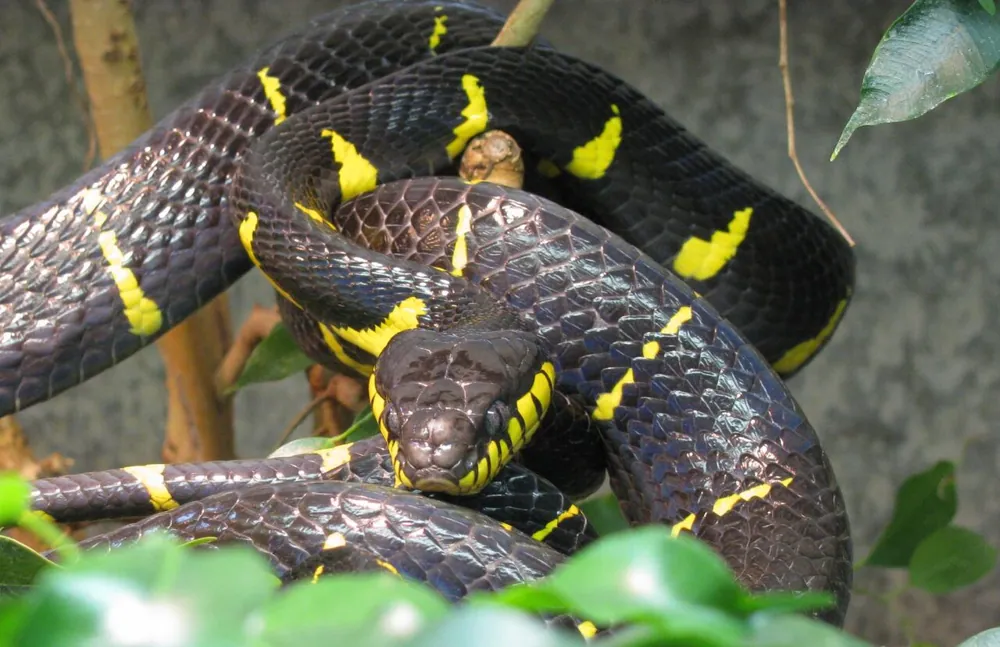
The mangrove snake is a large, tree-climbing snake with yellow and black bands. It lives in Southeast Asia and is one of the biggest cat snake species. It is mildly venomous, and it is often mistaken for a much more dangerous snake, the banded krait.1



 Hono anndirtee ngal
- Black above, with yellow bands across the back1
- Yellow lips with black edges1
- Black or bluish underside, sometimes speckled with yellow, and a yellow throat1
- Can grow to about 240 to 270 cm long1
- Has a triangular body cross-section1
No jiibondiree e: The mangrove snake can be confused with the banded krait, which has alternating black and yellow crossbands and a triangular body. The banded krait is extremely venomous, so treat any black and yellow banded snake with caution.1
Doole tooke ŋatgol
Tooke no yaltira ñiiƴe mum tuma ngal ŋatata.
Ko honɗun tooke mum waɗata (ŋatgol walla jukkugol)?
The snake has rear fangs and a venom gland linked to them. It has to chew to release the venom, which is released gradually. Its venom is weak, and the rear fangs are small, so it is hard for the snake to sink them into a person's arm or leg. Moderate bites have caused intense swelling.1
Hono musiiba mum heewiri e yimɓe?
Musiiba e yimɓe: MuusɗoNo waawi muusugol sanne, kono ko ɓadii kala tuma ɗum wonataa musiiba mawɗo.It is considered mildly venomous. Moderate bites have caused intense swelling, but there has never been a confirmed death, as of 2016.1
Ko honɗun ngal waɗata si ngal hulii?
It is a potentially defensive snake that may strike repeatedly, even when captive bred.1
 Si no ŋata
- Loot nokku ŋataaɗo on, deeƴnu neɗɗo on, heɓu ballal doktoro. Noone goɗɗe (no boomslang) no waawi warugol caggal saahaaji.
Adii fow noddu nimero ballal (112, 000, 911). Ɗum ko anndinal ballal adiingal, wanaa saaraangal doktoro. Ko adii nder ballal adiingal
 Reen hoore maa
- Wota a meem, wota a nanngu, wota a jalnu kullal ladde haa abada, hay si ko tokooso, hay si no yi'ee no ɗaanii walla maayii.
- Accu ngal nokku. Si a fotti e ngal, deeƴu, ruttu ɓaawo seeɗa seeɗa, accu ngal yaha laawol mum.
- Si gooto e majji ŋatii ma: deeƴu, wota a dillu, noddu nimero ballal (112, 000, 911) walla yahu lopitaan law. Jogo e hakkille no ngal nanndi, natal no walla.
Ngal faalaaka gaañugol ma. Ngal no huutora tooke mum ngam nanngugol ñaamdu walla reenugol hoore mum, ngal ɓuri yiɗugol suuɗaade. Ko ɓeydi fii reenugol hoore maa
Hoto nder aduna?
Hono mawniri?
Hono juutiri?
 juuti no rawaandi 2,5, hinere haa lawol
 juuti no banaanaaji 15 jokkondirɗi
 no waawi taccugol meeteruuji 100 nder segonde 54 (neɗɗo ɓurɗo yaawugol sokli 9,6)
Hono Mangrove snake mawniri, si fooɗondiraama e AN?
Ko limoore tun nder navigateur maa. Alaa ko danndetee walla ko neldetee ka nokku woo.
Hono yaawiri?


Humpito
Its venom contains denmotoxin, a three-finger toxin that is the first fully characterised bird-specific toxin.1
It is one of the biggest cat snake species.1
Despite its name, it is found more often in lowland rainforests than in mangrove swamps.1
It may refuse food for long periods if it is disturbed.1
Bonnoowo fenaandeeji
Fenaande: It is a dangerous killer because it looks like the banded krait.
Goonga: It is mildly venomous, and there has never been a confirmed death from its bite. Its look can be confused with the extremely venomous banded krait.1
Ɗo humpitooji ɗin iwri
- Boiga dendrophila (Wikipedia (CC BY-SA 4.0))
- Boiga dendrophila (iNaturalist): inɗe e ŋoordingol (classification).
- Venom Wiki: tolno musiiba, mawnugol aadaajo e miijo yaawugol ko amen. Ndaar no min ƴeewtirta ɗum: Hono min tolnirta musiiba.
Kala humpito nder ngoo hello no jogii limoore hollirnde iwdi mum. Si min juumii, yaafo, min ko yiɗɓe kulle, wanaa jaaynde ganndal. Haalan min e [email protected], min feewnitan.
 Yaare nden no weelaa! Venom Wiki ko golle neɗɗo gooto: ko yoɓetaake, alaa piiblisite, alaa reweteeɓe. Kopporde tokooso no walla heddingol ɗum e enternet.Ñaamnu yaare nden
 Brown tree snake
 Tiger keelback
 Red-necked keelback
 Green cat snake
 Asian vine snake
 Golden tree snake
 Yaare oolnde maayde
 Kobra Enndo
 Wipeeri cerkeeje siy Enndo
 Kobra laamɗo
 Wipeeri fuufoowndi
 Bowngal Russell
.JPG)