
 Afirik
 Aazi
Aazi Orop
Orop Amerik Sud
 Ostarali e Oseyani
 Antarktik
 Geeci Pasifik
 Geeci Atlantik
 Geeci Enndo
 Geeci Arktik
 Geeci Mediteraane
 Geeci Boɗeewi
 Geeci Karayib
 Geeci Korayl
 Geeci Siin Sud
 Geeci Filipiin
 Geeci Andaman
 Geeci Nord
 Geeci Timor e Arafura
 Gulf Bengal
 Gulf Kaliforni
Olive sea snake
 Ŋatgol
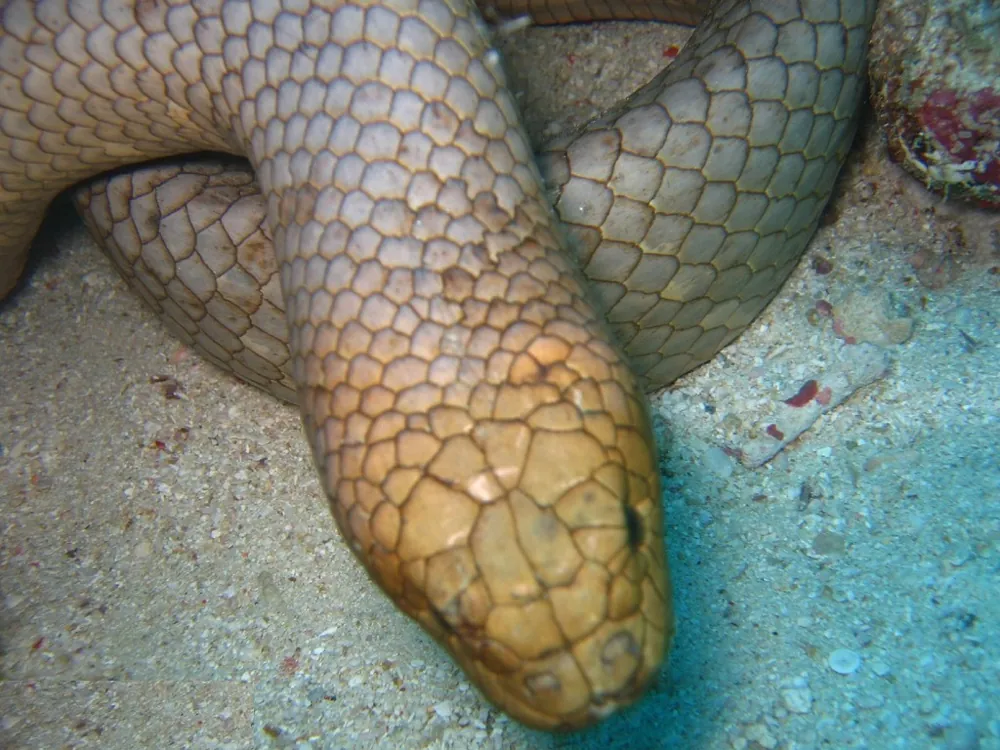
The olive sea snake is a venomous sea snake that lives on coral reefs across the Indo-Pacific, including the Great Barrier Reef. It swims with a paddle-like tail and can grow up to about a metre long. Prawn trawl nets are one of its biggest threats.1



 Hono anndirtee ngal
Doole tooke ŋatgol
Tooke no yaltira ñiiƴe mum tuma ngal ŋatata.
Ko honɗun tooke mum waɗata (ŋatgol walla jukkugol)?
Its venom is rich in enzymes that break down prey inside the body, which simplifies digestion. The venom also affects both the muscles and nerves of the prey, and it is used to incapacitate the prey.1
Hono musiiba mum heewiri e yimɓe?
Musiiba e yimɓe: Musiiba sanneNo waawi warugol neɗɗo mo safraaka.It can be aggressive towards prey, but attacks on divers or larger animals are rare. If provoked, it will fight back against the attacker.1
Ko honɗun ngal waɗata si ngal hulii?
If provoked, it will engage the attacker, and during the day it hides inside coral holes.1
 Si no ŋata
- Haɓɓugol tiiɗngol e dartingol: taar bande elastik tiiɗnde e dow nokku ŋataaɗo on, refti e dow koyngal walla jungo on fow, haɓɓu attelle, haɗu neɗɗo on dillagol fey haa ballal hewta.
- Yaltin neɗɗo on e ndiyam, yahra mo lopitaan law.
Adii fow noddu nimero ballal (112, 000, 911). Ɗum ko anndinal ballal adiingal, wanaa saaraangal doktoro. Ko adii nder ballal adiingal
 Reen hoore maa
- Wota a meem, wota a nanngu, wota a jalnu kullal ladde haa abada, hay si ko tokooso, hay si no yi'ee no ɗaanii walla maayii.
- Accu ngal nokku. Si a fotti e ngal, deeƴu, ruttu ɓaawo seeɗa seeɗa, accu ngal yaha laawol mum.
- Si gooto e majji ŋatii ma: deeƴu, wota a dillu, noddu nimero ballal (112, 000, 911) walla yahu lopitaan law. Jogo e hakkille no ngal nanndi, natal no walla.
Ngal faalaaka gaañugol ma. Ngal no huutora tooke mum ngam nanngugol ñaamdu walla reenugol hoore mum, ngal ɓuri yiɗugol suuɗaade. Ko ɓeydi fii reenugol hoore maa
Hoto nder aduna?
Hono mawniri?
Hono juutiri?
 juuti no ulluuɗi suudu 4, hinere haa lawol
 juuti no banaanaaji 11 jokkondirɗi
 no waawi yoowugol juutde pisin mawɗo (50 m) nder segonde 40
Hono Olive sea snake mawniri, si fooɗondiraama e AN?
Ko limoore tun nder navigateur maa. Alaa ko danndetee walla ko neldetee ka nokku woo.
Hono yaawiri?
Humpito
Its tail has light-sensitive cells in the skin, which help it detect light and stay fully hidden inside coral holes during the day.1
Males sometimes approach divers, possibly because they mistake the divers for female sea snakes.1
Prawn trawls are one of its greatest threats, and up to 50% of olive sea snakes caught in trawls are killed.1
Males can reach sexual maturity in their third year, while females do not mature until their fourth or fifth year.1
Bonnoowo fenaandeeji
Fenaande: Sea snakes regularly attack divers.
Goonga: Attacks on divers are rare. Males that approach divers are likely mistaking them for females.1
Ngam ganduɓe tooke
- Innde ganndal
- Aipysurus laevis
- Fedde
- Ɓoɗɗi geeci
- Ɓesngu
- Elapidae2
- Ordre
- Squamata
- Leyɗe mawɗe
- Geeci Enndo, Geeci Pasifik, Geeci Korayl, Geeci Timor e Arafura, Oseyanuuji
- Ɓiɓɓe tokosɓe
- It gives birth to live young, with up to five at a time and, in rare cases, ten or eleven. Gestation lasts about nine months.1
- Duuɓi nguurndam
- wona duuɓi 151
- Musiiba e yimɓe
- 4 / 5: Musiiba sanne3
Ɗo humpitooji ɗin iwri
- Aipysurus laevis (Wikipedia (CC BY-SA 4.0))
- Aipysurus laevis (iNaturalist): inɗe e ŋoordingol (classification).
- Venom Wiki: tolno musiiba, mawnugol aadaajo e miijo yaawugol ko amen. Ndaar no min ƴeewtirta ɗum: Hono min tolnirta musiiba.
Kala humpito nder ngoo hello no jogii limoore hollirnde iwdi mum. Si min juumii, yaafo, min ko yiɗɓe kulle, wanaa jaaynde ganndal. Haalan min e [email protected], min feewnitan.
 Yaare nden no weelaa! Venom Wiki ko golle neɗɗo gooto: ko yoɓetaake, alaa piiblisite, alaa reweteeɓe. Kopporde tokooso no walla heddingol ɗum e enternet.Ñaamnu yaare nden
Ko ɓeydi e fedde wootere: Ɓoɗɗi geeci
 Beaked sea snake
 Belcher's sea snake
 Black-banded sea krait
 Blue-lipped sea krait
 Dubois' sea snake
 Yellow-lipped sea krait
No hoɗi kadi nder: Geeci Enndo
 Meduusi kaaɗe OstaraliMeduusiiji e kulle geeci jukkoojeWaroowoWota a meem
 Kokiyaasi kone jeografiKokiyaasi kone e pulpuujiWaroowo
 Pulpu mawɗo koode bulaajeKokiyaasi kone e pulpuujiWaroowo
 Pulpu koode bulaaje sudKokiyaasi kone e pulpuujiWaroowo
 Hawksbill sea turtleKulle goɗɗe tookeeje ɓannduNo waawi warugol
 Irukandji jellyfishMeduusiiji e kulle geeci jukkoojeNo waawi warugolWota a meem