
 Afirik
 Aazi
Aazi Orop
Orop Amerik Sud
 Ostarali e Oseyani
 Antarktik
 Geeci Pasifik
 Geeci Atlantik
 Geeci Enndo
 Geeci Arktik
 Geeci Mediteraane
 Geeci Boɗeewi
 Geeci Karayib
 Geeci Korayl
 Geeci Siin Sud
 Geeci Filipiin
 Geeci Andaman
 Geeci Nord
 Geeci Timor e Arafura
 Gulf Bengal
 Gulf Kaliforni
Red-tailed bumblebee
 Jukkugol
The red-tailed bumblebee is a black bee with red markings at the back of its body. It lives across much of Central Europe, including Britain and Ireland. It is an important pollinator of flowers and crops, and like other bumblebees it can sting.1


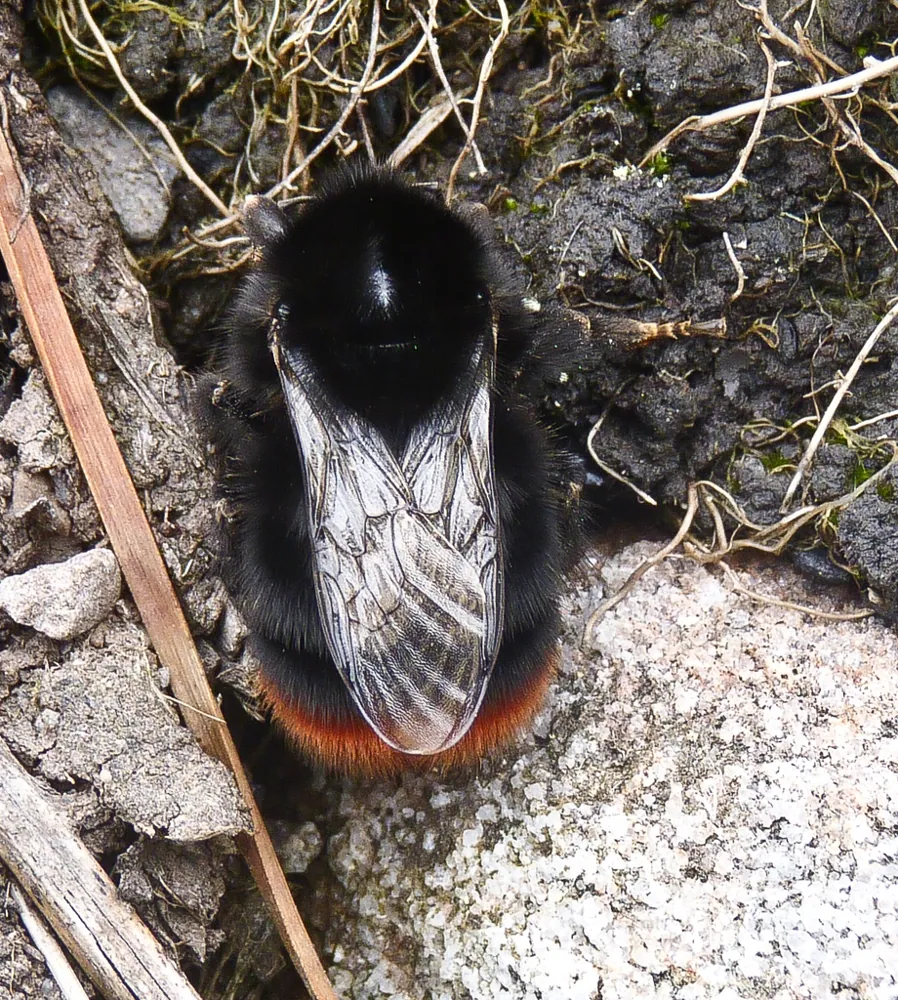
 Hono anndirtee ngal
- Black body with red markings around the abdomen.1
- Males have red and black colouring, a yellow band around the abdomen and yellow markings on the face.1
- Workers and the queen look similar, but the queen is much larger than the workers.1
No jiibondiree e: Rarer bumblebees such as Bombus ruderarius have a similar appearance.1
Doole tooke ŋatgol
Tooke no yaltira jukkere.
Hono musiiba mum heewiri e yimɓe?
Musiiba e yimɓe: SeeɗaNo jukkugol ñaaki walla ko ɓuri famɗugol. Ko ɓadii alaa musiiba e yimɓe. Si no jukka
- Ittu jukkere ñaaki nden e ɓorgol (gratter), ɓuuɓnu nokku on.
- Si neɗɗo on no caɗɗa foofagol, yeeso walla daande mum no ufi, walla no yi'a o no ɓadii majjugol hakkille, ɗum ko musiiba allergie: noddu nimero ballal, huutoro stylo adrénaline mum (auto-injecteur) si o no jogii.
Adii fow noddu nimero ballal (112, 000, 911). Ɗum ko anndinal ballal adiingal, wanaa saaraangal doktoro. Ko adii nder ballal adiingal
 Reen hoore maa
- Wota a meem, wota a nanngu, wota a jalnu kullal ladde haa abada, hay si ko tokooso, hay si no yi'ee no ɗaanii walla maayii.
- Accu ngal nokku. Si a fotti e ngal, deeƴu, ruttu ɓaawo seeɗa seeɗa, accu ngal yaha laawol mum.
- Si gooto e majji jukkii ma: deeƴu, wota a dillu, noddu nimero ballal (112, 000, 911) walla yahu lopitaan law. Jogo e hakkille no ngal nanndi, natal no walla.
Ngal faalaaka gaañugol ma. Ngal no huutora tooke mum ngam nanngugol ñaamdu walla reenugol hoore mum, ngal ɓuri yiɗugol suuɗaade. Ko ɓeydi fii reenugol hoore maa
Hoto nder aduna?
Hono mawniri?
Hono juutiri?
 ɓuri hoɓɓere maa tokoosere rabbiɗugol
 no waawi diwugol taccugol nokku bal fow nder segonde 15
Hono Red-tailed bumblebee mawniri, si fooɗondiraama e AN?
Ko limoore tun nder navigateur maa. Alaa ko danndetee walla ko neldetee ka nokku woo.
Hono yaawiri?


Humpito
The bees warm their nest by producing heat with their flight muscles, which they use to incubate the brood.1
Cuckoo bumblebees can invade its nests by copying its chemical scent or by producing a substance that repels the workers.1
Males mark spots with scent to attract females, and these scents are often copied by cuckoo bumblebees.1
Some individuals fly as far as 1,750 metres from the nest to find food, although most forage much closer.1
Males travel much farther than workers, which may help keep the population genetically varied.1
It forages and pollinates at higher temperatures than many other bumblebee species.1
Ngam ganduɓe tooke
- Innde ganndal
- Bombus lapidarius
- Fedde
- Ñaaki, ɗuggi e ɗuggi mawɗi
- Ɓesngu
- Apidae2
- Ordre
- Hymenoptera
- Leyɗe mawɗe
- Orop
- Ɓiɓɓe tokosɓe
- The queen lays eggs in the nest, and workers sometimes eat them. A nest usually holds a few hundred bees at most, with about 100 to 200 workers on average.1
- Hono ngal woniri nder ladde
- Near Threatened in Ireland1
- Musiiba e yimɓe
- 1 / 5: Seeɗa3
Ɗo humpitooji ɗin iwri
- Bombus lapidarius (Wikipedia (CC BY-SA 4.0))
- Bombus lapidarius (iNaturalist): inɗe e ŋoordingol (classification).
- Venom Wiki: tolno musiiba, mawnugol aadaajo e miijo yaawugol ko amen. Ndaar no min ƴeewtirta ɗum: Hono min tolnirta musiiba.
Kala humpito nder ngoo hello no jogii limoore hollirnde iwdi mum. Si min juumii, yaafo, min ko yiɗɓe kulle, wanaa jaaynde ganndal. Haalan min e [email protected], min feewnitan.
 Yaare nden no weelaa! Venom Wiki ko golle neɗɗo gooto: ko yoɓetaake, alaa piiblisite, alaa reweteeɓe. Kopporde tokooso no walla heddingol ɗum e enternet.Ñaamnu yaare nden
Ko ɓeydi e fedde wootere: Ñaaki, ɗuggi e ɗuggi mawɗi
 Common waspÑaaki, ɗuggi e ɗuggi mawɗiNo muusi tun
 European hornetÑaaki, ɗuggi e ɗuggi mawɗiNo muusi tun
 Western honey beeÑaaki, ɗuggi e ɗuggi mawɗiNo muusi tun
 European paper waspÑaaki, ɗuggi e ɗuggi mawɗiNo muusi tun
 German waspÑaaki, ɗuggi e ɗuggi mawɗiNo muusi tun
 Buff-tailed bumblebeeÑaaki, ɗuggi e ɗuggi mawɗiAlaa musiiba
No hoɗi kadi nder: Orop
 Common European adderWipeeri e adderNo sokli doktoro
 Spanish flyKulle goɗɗe tookeeje ɓannduNo sokli doktoroWota a meem
 Fire salamanderPaaɓe tooke, krapooji e tritonuujiNo muusi tunWota a meem
 Blunt-nosed viperWipeeri e adderNo waawi warugol
 Nose-horned viperWipeeri e adderNo waawi warugol
 Ottoman viperWipeeri e adderNo waawi warugol