
 Afirik
 Aazi
Aazi Orop
Orop Amerik Sud
 Ostarali e Oseyani
 Antarktik
 Geeci Pasifik
 Geeci Atlantik
 Geeci Enndo
 Geeci Arktik
 Geeci Mediteraane
 Geeci Boɗeewi
 Geeci Karayib
 Geeci Korayl
 Geeci Siin Sud
 Geeci Filipiin
 Geeci Andaman
 Geeci Nord
 Geeci Timor e Arafura
 Gulf Bengal
 Gulf Kaliforni
Stripe-tailed scorpion
 Jukkugol
The stripe-tailed scorpion is a medium-sized scorpion that lives in the deserts of south-western United States and north-western Mexico. It is often found under rocks and on sandy ground. Although it is venomous like all scorpions, its venom is not considered dangerous to people.1

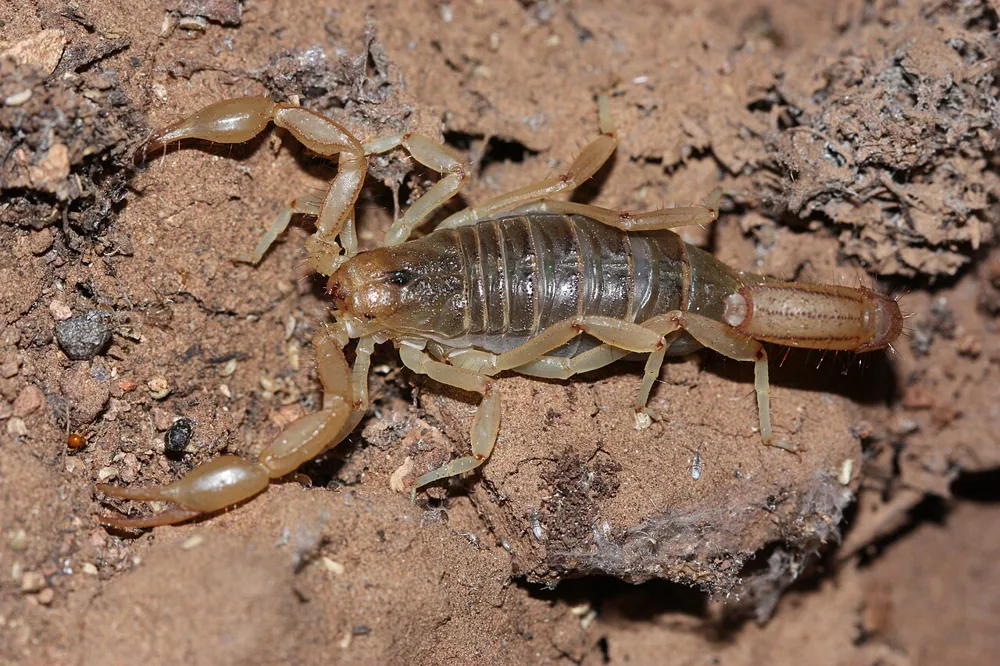
 Hono anndirtee ngal
- Medium-sized, with adults reaching nearly 60–70 mm.1
- Brownish-tan stripes run along the ridges on the back of the tail.1
- The tail is typically thicker than the hands and pedipalps (the front claw-like limbs).1
- Base colour is often light yellow or golden brown, with variable markings along the tail.1
No jiibondiree e: The Arizona bark scorpion (Centruroides sculpturatus) is similar in range. The stripe-tailed scorpion has a thicker tail than its hands and pedipalps, while bark scorpions have slender hands and pedipalps.1
Doole tooke ŋatgol
Tooke no yaltira jukkere.
Ko honɗun tooke mum waɗata (ŋatgol walla jukkugol)?
Like all scorpions, it is venomous. However, its venom is not medically significant for humans or other mammals.1
Hono musiiba mum heewiri e yimɓe?
Musiiba e yimɓe: SeeɗaNo jukkugol ñaaki walla ko ɓuri famɗugol. Ko ɓadii alaa musiiba e yimɓe.It is not considered dangerous to people.1
 Si no jukka
- Ɓuuɓnu nokku jukkaaɗo on e galaasi, haɗu neɗɗo on dillagol. Heɓu ballal doktoro law, ɓuri noon e sukaaɓe: yaare goɗɗe no mbara sukaaɓe.
Adii fow noddu nimero ballal (112, 000, 911). Ɗum ko anndinal ballal adiingal, wanaa saaraangal doktoro. Ko adii nder ballal adiingal
 Reen hoore maa
- Wota a meem, wota a nanngu, wota a jalnu kullal ladde haa abada, hay si ko tokooso, hay si no yi'ee no ɗaanii walla maayii.
- Accu ngal nokku. Si a fotti e ngal, deeƴu, ruttu ɓaawo seeɗa seeɗa, accu ngal yaha laawol mum.
- Si gooto e majji jukkii ma: deeƴu, wota a dillu, noddu nimero ballal (112, 000, 911) walla yahu lopitaan law. Jogo e hakkille no ngal nanndi, natal no walla.
Ngal faalaaka gaañugol ma. Ngal no huutora tooke mum ngam nanngugol ñaamdu walla reenugol hoore mum, ngal ɓuri yiɗugol suuɗaade. Ko ɓeydi fii reenugol hoore maa
Hoto nder aduna?
Hono mawniri?
Hono juutiri?
Hono teddiri?

 juuti no kaaɗe mahirɗe 2 e diisa gooto
 hoyɗo no feewi, a nanataa ɗum e jungo maa
 no waawi taccugol meeteruuji 100 nder segonde 260 (neɗɗo ɓurɗo yaawugol sokli 9,6)
Hono Stripe-tailed scorpion mawniri, si fooɗondiraama e AN?
Ko limoore tun nder navigateur maa. Alaa ko danndetee walla ko neldetee ka nokku woo.
Hono yaawiri?


Humpito
If the male keeps dancing longer than the female, she may attack him and eat him.1
During pregnancy, the female holds an unusually rigid body posture that no other scorpion shows, with her front legs lowered at birth.1
Mating involves a dance that can last from a few minutes to several hours, and the pair then goes their separate ways.1
Pallid bats, sand-swimmer snakes, spiders, centipedes, lizards, birds and other scorpions all prey on it.1
Bonnoowo fenaandeeji
Fenaande: Stripe-tailed scorpions are dangerous to people because they are venomous.
Goonga: Although it is venomous, its venom is not medically significant for humans or other mammals.1
Ngam ganduɓe tooke
Ɗo humpitooji ɗin iwri
- Paravaejovis spinigerus (Wikipedia (CC BY-SA 4.0))
- Paravaejovis spinigerus (iNaturalist): inɗe e ŋoordingol (classification).
- Venom Wiki: tolno musiiba, mawnugol aadaajo e miijo yaawugol ko amen. Ndaar no min ƴeewtirta ɗum: Hono min tolnirta musiiba.
Kala humpito nder ngoo hello no jogii limoore hollirnde iwdi mum. Si min juumii, yaafo, min ko yiɗɓe kulle, wanaa jaaynde ganndal. Haalan min e [email protected], min feewnitan.
 Yaare nden no weelaa! Venom Wiki ko golle neɗɗo gooto: ko yoɓetaake, alaa piiblisite, alaa reweteeɓe. Kopporde tokooso no walla heddingol ɗum e enternet.Ñaamnu yaare nden
 Arizona bark scorpion
 Cuban blue scorpion
 Striped bark scorpion
 Giant desert hairy scorpion
 Colima scorpion
 Durango scorpion
 Terciopelo
 Eastern coral snake
 Eastern diamondback rattlesnake
 Eyelash viper
 Timber rattlesnake
 Western diamondback rattlesnake