
 Afirik
 Aazi
Aazi Orop
Orop Amerik Sud
 Ostarali e Oseyani
 Antarktik
 Geeci Pasifik
 Geeci Atlantik
 Geeci Enndo
 Geeci Arktik
 Geeci Mediteraane
 Geeci Boɗeewi
 Geeci Karayib
 Geeci Korayl
 Geeci Siin Sud
 Geeci Filipiin
 Geeci Andaman
 Geeci Nord
 Geeci Timor e Arafura
 Gulf Bengal
 Gulf Kaliforni
Timber rattlesnake
 Ŋatgol
The timber rattlesnake is a venomous pit viper that lives in forests and rocky land in the eastern United States. It is the only rattlesnake in most of the crowded northeastern states, and it is one of the most northerly venomous snakes in North America.1



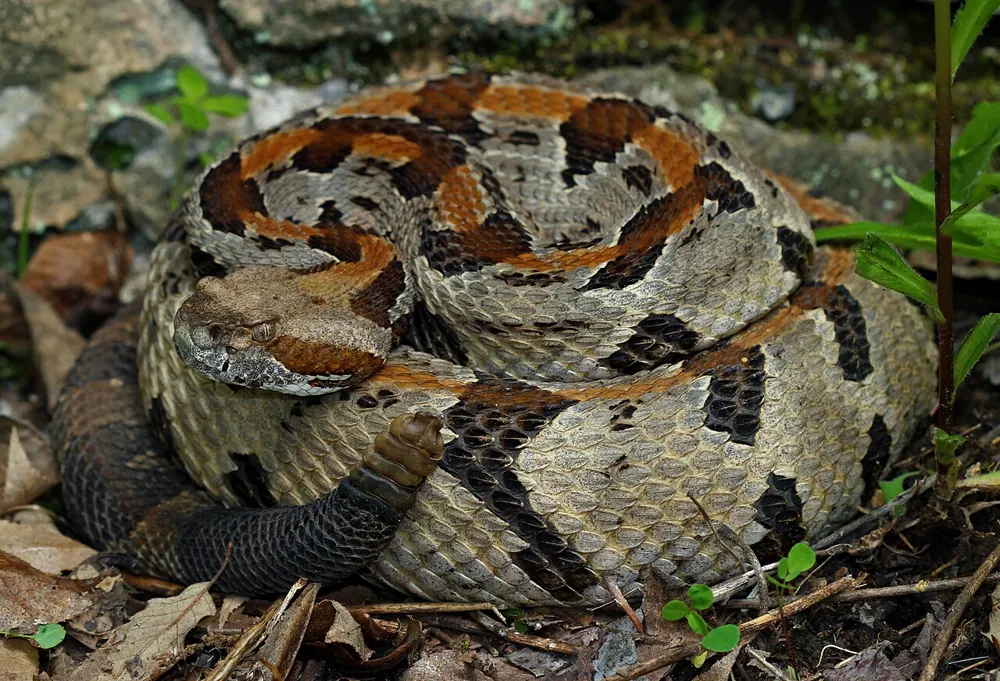
 Hono anndirtee ngal
- Dark brown or black crossbands on a yellowish-brown or greyish background1
- The crossbands have irregular zig-zag edges and may be V- or M-shaped1
- A rust-coloured stripe often runs down the middle of the back1
- The tail is black and looks 'velvety'1
- Melanism (very dark colouring) is common, and some individuals are almost solid black1
Doole tooke ŋatgol
Tooke no yaltira ñiiƴe mum tuma ngal ŋatata.
Ko honɗun tooke mum waɗata (ŋatgol walla jukkugol)?
Its venom is extremely potent and can be haemorrhagic (damaging blood vessels and causing bleeding) or neurotoxic (attacking the nerves), depending on the population and location. Its long fangs, large size and high venom yield make it potentially one of North America's most dangerous snakes. Venom-induced incapacitation can progress rapidly.1
Hono musiiba mum heewiri e yimɓe?
Musiiba e yimɓe: Musiiba sanneNo waawi warugol neɗɗo mo safraaka.It is potentially one of North America's most dangerous snakes, but it is usually shy and calm. It will retreat if it can and attacks mainly when cornered. Over many years in western Pennsylvania, one naturalist heard of only one death from its bite. Bites are widespread in some areas of Iowa's forests. Its remote, wooded habitat can make emergency medical care difficult or even impossible.1
Ko honɗun ngal waɗata si ngal hulii?
It rattles and feints a good deal before striking, and it will try to retreat first if it feels threatened.1
 Si no ŋata
- Haɗu neɗɗo on dillagol, deeƴnu mo, jogo koyngal walla jungo ŋataaɗo on e toownde ɓernde, ittu baagiiji e ko tiiɗi fow, yahra mo lopitaan law.
Adii fow noddu nimero ballal (112, 000, 911). Ɗum ko anndinal ballal adiingal, wanaa saaraangal doktoro. Ko adii nder ballal adiingal
 Reen hoore maa
- Wota a meem, wota a nanngu, wota a jalnu kullal ladde haa abada, hay si ko tokooso, hay si no yi'ee no ɗaanii walla maayii.
- Accu ngal nokku. Si a fotti e ngal, deeƴu, ruttu ɓaawo seeɗa seeɗa, accu ngal yaha laawol mum.
- Si gooto e majji ŋatii ma: deeƴu, wota a dillu, noddu nimero ballal (112, 000, 911) walla yahu lopitaan law. Jogo e hakkille no ngal nanndi, natal no walla.
Ngal faalaaka gaañugol ma. Ngal no huutora tooke mum ngam nanngugol ñaamdu walla reenugol hoore mum, ngal ɓuri yiɗugol suuɗaade. Ko ɓeydi fii reenugol hoore maa
Hoto nder aduna?
Hono mawniri?
Hono juutiri?
Hono teddiri?
 juuti no ulluuɗi suudu 4, hinere haa lawol
 juuti no banaanaaji 11 jokkondirɗiteddi no ullundu suudu
 no waawi taccugol meeteruuji 100 nder segonde 95 (neɗɗo ɓurɗo yaawugol sokli 9,6)
Hono Timber rattlesnake mawniri, si fooɗondiraama e AN?
Ko limoore tun nder navigateur maa. Alaa ko danndetee walla ko neldetee ka nokku woo.
Hono yaawiri?


Humpito
Timber rattlesnakes return to the same winter den each year, and juveniles can track chemical cues to find relatives in it.1
Female timber rattlesnakes bask in the sun on open rocky areas called basking knolls before they give birth.1
They share winter dens with copperheads and rat snakes.1
It is the only rattlesnake in most of the populous Northeastern United States, and one of the most northerly venomous snakes in North America.1
Males often mate farther from the winter dens than females do.1
Bonnoowo fenaandeeji
Fenaande: Rattlesnakes attack people as soon as they see them.
Goonga: Timber rattlesnakes are shy and will try to retreat from danger first. They attack mainly when they are cornered, so leaving them alone keeps people safe.1
Ngam ganduɓe tooke
- Innde ganndal
- Crotalus horridus
- Fedde
- Ɓoɗɗi wulloowi
- Ɓesngu
- Viperidae2
- Ordre
- Squamata
- Leyɗe mawɗe
- Amerik Nord
- Ɓiɓɓe tokosɓe
- Females first reproduce at a mean age of 9.6 years and average 7.7 offspring per litter. Most females reproduce only once in their lifetime.1
- Hono ngal woniri nder ladde
- Extirpated in Canada, as listed under the Canadian Species at Risk Act in May 2001.1
- Musiiba e yimɓe
- 4 / 5: Musiiba sanne3
Ɗo humpitooji ɗin iwri
- Timber rattlesnake (Wikipedia (CC BY-SA 4.0))
- Crotalus horridus (iNaturalist): inɗe e ŋoordingol (classification).
- Venom Wiki: tolno musiiba, mawnugol aadaajo e miijo yaawugol ko amen. Ndaar no min ƴeewtirta ɗum: Hono min tolnirta musiiba.
Kala humpito nder ngoo hello no jogii limoore hollirnde iwdi mum. Si min juumii, yaafo, min ko yiɗɓe kulle, wanaa jaaynde ganndal. Haalan min e [email protected], min feewnitan.
 Yaare nden no weelaa! Venom Wiki ko golle neɗɗo gooto: ko yoɓetaake, alaa piiblisite, alaa reweteeɓe. Kopporde tokooso no walla heddingol ɗum e enternet.Ñaamnu yaare nden
Ko ɓeydi e fedde wootere: Ɓoɗɗi wulloowi
 Eastern diamondback rattlesnakeƁoɗɗi wulloowiNo waawi warugol
 Western diamondback rattlesnakeƁoɗɗi wulloowiNo waawi warugol
 SidewinderƁoɗɗi wulloowiNo sokli doktoro
 Mojave rattlesnakeƁoɗɗi wulloowiNo waawi warugol
 Aruba rattlesnakeƁoɗɗi wulloowiNo sokli doktoro
 Black-tailed rattlesnakeƁoɗɗi wulloowiNo sokli doktoro
 Terciopelo
 Eastern coral snake
 Eyelash viper
 Arizona bark scorpion
 Brown recluse
 Cane toad
_-_Flickr_-_2ndPeter.jpg)