
 Afirik
 Asiya
Asiya Turai
Turai Amerik Worgo
 Australiya e Oseaniya
 Antarktika
 Baharu Pasifik
 Baharu Atlantik
 Baharu Indiya
 Baharu Arktik
 Baharu Mediterane
 Baharu Boɗeeru
 Baharu Karibiya
 Baharu Koral
 Baharu Ciina Worgo
 Baharu Filipin
 Baharu Andaman
 Baharu Rewo
 Baharu Timor e Arafura
 Baharu Bengal
 Baharu Kaliforniya
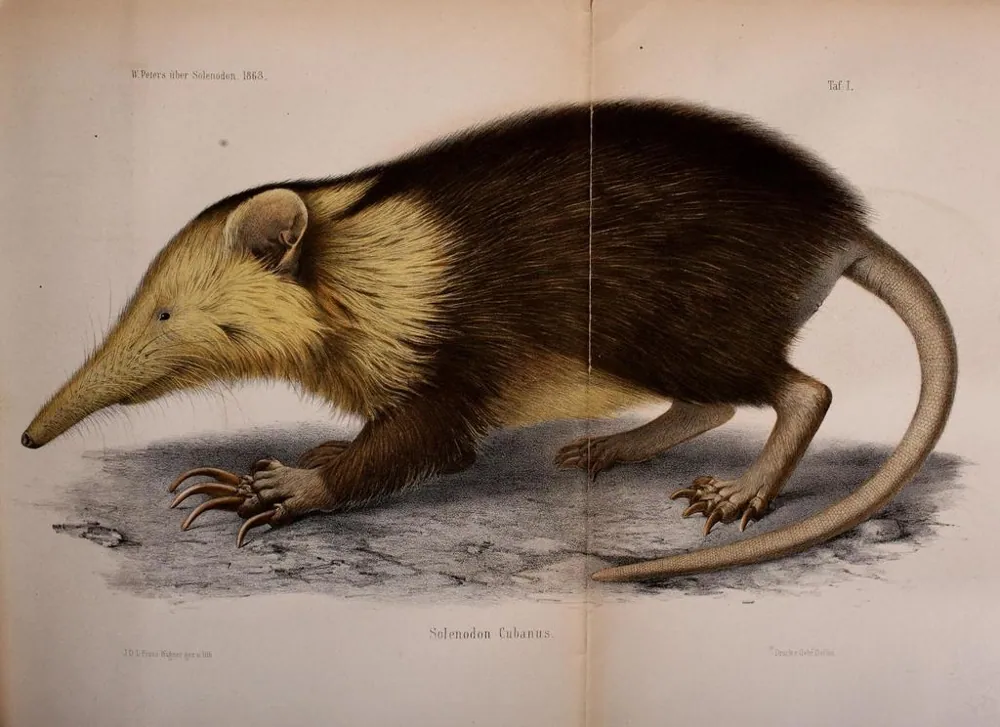
Cuban solenodon
 Ina ŋata
The Cuban solenodon is a small, furry, shrew-like mammal that lives only in the mountain forests of eastern Cuba. It is one of the few mammals that can inject venom, which it uses to catch its prey. It is endangered and was once thought to be extinct.1



 No anndirto nde
Doole tooke
Tooke ina yalta e ñiiƴe mum si nde ŋatii.
Hol ko tooke mum (ŋatol walla fiɗol) waɗata?
Its venom comes from modified salivary glands in the lower jaw, so it is a venomous bite. The venom is strong enough to kill lizards, other small reptiles, frogs, small birds and rodents. Solenodons do not appear to be immune to the venom of their own kind, and cage mates have been reported dying after fights.1
Hol no nde woni bone e yimɓe?
Bone e yimɓe: Ina muusaIna waawi muusude sanne, kono ɓadii abada wonaa bone mawɗo. Si nde ŋatii
- Lootu barme moƴƴa, heɓu ballal doktaa.
Sahaa fof, noddu lamba ballal yaawngal (112, 000, 911) ko adii. Ɗum ko ballal arano kuuɓal, wonaa wasiyya doktaa. Aslu ballal arano
 Reen hoore maa
- Taa memu, taa nanngu, taa aaɓnu dabbaare ladde abada, hay pamaro, hay si ina wayi no ɗaanii walla maayii.
- Accu nde nokku. Si a fottii e gooto, deeƴu, ruttu caggal seeɗa seeɗa, accu nde yaha laawol mum.
- Si gooto e majji ŋatii ma: deeƴu, taa dillu, noddu lamba ballal yaawngal (112, 000, 911) walla yah asibiti law. Siftor no nde wayri, foto ina walla.
Nde ɗaɓɓaaki ma. Nde huutora tooke mum ngam nanngude ñaamdu walla reende hoore mum, nde ɓuri yiɗde suuɗaade. Ɓeydu anndude no reentorto
Hol to e aduna?
Hol no nde mawni?
Hol no nde juuti?
Hol no nde teddi?
 juuti no ayaba 3 jokkondiraaɗi
 juuti no bulok fijo 18 jokkondiraaɗi
 ina waawi dogde meeter 100 nder sakan 45 (neɗɗo ɓurɗo yaawde ina haani 9,6)
Hol no Cuban solenodon mawni, fottindaade e AAN?
Hiisa tan nder browser maa. Alaa ko mooftetee walla ko neletee.
Hol no nde yaawi?


Anndal
The solenodons are one of the few groups of mammals that are venomous.1
It was declared extinct in 1970, but was found again in 1974.1
The Cuban solenodon found in 2003 was named Alejandrito. It was healthy, and it was released back into the wild after two days of scientific study.1
Males mate with several females, but they do not help raise the young. Males and females only meet to mate.1
Feññinoowo goonga
Fenaande: The Cuban solenodon is extinct.
Goonga: It is not extinct. It was once thought to be extinct because it is so rare and hard to see, but it survives today and is listed as endangered.1
Ɗo anndal iwi
- Cuban solenodon (Wikipedia (CC BY-SA 4.0))
- Atopogale cubana (iNaturalist): inɗe e tolnugol.
- Venom Wiki: darja bone, mawnude woowaaɗo e miijo yaawre ko amen. Ndaar no min hiisirta ɗum: No min betiri bone.
Kala anndal e ngoo hello ina jogii limre hollirnde iwdi mum. Si min juumii, accu min, min yiɗɓe dabbaaji, wonaa jaridaa ganndal. Wiy min e [email protected] min feewnitay.
 Yaare nden ina heege! Venom Wiki ko golle neɗɗo gooto: meere, tawa tallaaji alaa, trackers alaa. Ballal pamarngal ina walla heddinde ɗum e internet.Ñaamnu yaare nden
Goɗɗi e fedde wootere: Dabbaaji muynooji tooke
 Common vampire batDabbaaji muynooji tookeIna muusa tan
 Hispaniolan solenodonDabbaaji muynooji tookeIna muusa tan
 Northern short-tailed shrewDabbaaji muynooji tookeAlaa bone
 Hairy-legged vampire batDabbaaji muynooji tookeAlaa bone
 White-winged vampire batDabbaaji muynooji tookeAlaa bone
 PlatypusDabbaaji muynooji tookeIna muusa tan
 Terciopelo
 Eastern coral snake
 Eastern diamondback rattlesnake
 Eyelash viper
 Timber rattlesnake
 Western diamondback rattlesnake