
 Afirik
 Asiya
Asiya Turai
Turai Amerik Worgo
 Australiya e Oseaniya
 Antarktika
 Baharu Pasifik
 Baharu Atlantik
 Baharu Indiya
 Baharu Arktik
 Baharu Mediterane
 Baharu Boɗeeru
 Baharu Karibiya
 Baharu Koral
 Baharu Ciina Worgo
 Baharu Filipin
 Baharu Andaman
 Baharu Rewo
 Baharu Timor e Arafura
 Baharu Bengal
 Baharu Kaliforniya
Eyelash viper
 Ina ŋata
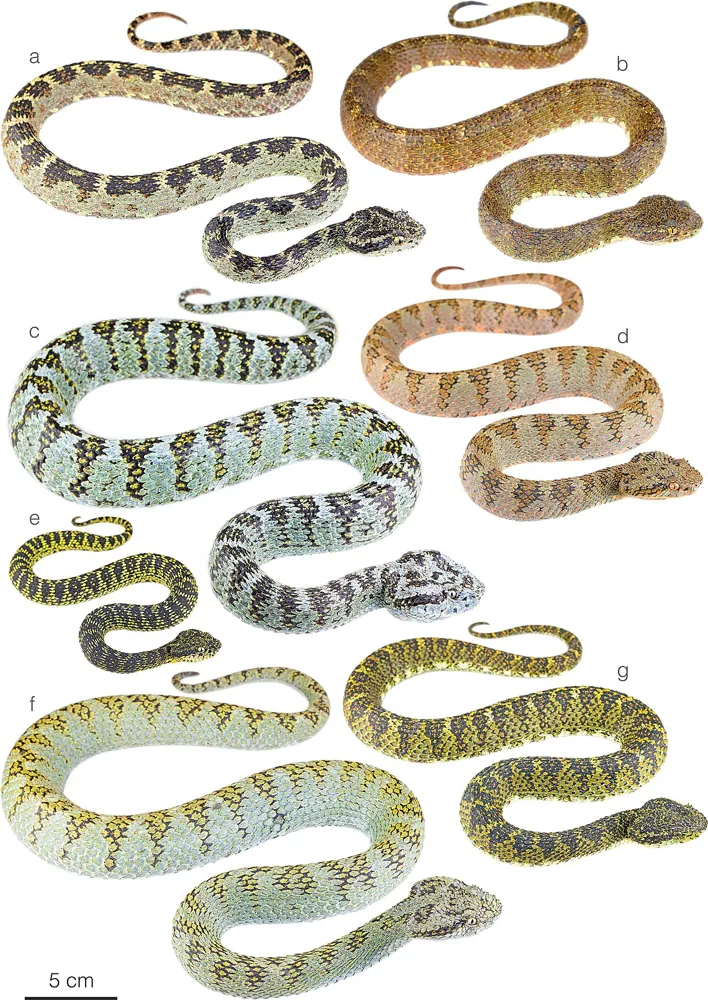
The eyelash viper is a small, tree-living pitviper that lives mainly in the highlands of Colombia. It is named after the eyelash-like scales above its eyes. Its venom can cause serious harm, so it is important to recognise it and keep well away.1



 No anndirto nde
Doole tooke
Tooke ina yalta e ñiiƴe mum si nde ŋatii.
Hol ko tooke mum (ŋatol walla fiɗol) waɗata?
Its venom contains several components that damage tissue, cause swelling and disturb blood clotting. A bite typically causes pain, swelling and bruising at the bite site, and sometimes blisters or local tissue death. Some reports describe rapid local tissue damage followed by clotting problems and acute kidney failure.1
Hol no nde woni bone e yimɓe?
Bone e yimɓe: Bone sanneIna waawi warde neɗɗo mo heɓaali safaara.The snake is not known to be aggressive towards people and tends to avoid creatures larger than itself, but it will strike if repeatedly harassed. Some studies of venom from northern Colombia reported serious effects, including kidney failure.1
Hol ko nde waɗata si nde hulii?
It is not known to be aggressive and tends to avoid larger creatures, but it will strike if repeatedly harassed.1
 Si nde ŋatii
- Deeƴin neɗɗo oo, taa o dilla, waɗu koyngal walla junngo ŋataangal e toowal ɓernde, ittu zoobe e geɗe ɗigginiiɗe, yahra mo asibiti law.
Sahaa fof, noddu lamba ballal yaawngal (112, 000, 911) ko adii. Ɗum ko ballal arano kuuɓal, wonaa wasiyya doktaa. Aslu ballal arano
 Reen hoore maa
- Taa memu, taa nanngu, taa aaɓnu dabbaare ladde abada, hay pamaro, hay si ina wayi no ɗaanii walla maayii.
- Accu nde nokku. Si a fottii e gooto, deeƴu, ruttu caggal seeɗa seeɗa, accu nde yaha laawol mum.
- Si gooto e majji ŋatii ma: deeƴu, taa dillu, noddu lamba ballal yaawngal (112, 000, 911) walla yah asibiti law. Siftor no nde wayri, foto ina walla.
Nde ɗaɓɓaaki ma. Nde huutora tooke mum ngam nanngude ñaamdu walla reende hoore mum, nde ɓuri yiɗde suuɗaade. Ɓeydu anndude no reentorto
Hol to e aduna?
Hol no nde mawni?
Hol no nde juuti?
 juuti no ullundi galle 1,5, hinere haa laaci
 juuti no ayaba 5 jokkondiraaɗi
 ina waawi dogde meeter 100 nder sakan 110 (neɗɗo ɓurɗo yaawde ina haani 9,6)
Hol no Eyelash viper mawni, fottindaade e AAN?
Hiisa tan nder browser maa. Alaa ko mooftetee walla ko neletee.
Hol no nde yaawi?


Anndal
Males perform a courtship ritual called the 'dance of the adders', in which two males rise up in a cobra-like stance and push against each other until one is pushed away or falls.1
Its strike accuracy improves with practice, according to studies of individuals over time.1
Some individuals return to the same ambush sites each year, timing their visits to the spring bird migration.1
Its eyelash-like scales may help it hide by breaking up its outline among the leaves where it rests.1
Feññinoowo goonga
Fenaande: After a bite, the snake winks its eyelashes at the victim, as some local folktales describe.
Goonga: No snake can do this. Snakes have no true eyelids and cannot close their eyes. Most reptiles have a thin, membrane-like eyelid that acts as a shield, mainly when resting.1
Ngam ganduɓe tooke
- Innde ganndal
- Bothriechis schlegelii
- Fedde
- Pit viper
- Besngu
- Viperidae2
- Tolno
- Squamata
- Nahiyaaji
- Amerik Rewo, Amerik Worgo
- Ɓikkoy
- It gives birth to live young rather than laying eggs, with females carrying the eggs for around six months. A typical brood has 2 to 20 young, each 15 to 20 cm long.1
- Hol no nde wonata e ladde
- Least Concern (IUCN Red List, 2013)1
- Bone e yimɓe
- 4 / 5: Bone sanne3
Ɗo anndal iwi
- Bothriechis schlegelii (Wikipedia (CC BY-SA 4.0))
- Bothriechis schlegelii (iNaturalist): inɗe e tolnugol.
- Venom Wiki: darja bone, mawnude woowaaɗo e miijo yaawre ko amen. Ndaar no min hiisirta ɗum: No min betiri bone.
Kala anndal e ngoo hello ina jogii limre hollirnde iwdi mum. Si min juumii, accu min, min yiɗɓe dabbaaji, wonaa jaridaa ganndal. Wiy min e [email protected] min feewnitay.
 Yaare nden ina heege! Venom Wiki ko golle neɗɗo gooto: meere, tawa tallaaji alaa, trackers alaa. Ballal pamarngal ina walla heddinde ɗum e internet.Ñaamnu yaare nden
 Terciopelo
 Golden lancehead
 South American bushmaster
 Cottonmouth
 Eastern copperhead
 Common lancehead
 Eastern coral snake
 Eastern diamondback rattlesnake
 Timber rattlesnake
 Western diamondback rattlesnake
 Arizona bark scorpion
 Brown recluse