
 Afirik
 Asiya
Asiya Turai
Turai Amerik Worgo
 Australiya e Oseaniya
 Antarktika
 Baharu Pasifik
 Baharu Atlantik
 Baharu Indiya
 Baharu Arktik
 Baharu Mediterane
 Baharu Boɗeeru
 Baharu Karibiya
 Baharu Koral
 Baharu Ciina Worgo
 Baharu Filipin
 Baharu Andaman
 Baharu Rewo
 Baharu Timor e Arafura
 Baharu Bengal
 Baharu Kaliforniya
Diving bell spider
 Ina ŋata
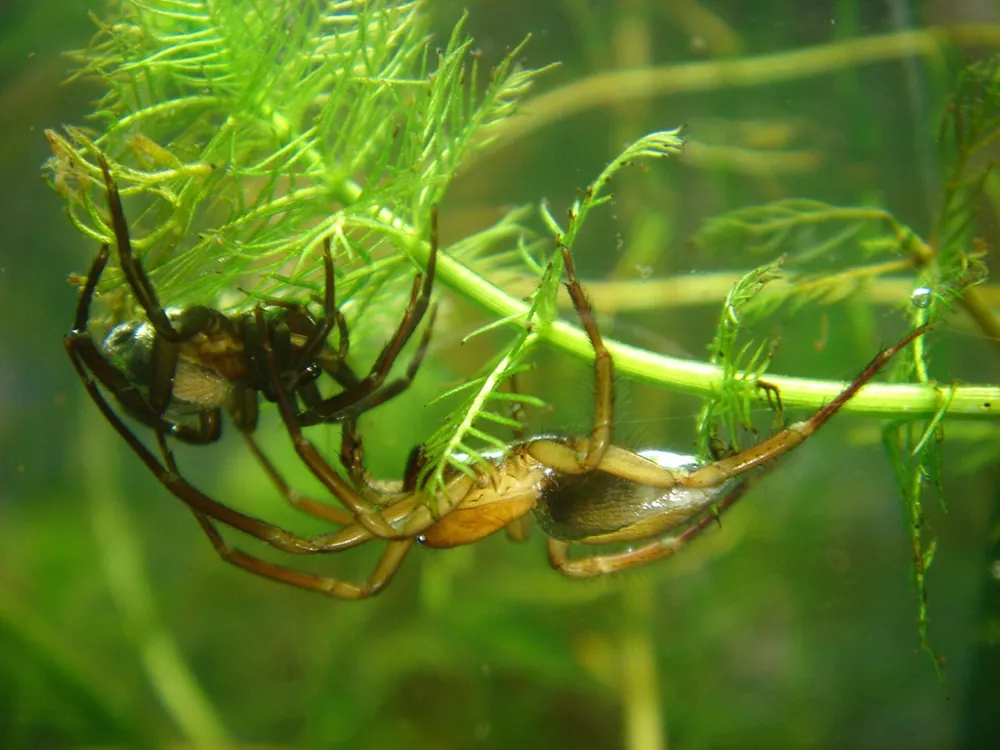
The diving bell spider is the only spider known to live almost entirely underwater. It makes its home in clean freshwater across Europe and Asia. It is special because it breathes air that it carries down from the surface and keeps in a silk bell under the water.1



 No anndirto nde
- Out of the water, it is mid to dark brown.1
- Hairs on the abdomen give it a dark grey, velvet-like look.1
- Underwater, an air bubble trapped by dense hairs on the abdomen and legs makes it look silvery.1
- Males have a head-and-body length of 10 to 15 mm, and females 8 to 12 mm.1
- It spends most of its time inside a silk diving bell, darting out to catch prey.1
Doole tooke
Tooke ina yalta e ñiiƴe mum si nde ŋatii.
Hol ko tooke mum (ŋatol walla fiɗol) waɗata?
Reports describe a bite that is painful, with local swelling, vomiting and a slight fever that lasts 5 to 10 days. These reports are old and unverified, so the effects are not well confirmed.1
Hol no nde woni bone e yimɓe?
Bone e yimɓe: Ina muusaIna waawi muusude sanne, kono ɓadii abada wonaa bone mawɗo.The bite is reputedly painful, but there is no solid evidence of serious harm to people. Recent confirmed reports are lacking.1
 Si nde ŋatii
- Lootu ŋatol ngol, waɗu kankara dow mum ngam muusu. Heɓu ballal doktaa si muusu ina tiiɗi, ina yaajoo, walla neɗɗo oo ɓanndu mum welaani.
Sahaa fof, noddu lamba ballal yaawngal (112, 000, 911) ko adii. Ɗum ko ballal arano kuuɓal, wonaa wasiyya doktaa. Aslu ballal arano
 Reen hoore maa
- Taa memu, taa nanngu, taa aaɓnu dabbaare ladde abada, hay pamaro, hay si ina wayi no ɗaanii walla maayii.
- Accu nde nokku. Si a fottii e gooto, deeƴu, ruttu caggal seeɗa seeɗa, accu nde yaha laawol mum.
- Si gooto e majji ŋatii ma: deeƴu, taa dillu, noddu lamba ballal yaawngal (112, 000, 911) walla yah asibiti law. Siftor no nde wayri, foto ina walla.
Nde ɗaɓɓaaki ma. Nde huutora tooke mum ngam nanngude ñaamdu walla reende hoore mum, nde ɓuri yiɗde suuɗaade. Ɓeydu anndude no reentorto
Hol to e aduna?
Hol no nde mawni?
Hol no nde juuti?
 ɓuri famɗude njuuteendi feɗeendu maa pamaru
Hol no Diving bell spider mawni, fottindaade e AAN?
Hiisa tan nder browser maa. Alaa ko mooftetee walla ko neletee.
Hol no nde yaawi?


Anndal
It is the only known spider that spends almost its whole life underwater, including resting, hunting, mating, laying eggs and overwintering. It surfaces only briefly to refill its air supply.1
Its diving bell is made of waterproof silk and lets gases pass through. Oxygen flows in and carbon dioxide flows out, so the bell works like a kind of gill.1
Nitrogen slowly leaves the bell, so the air bubble shrinks and the spider must keep refilling it.1
Unlike most spiders, the males are larger than the females, and they are more active hunters.1
Feññinoowo goonga
Fenaande: Its bite is very painful and causes vomiting and fever.
Goonga: These effects are based on old, unverified reports. There is no solid evidence for them, and recent confirmed reports are lacking.1
Ngam ganduɓe tooke
- Innde ganndal
- Argyroneta aquatica
- Fedde
- Gizo-gizo
- Besngu
- Argyronetidae2
- Tolno
- Araneae
- Nahiyaaji
- Turai, Asiya
- Ɓikkoy
- After mating in the female's bell, she builds an egg sac inside it and lays between 30 and 70 eggs.1
- Duuɓi nguurndam
- ɓadii duuɓi 21
- Hol no nde wonata e ladde
- Endangered in South Korea1
- Bone e yimɓe
- 2 / 5: Ina muusa3
Ɗo anndal iwi
- Diving bell spider (Wikipedia (CC BY-SA 4.0))
- Argyroneta aquatica (iNaturalist): inɗe e tolnugol.
- Venom Wiki: darja bone, mawnude woowaaɗo e miijo yaawre ko amen. Ndaar no min hiisirta ɗum: No min betiri bone.
Kala anndal e ngoo hello ina jogii limre hollirnde iwdi mum. Si min juumii, accu min, min yiɗɓe dabbaaji, wonaa jaridaa ganndal. Wiy min e [email protected] min feewnitay.
 Yaare nden ina heege! Venom Wiki ko golle neɗɗo gooto: meere, tawa tallaaji alaa, trackers alaa. Ballal pamarngal ina walla heddinde ɗum e internet.Ñaamnu yaare nden
Goɗɗi e fedde wootere: Gizo-gizo
 Mediterranean black widow
 European yellow sac spider
 Noble false widow
 Tarantula wolf spider
 Daddy long-legs spider
 European garden spider
Ina wona kadi e: Turai
 Common European adderViper e adderIna haani doktaa
 Spanish flyDabbaaji goɗɗi tooke memde walla ñaamdeIna haani doktaaTaa memu
 Common waspNyaakuuje, zanzaro e zanzaro mawɓeIna muusa tan
 European hornetNyaakuuje, zanzaro e zanzaro mawɓeIna muusa tan
 Fire salamanderKwaɗoji tooke, kwaɗoji mawɗi e newtIna muusa tanTaa memu
 Western honey beeNyaakuuje, zanzaro e zanzaro mawɓeIna muusa tan